On this day (October 3) in 1966, Merle Haggard released Swinging Doors. Later that year, it topped the country chart for two weeks, giving Haggard his first No. 1. It also contained his two biggest hits at the time–the title track and “The Bottle Let Me Down.” Interestingly, the LP has been listed under multiple names thanks to some questionable design choices and a partial re-release in the 1970s.
Haggard released four singles from his 1965 debut album Strangers. The title track was the only one of those to break into the top 10. “Sing a Sad Song” landed within the top 40. Early the next year, he released “Swinging Doors,” and it went to No. 5. His next single, “The Bottle Let Me Down,” went even higher, peaking at No. 3.
Videos by American Songwriter
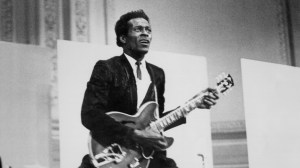
Behind the scenes, Haggard had started honing in on the advice of Buck Owens. After finding a pair of top 10 hits, he looked long and hard at what made those songs different from his first album. Then, he went back to the studio with the Strangers. He also brought in session musicians. For instance, Glen Campbell and James Burton played guitar on the album. These extra players helped fill out his sound. It worked like a charm. He didn’t release another single that missed the top 10 until 1977.
The Confusion Around the Title of this Merle Haggard Classic
The cover of the album reads Swinging Doors and the Bottle Let Me Down. In smaller print, it says “plus” and lists the rest of the songs on the LP. Moreover, Swinging Doors is the title given on the spine and rear cover.
Still, the album has been listed as Swinging Doors and the Bottle Let Me Down in various places since its release. Merle Haggard added a third title to the mix a few years later.
In 1971, Haggard released High on a Hilltop. It is Swinging Doors without the songs “The Girl Turned Ripe” and “This Town’s Not Big Enough.” The tracklist is even in the same order.
No matter what you call the album, it marks the point in Haggard’s career when he found his signature sound. It also produced two classic songs that remain fan favorites 60 years later.
Featured Image by Lynn Pelham/Getty Images
-
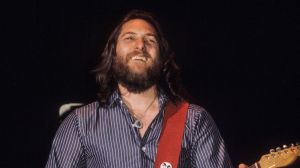
CONCORD, CA – JULY 31: Steve Cropper performs with the Blues Brothers at Concord Pavilion on July 31, 1980 in Concord, California. (Photo by Ed Perlstein/Redferns/Getty Images) -
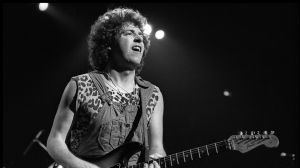
Steve Lukather of Toto performs live on stage at 'Muziekcentrum Vredenburg', Utrecht, Netherlands, 26th September 1982. (Photo by Rob Verhorst/Redferns) -
LAS VEGAS, NEVADA – Kane Brown performs onstage during the 61st Academy of Country Music Awards at MGM Grand Garden Arena on May 17, 2026 in Las Vegas, Nevada. (Photo by Kevin Mazur/Getty Images for ACM) -
Sandy West performing with the Runaways -
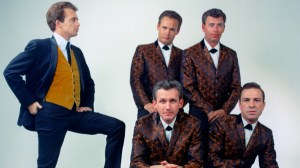
Roy Nichols with Merle Haggard and the Strangers -
Country singer songwriter and producer Owen Bradley takes notes while collaborating with child country singing superstar Brenda Lee and Pat Boone circa 1960 in Nashville, Tennessee. (Photo by Bob Grannis/Getty Images) -
Photo by Michael Ochs Archives/Getty Images