Your cart is currently empty!

The Night Johnny Cash Realized His Old Sound Was Over
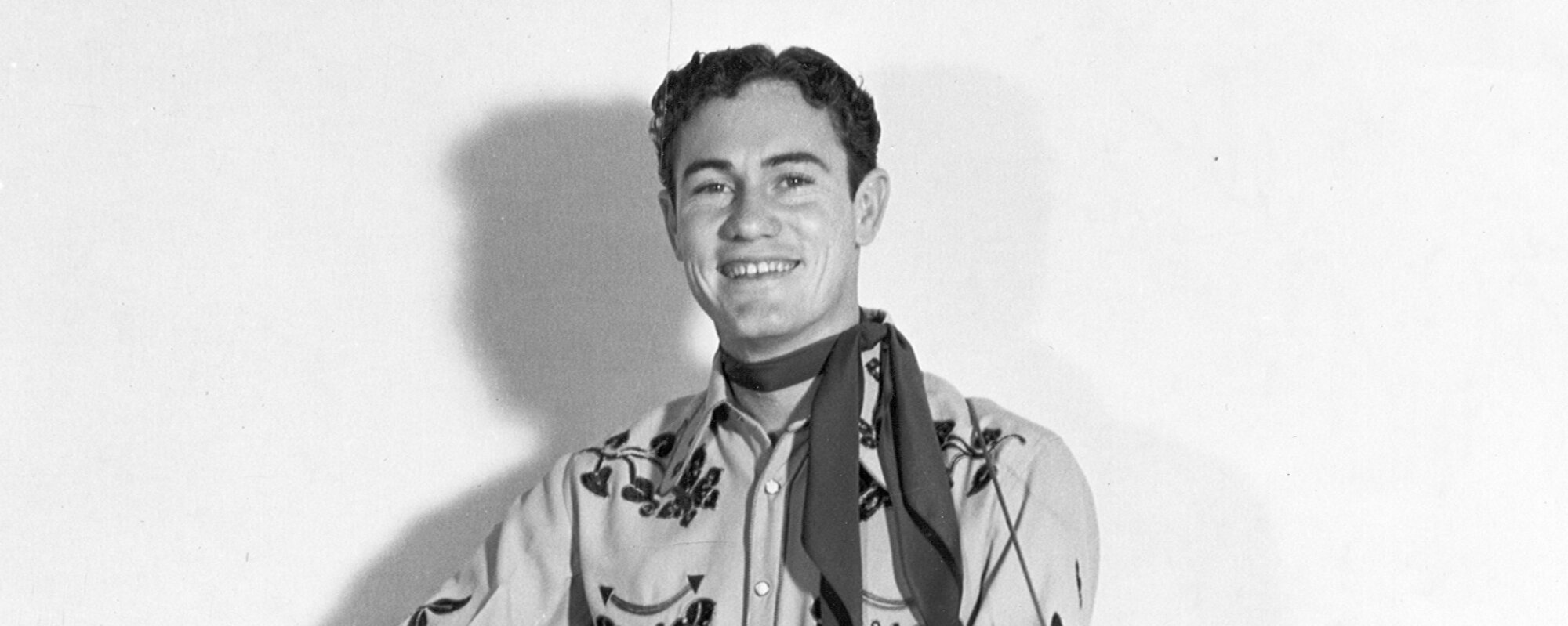
Johnny Cash built his career on a seamless blend of rockabilly and country music. His instantly recognizable voice will always be tied to the boom-chick-a guitar style that he laid down on classics like “I Walk the Line” and “Ring of Fire.” However, despite his legendary status in country music, there was a time when he had fallen out of favor with the industry and the record-buying public. His work with a superstar producer changed that. It also changed his sound forever.
Videos by American Songwriter
In 1993, Cash had been releasing music for nearly 40 years. At the time, though, he was as close to being forgotten as a legendary figure can get. He hadn’t had a hit single since “The Baron” reached No. 10 in 1981. His last hit album, One Piece at a Time, dropped in 1976, peaking at No. 2. Country radio rarely, if ever, played even Cash’s biggest hits, and he was constantly at odds with his label, Polygram Records.
[RELATED: 3 Songs Johnny Cash Recorded That Hit Harder Than Anyone Expected]
Then, according to Louder Sound, on February 27, after a show at the Rhythm Cafe in Santa Ana, California, his fortune changed. That night, he met producer Rick Rubin for the first time. Lou Robin, Cash’s manager, took Rubin backstage to meet the aging icon. At the time, he had spoken to several producers and record label executives. So, in his mind, this was just one more in a long line of guys who came in and told him how they were going to revive his career and put him back at the top of the charts.
Johnny Cash Meets Rick Rubin
Cash and Rubin sat down at a table in the dressing room, said “Hello,” and stared at one another for a couple of minutes. Finally, Cash asked, “What’re you gonna do with me that nobody else has done to sell records for me?” Rubin was honest. “Well, I don’t know that we will sell records,” he admitted. “I would like you to sit in my living room with a guitar and two microphones and just sing to your heart’s content–everything you ever wanted to record.” Thus began the partnership that would spawn seven poignant albums. Some of them even became hits.
On paper, it seems like an odd pairing. Johnny Cash was The Man in Black, one of the Highwaymen, a bona fide country music hero. Rick Rubin, on the other hand, was best known for producing records for A-list hip hop artists like Run-DMC and the Beastie Boys or heavy metal giants like Slayer and Danzig.
This wasn’t lost on Cash. “The thing that intrigued me was that the man that produced the rap music and the Chili Peppers and Slayer and all of them was interested in me personally,” he said during an interview.
“It’s given me an opportunity to express myself artistically that I never had before,” he said of his partnership with Rubin. “I dug out every old song that I ever wanted to sing, and I’ve sung them. It has given me an enthusiasm and a new look at what my possibilities and capabilities are that I never thought I would get to experience.”
The Outcome of Cash’s Work with Rubin
Johnny Cash released American Recordings, his first Rick Rubin-produced album, in April 1994. It reached No. 23 on the Top Country Albums chart, his highest position in years. It also brought him the Grammy Award for Best Folk Album.
In 2002, he released American IV: The Man Comes Around, the final LP issued before he passed in September 2003. It reached No. 2 on the country chart and was certified Platinum in the United States, Canada, and the United Kingdom. Moreover, it contained his cover of “Hurt,” written by Nine Inch Nails frontman Trent Reznor. The song won Single and Music Video of the Year at the 2003 CMA Awards. It also brought him the Grammy for Best Short Form Video.
Johnny Cash’s American Recordings Releases:
- American Recordings (1994)
- American II: Unchained (1996)
- American III: Solitary Man (2000)
- American IV: The Man Comes Around (2002)
- My Mother’s Hymn Book (2004)
- American V: A Hundred Highways (2006)
- American VI: Ain’t No Grave (2010)
His work with Rubin didn’t produce singles that burned up the charts. Instead, those albums did something more important. They gave a man who spent his life entertaining millions of people the chance to sit down and make the music he’d always wanted to make. They also showed longtime fans a different side of the legendary singer/songwriter. In short, they were a near-perfect end to a genre-defining career.
Featured Image by Langdon/Getty Images

Leave a Reply
Only members can comment. Become a member. Already a member? Log in.