Your cart is currently empty!


The Writer’s Block: The Secrets Behind Jon Batiste’s World of Songs
When Jon Batiste began working on his 2025 album, Big Money, an impromptu sit-down on the piano with Randy Newman turned into the first time in years that the legendary songwriter and composer sang. Both moved through a couple of songs together before crafting a bluesy cover of the 1958 Doc Pomus-penned Ray Charles’ hit “Lonely Avenue,” which Batiste included on the album.
Along with Newman’s contribution, other special guests filled up Big Money, which Batiste wrote on guitar, not piano, from Andra Day on the opening “Lean on My Love,” NO ID on the closing “Angels,” and the Womack Sisters on the rockabilly-bent “Pinnacle.”
Released August 2025, Big Money earned the seven-time Grammy-winner three additional nominations in 2026, including Best American Roots Performance, Best American Roots Song, and a first for Best Americana Album. Batiste previously picked up his first Folk and Americana nomination for his T Bone Burnett-produced Hollywood Africans in 2018.
“Some folks classify this as an Americana album,” Batiste told American Songwriter. “For me, I classify it as my first guitar album.”
Videos by American Songwriter
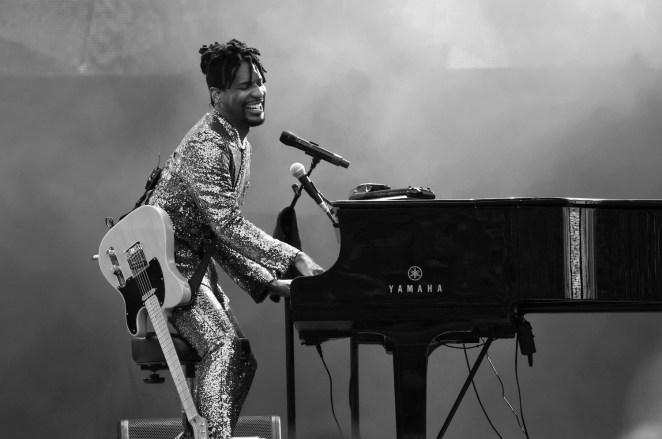
Years before working as the bandleader and musical director of The Late Show with Stephen Colbert from 2015 through 2022, Batiste released his debut Times in New Orleans in 2005 and eight more albums since, penetrating jazz, classical, world, gospel, Americana, blues, and more genres.
In 2020, Batiste picked up a Golden Globe, Critics’ Choice Award, BAFTA Award, and the Academy Award for Best Original Score for his work, alongside Nine Inch Nails’ Trent Reznor and Atticus Ross on the Pixar animated film Soul, adding to his collaborations spanning work with Stevie Wonder, Prince, Willie Nelson, Mavis Staples, Vince Gill, Beyoncé, Alicia Keys, Lenny Kravitz, A$AP Rocky, Ed Sheeran, Lana Del Rey, and Roy Hargrove, among other artists.
Batiste recently dug deeper into what fires up his soul of songs, finding a “greater intention,” and when a songwriter has said their piece.
How has songwriting changed for you since your debut Times of New Orleans (2005)?
I’m as informed about the craft and as good as I’ve ever been now, and it’s really exciting, because I can take all the things I learned from New Orleans and from Jazz [Jazz is Now, 2013] and classical music and all of the different things that I’ve been able to play as a musician. Going back, thinking about the years leading up to the record I did to something like Hollywood Africans (2018), which I worked on with T Bone [Burnett], to stuff that I did before, it’s like the last 12 to 15 years. I feel like I have been adding things to my toolkit of songwriting. And now I understand songwriting isn’t just about the song, but it’s about pairing the right messenger with the right message. And, for me, I’ve realized what kind of messenger I am and what my messages are. So it’s a really powerful place to be as an artist, because you feel empowered to go and inspire people. The gift of a song is that it makes someone out there feel and know that they’re not alone. And if you can make people feel and know that they’re not alone, that’s the power of good in the world. So I think that now I’m in this place where I’ve acquired these powers, and I want to use them for as much good as I can.
Thinking back over the past two decades and some of your older material, what’s your connection to these songs now?
I have two brains about composition and songwriting: one is as a composer, and the other is as a songwriter. When I go back and listen, you can hear the shift in development when I’m approaching something as a composer or as a songwriter, or sometimes I’m doing both within the same song. Going back to earlier albums, I always thought it felt unwieldy to me at first, but now I realize it’s very unique. It’s a unique imprint in my approach, so embracing that is also a part of what I’ve really figured out, how to do something intentionally. Whereas, when I look back, I was doing it just innately. It wasn’t necessarily my intention. It was just the way that I understood music. Now I’ve been introduced to myself in a deeper way, and I have that as something that I can put into a song with greater intention.
The gift of a song is that it makes someone out there feel and know that they’re not alone.
Jon Batiste
Who were some co-writers or songwriters who left a noticeable imprint on you?
In my most recent memory, working with Vince Gill. He’s nice, and he’s obviously a veteran. And what a wonderful guy. That was, very much, a great experience. I’m just thinking about recent experiences that have blown my mind. Shania Twain, we’ve done some great stuff together. It’s beautiful to see how some of the ones who have been creating all this incredible work for so many years are still inspired and still want to, still want to create, and still have a lot left to say.
That’s from one perspective, but then there are a lot of younger songwriters and lyricists whom I’ve really enjoyed building relationships with, whether it’s Autumn Rowe, who I’ve been working with for some years, or Nick Waterhouse, who’s another songwriter whom I’ve been working with for some years, and folks in my generation. And there are also some folks who I’ve had the pleasure of working with, who are coming from Gen Z and have a whole other approach and perspective that I’m always finding inspiring. These are creatives I want to collaborate with, but there’s definitely something about building those relationships with people who are in my generation and my peers, and then with folks who are still inspired and have been doing it for a while, and have a real perspective. Again, it’s talking about the messenger and the message—people who really understand that in their own way and still have something to say.
When I sat with Randy [Newman], he was still writing, and the last time that we were together at the piano, we started doing something, but we didn’t plan to do it. When we get together, it’s always something that happens … something musical happens. It wasn’t like a songwriting session, but it was really cool to do that with him, because he doesn’t do that a lot, in terms of writing with other people.
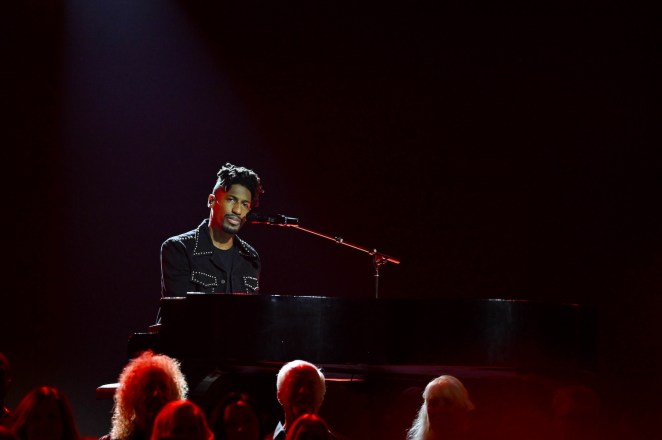
Now that you found the intention, you’re also one of the artists you mentioned who is still excited and very inspired by what you’re doing.
Not that I think that one is better than the other, but I do think that there are some folks whom I’ve met who also have said their piece. And it’s really interesting when you meet someone who is of that generation, and they’re like, “I’ve written everything that I have to say.” There’s a beautiful maturity to that as well. Whether you still have a lot to say or if you’ve said your piece, I think that it takes a great awareness of an artist and a songwriter to know when you’ve arrived.
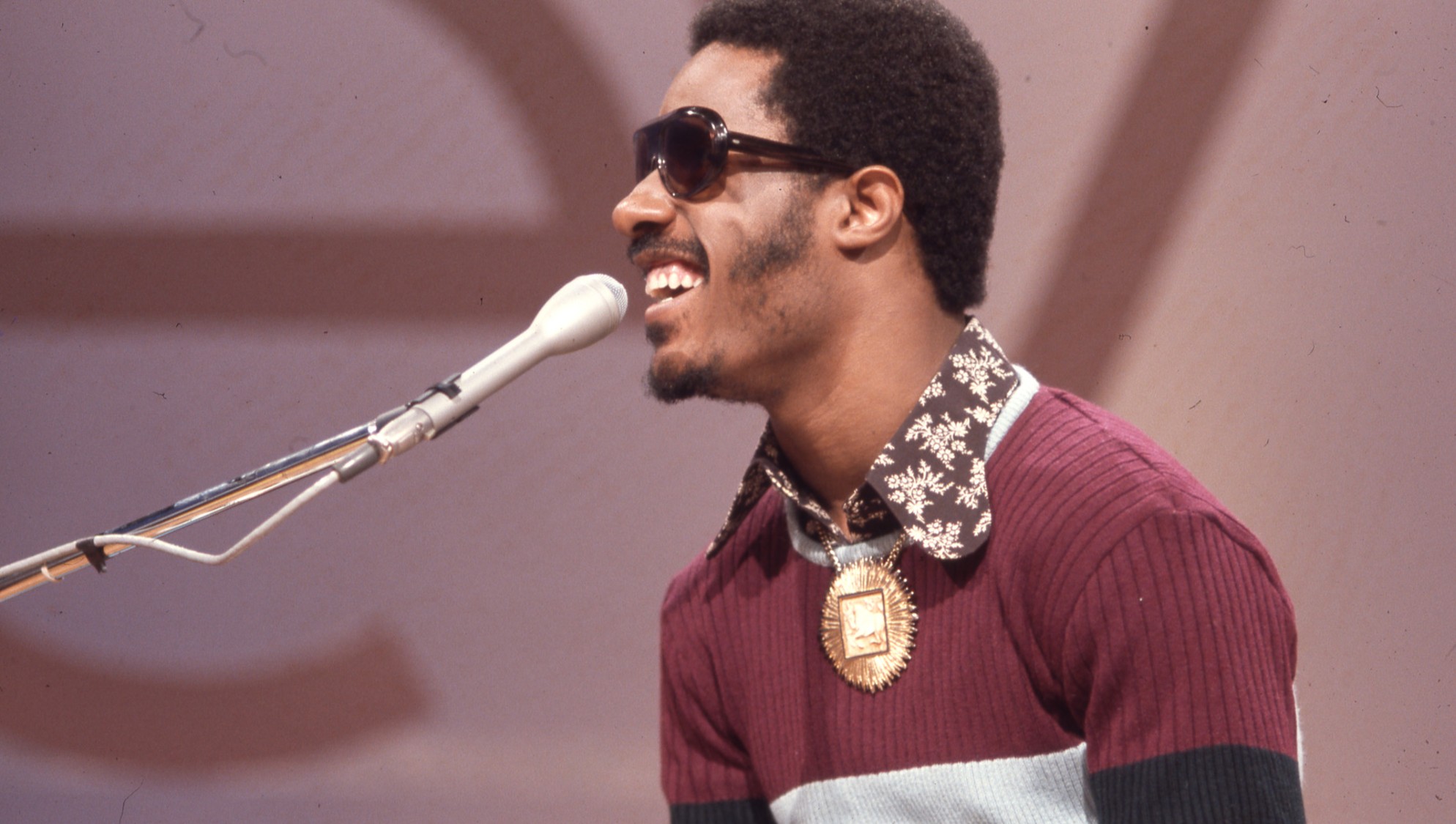
If you’re a messenger and you delivered the message and it was clear, then that’s incredible. I’m just honored to be able to even say that I have spent time with these folks who have given me so much over the years, and now to call them friends. It’s just amazing. I’m thinking about other folks who are still inspired. Stevie Wonder, we’ve worked on some things, and he is like a beacon of a songwriter for me. He’s got scores of music that he’s been working on, and we were working on some things, and he’s got that inspiration to go.
Are you concerned about the inspiration ever running dry?
If you think about someone like Joni [Mitchell], she had a show at the Hollywood Bowl, and I was able to play with her, and we spent some time together around the time I was making Big Money. I would sometimes see her, and we would play together, and she’s just someone who loves songs, but now she’s not in a space where she feels like she wants to write. She could write, of course. Those are two examples. Stevie and Joni. Stevie is constantly writing, and Joni has given the world enough songs for the ages and is now at a point where she’s very content. And if a song happens, she’ll obviously find it. We know how to grab it as artists, but I find it super interesting the way that people land on, and where they land, as they continue to practice the craft.
Now that Big Money is out, are you already working on the next thing?
I like to start songs, and my antenna is always up. I have ideas that I’m constantly sketching, that I will write lyrics or even phrases into. We were at the airport, and someone said a sentence in the line coming through security, and you. They said, “I ain’t like you yet,” and I was like, “Oh, that’s a good one. I gotta write that.” I’m constantly starting ideas that I know that their time will come. How the vision comes to me is less about trying to get a collection of songs, but more about a narrative emerging in a collection of songs. Once that’s clear, that’s when I know I have an album.
I’m constantly writing. I never stop writing.
Photo: Kevin Mazur/Getty Images
Leave a Reply
Only members can comment. Become a member. Already a member? Log in.