
Songs about life on the road are common in the overarching canon of rock music. But most of those songs pertain to touring the country and playing music. “Turn The Page”, one of the best of that little subgenre, came from Bob Seger.
Seger was singing about a different kind of journey in his 1982 song “Roll Me Away”. It’s the journey of an individual trying to recapture something that he’s lost. But he’s unsure of where to find it and unsure of even the identity of what’s gone missing.
Videos by American Songwriter
That’s How He “Rolls”
Bob Seger titled his 1982 album The Distance. It’s a figurative distance, as in the distance between two people who were once close. Or the distance one has traveled in their life from humble beginnings. Perhaps even the distance between one’s youthful ideals and life’s harsh realities.
Seger had come a long way himself from journeyman musician to rock star. You could argue that the peak of that journey came in 1980 when Against The Wind hit the top of the album charts in America, the first time that Seger ever reached that level.
While others might revel in such an accomplishment, it caused Seger a great deal of soul-searching and self-reflection. “Roll Me Away” originated from a solo motorcycle journey that the artist took from his home in Michigan to South Dakota.
The label of “heartland rock” feels a bit limiting to the scope of what Seger has delivered throughout his career. But it’s certainly apropos here, as special guest Roy Bittan’s rolling piano chords accompany Seger as he literally makes his way across the heartland. He does all this while figuratively surveying the rocky terrain of his frazzled mind and wounded heart.
A Deep Dive into the Lyrics of “Roll Me Away”
“Right away I made my choice,” the narrator of “Roll Me Away” explains of his trip, as if decisions on the road are much clearer than the choices we make in day-to-day life. “I was tired of my own voice,” Seger sings, perhaps skeptical of his career trajectory in the wake of so much success.
Eventually, he finds a companion in a girl he meets at a roadside bar. “She looked out the window a long, long moment,” Seger explains. “And then she looked into my eyes.” Without a word, he knows she’s a kindred spirit. “I too am lost,” her look suggests. “I feel double-crossed/And I’m sick of what’s wrong and what’s right.”
In the middle eight, Seger recounts the scenery as the narrator finds some inner peace: “Finally feelin’ free.” But it’s not too long before it once again becomes a solitary journey. “She said she missed her home,” he says. “I headed on alone.”
The narrator finds himself at a literal and spiritual crossroad in the final verse. “I could go east, I could go west,” he muses. “It was all up for me to decide.” At that moment, a symbol helps clear his mind and his path. “Just then I saw a young hawk flyin’,” he recounts. “And my soul began to rise.”
“And as the sunset faded I spoke to the faintest first starlight,” Seger continues in the last refrain before making a declaration: “And I said next time/Next time/We’ll get it right.” “Roll Me Away” certainly gets it just right, breathlessly capturing the lonely redemption one can find when alone on the road.
(Photo by Paul Natkin/Getty Images)
More Behind The Lyrics
-
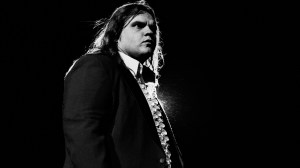
Atlanta – April 12: Singer/Songwriter Meat Loaf (Marvin Lee Aday) performs at Symphony Hall in Atlanta Georgia April 12, 1978 (Photo By Rick Diamond/Getty Images) -
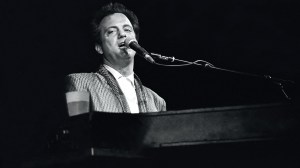
Musician, singer, songwriter and composer Billy Joel is shown performing on stage during a live concert appearance on February 2, 1987 in Hartford, Connecticut. (Photo by John Atashian/Getty Images) -
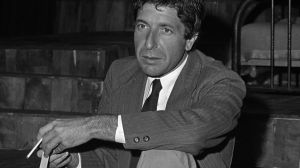
Canadian singer/songwriter Leonard Cohen (Photo by Fairchild Archive/Penske Media via Getty Images) -
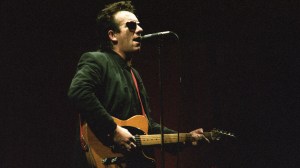
MINNEAPOLIS, MN – AUGUST 29: Elvis Costello performs at the Orpheum Theatre in Minneapolis, Minnesota on August 29, 1984. (Photo by Jim Steinfeldt/Michael Ochs Archives/Getty Images) -
(MANDATORY CREDIT Ebet Roberts/Getty Images) American singer-songwriter and guitarist Chrissie Hynde performing with rock group The Pretenders, USA, 1994. (Photo by Ebet Roberts/Redferns/Getty Images) -
UNITED KINGDOM – JANUARY 01: Photo of Nick LOWE; Posed head and shoulders, holding cigarette (Photo by Estate Of Keith Morris/Redferns) -
0000120354-PC-Vue22A-Korody 001 -
LONDON – SEPTEMBER 18: The Who perform live on stage at Oval Cricket Ground in London on September 18 1971 L-R Pete townshend, Roger Daltrey (Photo by Gijsbert Hanekroot/Redferns)