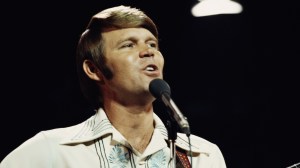
One album can change everything, for better or worse. From the outside looking in at the 1986 Journey album Raised On Radio, fans likely just noted the continued success that the LP and its singles enjoyed.
But behind the scenes, Journey was splintering. This album exacerbated all the simmering tensions. It’s no surprise that their classic lineup would only record one more album together. And that didn’t come until a decade after this one.
Videos by American Songwriter
Solo Steve
With the albums Escape and Frontiers, released in 1981 and 1983, Journey moved to the top of the rock music world in America. Hit singles, whether they were rabble-rousing rockers or lighter-waving ballads, abounded. The band could do no wrong. But they were also keeping a frenetic pace that was starting to catch up with them.
At the end of the world tour following Frontiers, the band members agreed that they needed some time away to do other things. For lead singer Steve Perry, that meant the 1984 solo album Street Talk. That album did business comparable to what Journey had been doing, which made Perry think twice about even coming back into the fold.
He was eventually convinced to return for the band’s next go-round, with sessions beginning in late 1985. But Perry wanted things done differently, and the success of the solo album gave him the confidence to ask for it. Fellow Journey songwriters Jonathan Cain and Neal Schon were on board. But the rhythm section never quite got the memo.
The Rhythm Section Exits
Before bassist Ross Valory and drummer Steve Smith even entered the studio, Perry, Cain, and Schon had written the music for the new album and demoed it while utilizing the newest recording techniques. Valory and Smith struggled with how to fit their way into the new songs.
The decision was quickly made to fire the two men. Smith ended up playing on just three of the album’s new tracks, while Valory was completely absent. Studio musicians ended up filling in the gap, including Randy Jackson, who’d eventually gain notoriety as a judge on American Idol, as the album’s primary bassist.
Perry also produced the record, a first for him within the band. He even got his way when it came to the album title. As opposed to Journey’s previous one-word titles, Perry prevailed upon the band to break this trend, calling the new album, which was released in April 1986, Raised On Radio.
‘Radio’ Daze
In terms of its commercial impact, Raised On Radio mostly lived up to previous band standards. It peaked at No. 4 on the album charts and produced an impressive four Top 20 singles.
But the reverberations of the fractious recording process continued into the tour to support it. That’s when Perry, feeling the strain on his voice and the pressure of delivering as the frontman of a rock and roll machine, shut down the rest of the schedule after just 40 dates.
He told the other members of Journey that he’d return to the fold when he was ready. It was a decade before that happened, by which time Steve Smith and Ross Valory were reinstated. Still, it can’t be denied that the scars left behind by the making of Raised On Radio shuttered Journey’s seemingly unstoppable momentum.
(Photo by Jim Steinfeldt/Michael Ochs Archives/Getty Images)
More Features
-
American singer and musician Maybelle Carter (1909-1978) of The Carter Family, playing the autoharp as the band perform live at Columbia Recording Studios, possibly during the recording of 'An Historic Reunion' at Columbia Recording Studios in Nashville, Tennessee, June 1966. Maybelle and her daughters had also performed as The Carter Sisters and Mother Maybelle. (Photo by Don Paulsen/Michael Ochs Archives/Getty Images) -
Photo by American Stock/Hulton Archive/Getty Images -
NASHVILLE, TN – APRIL 24: Singer-songwriter Eric Church and Katherine Blasingame Church attend Best Cellars Wine Dinner hosted by T.J. Martell Foundation on April 24, 2017 in Nashville, Tennessee. (Photo by Jason Davis/Getty Images for T.J. Martell) -
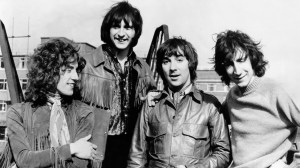
CIRCA 1975: Roger Daltrey, John Entwistle, Keith Moon and Pete Townshend of the rock and roll band "The Who" pose for a portrait in circa 1975. (Photo by Michael Ochs Archives/Getty Images) -
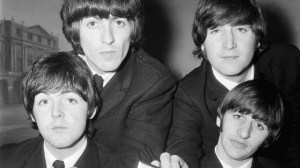
The Beatles pose with their MBEs at a press conference held at the Saville Theatre, London, following their investiture at Buckingham Palace. Top left to right: George Harrison, John Lennon. Bottom: Paul McCartney and Ringo Starr. 26th October 1965. (Photo by Mirrorpix via Getty Images) -
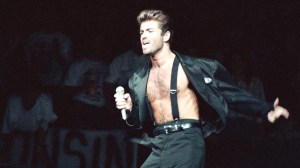
George Michael performing in 1989. (Photo by Jim Steinfeldt/Michael Ochs Archives/Getty Images) -
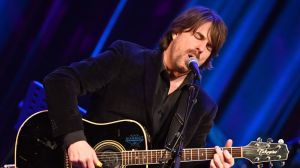
FRANKLIN, TN – Jimmy Wayne performs onstage during A Welby Street Christmas: Hosted by Serene & Pearl at Franklin Theater on December 9, 2016 in Franklin, Tennessee. (Photo by Jason Davis/Getty Images for Bandtwango)