
When asked to name a Kenny Rogers song, almost everyone will think of “The Gambler”. One of Rogers’ biggest hits, “The Gambler” was written by Don Schlitz. A multi-platinum, crossover hit, the song also spawned a series of TV movies starring Rogers.
So it’s surprising that “The Gambler” almost went to someone else instead, namely Willie Nelson. The song was indeed pitched to Rogers, who suggested to Nelson that he record it instead.
Videos by American Songwriter
“Through the years, him and I were big pals. In fact, he tried to get me to record ‘The Gambler’”, Nelson reveals. “We were somewhere, I don’t know, and he was like, ‘I’ve got this song, I think you should do it.’ And he played it for me, and I said, ‘You know, it’s a great song, but I don’t think I’ll do it.’”
In fact, Nelson may have been tempted to record “The Gambler” if he didn’t already have another hit with another long song.
“I was doing a song every night called ‘Red Headed Stranger’, which has 100 verses in it. It’s a long song,” Nelson says.
“I said, ‘I just don’t want to do another long song on my show, and I can’t quit ‘Red Headed Stranger’. So he said, ‘Okay, I will record it myself,’ and so he did. And there it is.”
The Story Behind “The Gambler” by Kenny Rogers
“The Gambler” became not only one of the biggest hits in Rogers’ career, but also one of Schlitz’s biggest hits as a songwriter as well. The success of the song is surprising, since Schlitz wrote most of “The Gambler” in about 20 minutes, penning the entire thing by himself. The song is Schlitz’s first big cut as a songwriter.
“I wrote it in August of ’76, walking home from a meeting with my mentor, Bob McDill,” Schlitz, who was working as a computer operator at the time, recalls. “I walked from his office over on Music Row to my apartment. And in that 20 minutes, I wrote most of it in my head.”
Schlitz had everything but the last verse, which took him a while to complete. He admits he had no idea what was going to happen, even as he was writing it.
“[I] thought it was an interesting story, but it was a throwaway,” he adds. “I spent about six weeks trying to figure out what was gonna happen after the chorus.”
Ultimately, Schlitz ended the song with a presumption that the person in the song passes away. It became a nod to a French short story writer known for leaving his stories open-ended.
“I finally settled on the eight lines of the last verse, what I now call my ‘Guy de Maupassant’ ending,” he says. “And nobody would touch it.”
Photo by Gary Gershoff/Getty Images
More Behind The Song
-
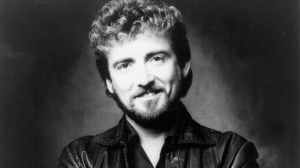
Keith Whitley Portrait Session Country singer and songwriter Keith Whitley poses for and RCA Records publicity still in 1984. (Photo by Michael Ochs Archives/Getty Images) -

Musician Toby Keith performs on stage during the 2009 CMT Music Awards at the Sommet Center on June 16, 2009 in Nashville, Tennessee. (Photo by Jeff Kravitz/FilmMagic) -
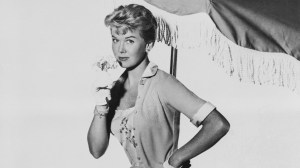
(Original Caption) 2/17/56-Hollywood, California: Singing actress Doris Day models one of the American-girl-look outifts she's designing for Little Miss English Ltd. The full skirt and matching sleeveless camisole blouse are of silk-finish cotton satin in a leaf print on soft blue. The companion sweater, a feature of all Miss Day's designs, picks up one of the leaf colors and is trimmed with French cuffs and Peter Pan collar of the print material. The three pieces may be bought separately. -

Tom Jones at the Metro in Chicago, Illinois, December 2,1994. (Photo by Paul Natkin/Getty Images) -
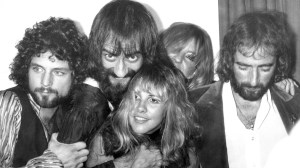
LOS ANGELES – SEPTEMBER 1: Fleetwood Mac (L-R Stevie Nicks, Lindsey Buckingham, Christine McVie, John McVie and Mick Fleetwood) backstage at the Los Angeles Rock Awards on September 1, 1977 in Los Angeles, California. (Photo by Richard Creamer/Michael Ochs Archives/Getty Images) -

Luther Vandross on stage at the 2002 American Music Awards at the Shrine Auditorium in Los Angeles January 8, 2002 (Photo by KMazur/WireImage) -
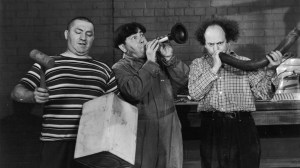
circa 1940: The Three Stooges turn plumbing equipment into musical instruments in a still from an unidentified film. L-R: Curly Howard (1903 – 1952), Moe Howard (1897 – 1975) and Larry Fine (1902 – 1975). (Photo by Hulton Archive/Getty Images) -

TODAY — Pictured: Keith Urban on Thursday, August 2, 2018 — (Photo by: Nathan Congleton/NBCU Photo Bank/NBCUniversal via Getty Images via Getty Images)