
Ask anyone alive at the time, and they’ll tell you that the 1960s were when “everything changed.” Culturally, politically, musically. It was a big time for music, as folk singer-songwriter anthems took over the airwaves and rock and roll had effectively evolved into countless subgenres, namely psychedelia. Let’s take a look at a couple of folk songs from 1963, in particular, that hinted at what would occur throughout the rest of that legendary decade.
“Masters Of War” by Bob Dylan from ‘The Freewheelin’ Bob Dylan’
A ton of Bob Dylan tracks could have made it to our list of folk songs from 1963 that hinted that the 1960s were going to be wild. I went with “Masters Of War” because it’s such an intense anti-war song. Obviously, musicians were penning anti-Vietnam War songs left and right in 1963. But Dylan’s “Masters Of War” had a powerful energy to it that likely encouraged other musicians to get angry in their music, rather than settling for the flowery, soothing sound that folk music was known for. It was a call to action, one that many folk musicians who followed in Dylan’s footsteps would try to emulate through the rest of the 60s.
Videos by American Songwriter
“Little Boxes” by Pete Seeger
Pete Seeger is still revered as one of the most prominent folk musicians of his era. But only one of his songs ever became a charting semi-success. And, surprisingly, he didn’t even write it. Seeger’s “Little Boxes”, out in 1963, was written by his friend Malvina Reynolds. Seeger recorded it, and the song went to No. 70 on the Billboard Hot 100 chart.
This satirical song is beautifully composed. It uses very visual descriptions to compare middle-class suburbia to almost childish materials and shapes. That was a unique way of penning a protest song, without a doubt. And other musicians would further explore how weird they could get with protest music throughout the rest of the decade.
“Come Away Melinda” by Harry Belafonte from ‘Streets I Have Walked’
This deep cut from Harry Belafonte was originally written by Fran Minkoff and Fred Hellerman. Released by Belafonte in 1963, “Come Away Melinda” was released as the closing song on Streets I Have Walked. The Big 3 (which featured pre-Mamas And Papas’ Cass Elliot) would record the song as well, in addition to quite a few others, like Uriah Heap.
Despite its popularity among musicians, “Come Away Melinda” is kind of a deep cut in 60s folk protest music history. The song is a devastating anti-war song, narrated from the perspective of a child as well as her father. And it was definitely a sign of what was to come from emotionally arresting protest music later on in the 60s.
Photo by Brian Shuel/Redferns
More The List
-
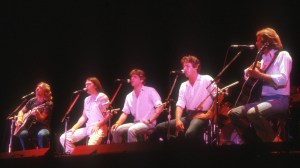
(L-R) Joe Walsh, Timothy B. Schmit, Glenn Frey, Don Henley and Don Felder of the rock band "Eagles" performing onstage in 1980. (Photo by Michael Ochs Archives/Getty Images) -
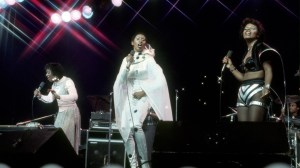
LOS ANGELES – CIRCA 1974: Singer Patti Labelle performs onstage with her group LaBelle in circa 1974 in Los Angeles, California. Also in the group were former Bluebelles, Sarah Dash and Nona Hendryx. (Photo by Michael Ochs Archives/Getty Images) -
Photo by Rick Diamond/WireImage for BMI Nashville -
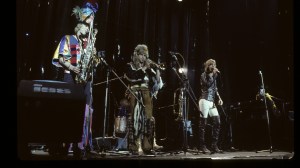
IN CONCERT – From London – Shoot Date: June 13, 1974. (Photo by ABC Photo Archives/ABC via Getty Images) BLUE SWEDE -
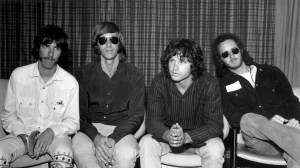
3rd September 1968: American psychedelic rock band, The Doors during a press conference at Heathrow Airport, London (left to right); drummer John Densmore, keyboard player Ray Mansarek, vocalist Jim Morrison (1943 – 1971) and guitarist Robby Krieger. (Photo by Central Press/Getty Images) -
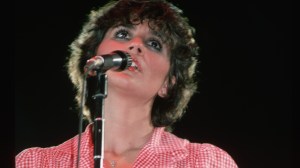
Original Caption) : 1980-Pop singer Linda Ronstadt is shown singing on stage, holding the microphone stand. She wears a gingham shirt with a tie front and askirt with flowers on it in this waist-up portrait. (Photo by Lynn Goldsmith/Corbis/VCG via Getty Images) -
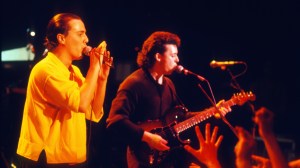
Tears for Fears – Koninklijk Circus – Brussel – Belgium – 21/04/1985 Roland Orzabal, Curt Smith Photo gie Knaeps -
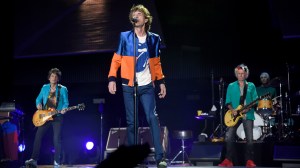
The Rolling Stones at Desert Trip