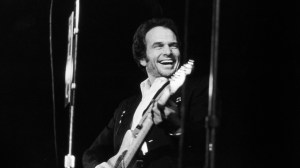
If you’re not up on your music trivia, you might not know the name off the top of your head. But we’re guessing that you’ll recognize the voice. Paul Carrack’s career has taken him in many different directions, and the British musician tends to lend his reliably soulful pipes to just about every project of which he’s a part.
The five songs in this list are all nothing less than iconic, thanks in large part to Carrack’s vocals on them. Read about their history, and then click on the videos to get a listen to his brilliance.
Videos by American Songwriter
“How Long” by Ace from Five-A-Side (1974)
Carrack was part of a short-lived jazz rock group called Warm Dust in the early 1970s. From the ashes of that outfit came Ace, with Carrack as the lead singer and chief songwriter, as well as keyboardist. All of those skills come to the fore on “How Long,” their biggest hit single by a wide margin. He lays the groundwork with his organ work, and the lyrics are just biting enough to add some tartness to the laid-back groove. Even though he was only 23 at the time the song became a hit, Carrack already displayed a knack for keeping his vocal in check, waiting for exactly the right moments to emote.
“Tempted” by Squeeze from East Side Story (1981)
It says something about Carrack’s vocal talents that he sang lead on only two Squeeze songs in his brief time (one album in 1981 and another in 1993) with this brilliant, long-running British band, and one of those became the band’s most iconic song. Of course, it helped that “Tempted,” with lyrics from Chris Difford and music from Glenn Tilbrook, is a wonderful song to start. But Carrack’s interpretation of it is so iconic it makes all covers of the track seem a little bit lackluster. From the moment he tears into the opening verse, all the way to the grunt he gives before heading back to the chorus in the final section, his vocals are immaculate.
“Don’t Shed a Tear” by Paul Carrack from One Good Reason (1987)
Carrack’s first two solo albums in the first half of the ’80s produced just a single, minor Top-40 hit (“I Need You” in 1982). By the time he returned to record another album on his own, his profile had been raised by his membership in Mike + the Mechanics. “Don’t Shed a Tear” was written by Eddie Schwartz and Rob Friedman, and Carrack jumped on it when it came his way. The narrator in the song realizes the girl he’s been pursuing is bad news, and when Carrack tears into the chorus to tell her off, you can hear both the hurt and relief in his voice.
“The Living Years” by Mike + the Mechanics from Living Years (1988)
When Mike Rutherford decided he needed a side project away from his Genesis commitments, he wisely realized he wasn’t the frontman type. Instead, he hired a pair of singers, Carrack and Paul Young, to do the heavy vocal lifting. Carrack took the lead on “Silent Running,” the band’s hit debut single in 1985. With “The Living Years,” written by Rutherford and BA Robertson—both of whom were coming to grips with the deaths of their fathers—Carrack received his ultimate vocal showcase. Surrounded by a children’s choir, he delivers every last bit of gut-wrenching emotion the lyrics demand.
“Love Will Keep Us Alive” by Paul Carrack from Blue Views (1995)
Carrack’s vocal talents sometimes overshadow that he is a top-notch songwriter as well, as evidenced by the array of high-profile artists who have covered his work. “Love Will Keep Us Alive,” written by Carrack with Jim Capaldi and Peter Vale, became the biggest hit out of the new songs the Eagles recorded for their Hell Freezes Over comeback project in 1994. Carrack put his own spin on the song a year later, and he predictably finds a heartfelt home within the gorgeous melody. He’d later record a version with Timothy B. Schmit of the Eagles singing harmonies.
Photo by Neil H Kitson/Redferns via Getty Images
More The List
-
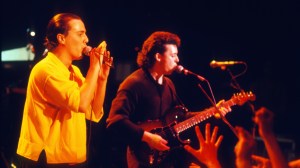
Tears for Fears – Koninklijk Circus – Brussel – Belgium – 21/04/1985 Roland Orzabal, Curt Smith Photo gie Knaeps -
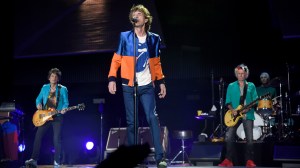
The Rolling Stones at Desert Trip -
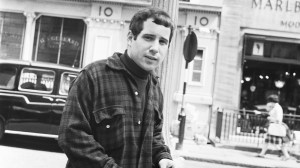
Pauk Simon 1965.© Chris Walter. -
NEW YORK – JANUARY 13-15: Bob Dylan plays a Fender Jazz bass with the harmonica around his neck while recording his album 'Bringing It All Back Home' on January 13-15, 1965 in Columbia's Studio A in New York City, New York. (Photo by Michael Ochs Archives/Getty Images) -
Photo by Luciano Viti/Getty Images -
American singer-songwriter and guitarist Richie Havens, wearing a tan-coloured suede waistcoat over a black turtleneck sweater, plays a Guild D-40 acoustic guitar during a television appearance in London, England, circa 1970. (Photo by Tony Russell/Redferns/Getty Images) -
UNITED STATES – JANUARY 01: Billy Joel performs live on stage during his 1980 US tour (Photo by Richard E. Aaron/Redferns)