Your cart is currently empty!



“Far and Above Anything I Had Ever Had”: Johnny Cash Recalls Most Surprising Thing About Playing Prison Concerts
Whether as an inmate or his brief string of prison concerts, country legend Johnny Cash was very familiar with the U.S. penal system throughout his decades-long career. The third track Cash ever recorded with Sun Records was “Folsom Prison Blues,” which he released as a single in 1955 to tremendous critical acclaim. Two years later, Cash included more prison songs on his album debut, Johnny Cash with His Hot and Blue Guitar!, including “Rock Island Line” and “Doin’ My Time.”
Videos by American Songwriter
Before he had even spent a decade in the music business, the public made a clear association with Johnny Cash and prison songs. This reputation boded well for his subsequent concert series in various penitentiaries across the country starting in the late 1950s. In a 1997 interview with Terry Gross for NPR’s Fresh Air, Cash revealed what surprised him the most about performing at places like San Quentin State Prison and Folsom Prison.
Johnny Cash Was Most Surprised By This At Prison Concerts
Gather a large group of criminals, many of whom have been convicted for violent offenses, in a room and get them buzzing with excitement over a rare occurrence like a musical concert, and things are liable to get rowdy. In terms of tough audiences, prisons must be up there in difficulty—even after considering the fact that they can’t get up and leave mid-show. But if anyone could connect with a crowd of societal outskirters, it would be the dark, brooding Man in Black himself.
Cash described the reaction of his inmate audience as “far and above anything I had ever had in my life, the complete explosion of noise and reaction that they gave me with every song. What really surprised me was any kind of prison song, I could do no wrong. Whatever, “The Prisoner Song,” a San Quentin song of mine, but they felt like they could identify with me, I suppose. I sing songs like “Dark As a Dungeon” or “Bottom Of a Mountain,” songs about the working man, the hard life. Of course, they’d been through the hard life, all of them, or they wouldn’t be there. So, they kind of related to all that, I guess. Songs about the down-and-outer.”
The country star added that he noticed inmates never requested love songs, which was a bit of a surprise. Sequestered away from the rest of society and your loved ones, one might assume songs that transport the listener back to a happy relationship or peaceful home life would be popular. But the opposite was true. The inmates wanted to hear songs that reflected their unique experience, and Cash was the perfect man for the job.
A Short-Lived But Highly Influential Period
Johnny Cash’s first prison concert was a New Year’s Day performance in 1958 at San Quentin State Prison in California. He subsequently performed at Folsom Prison in California, Cummins Prison in Arkansas, Tennessee State Prison in Nashville, and Leavenworth Prison in Kansas, among others. Cash’s two live albums from Folsom Prison (1968) and San Quentin (1969) topped the Billboard country charts and even usurped the Beatles in record sales, which was a massive feat at the height of the Fab Four’s musical reign.
Cash told Terry Gross in his 1997 interview that he initially pursued live recordings of these performances because of the crowd’s raucous reaction to his music. Eventually, this would be the same energy that led him to stop playing penitentiary gigs. According to Cash, “My wife was scared to death, and the other women on the show were, too.”
Still, Cash’s short-lived stint as a prison performer proved highly influential in both record sales and the countless inmates he inspired, musically speaking. One such prisoner was Merle Haggard, another country icon who just so happened to be in the front row at one of Cash’s San Quentin performances. “When Cash left there was guys all over that yard with guitars,” Haggard recalled in an interview with Dan Rather. “They all knew that I played. There must have been 20 guys come up to me and say, ‘Can you show me how he did that intro on “Folsom Prison Blues?”’”
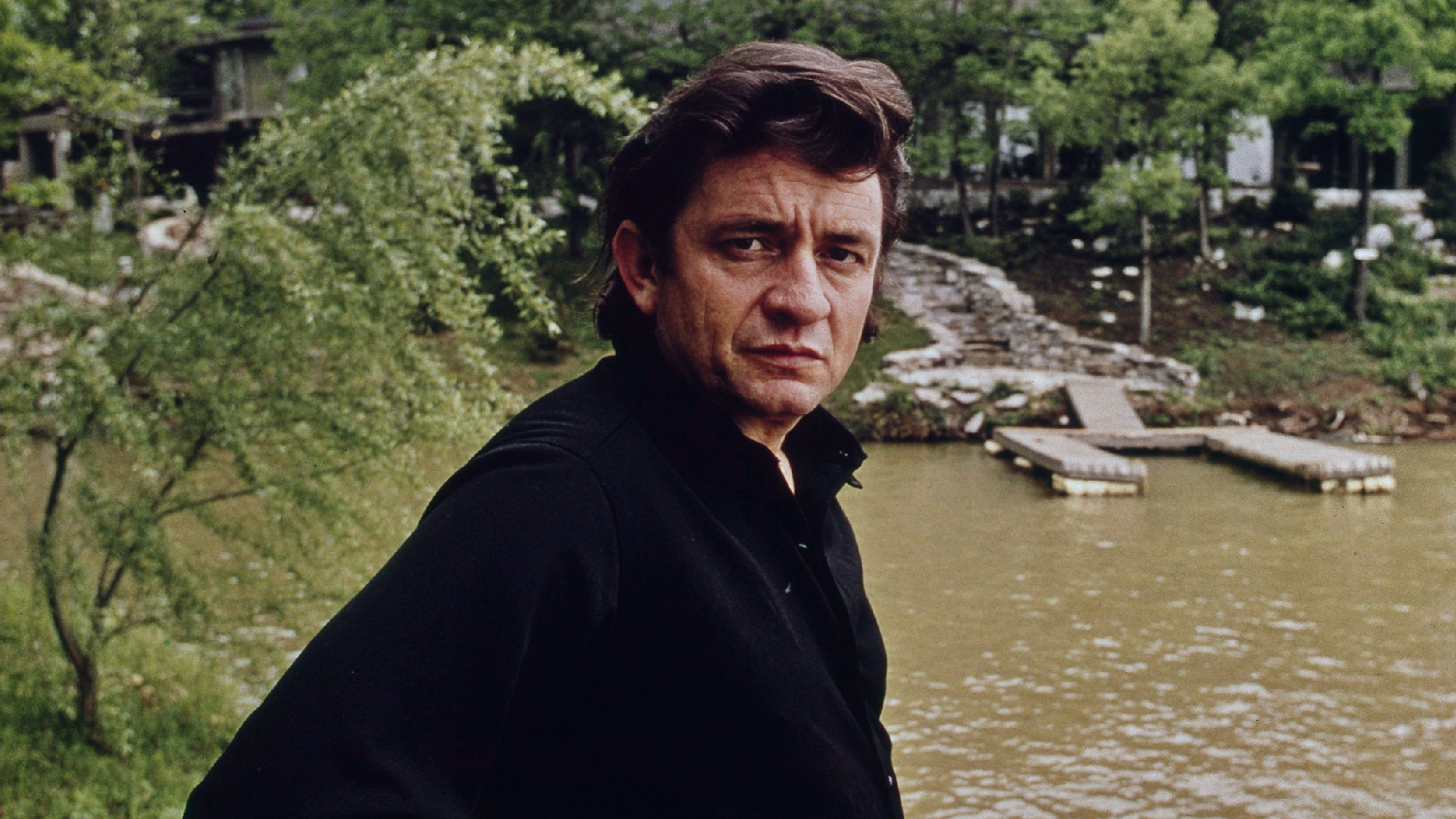
Photo by Bettmann/Getty Images
Leave a Reply
Only members can comment. Become a member. Already a member? Log in.