Your cart is currently empty!



How John Mulaney Gave New Life to a 1985 Wang Chung Song About Los Angeles
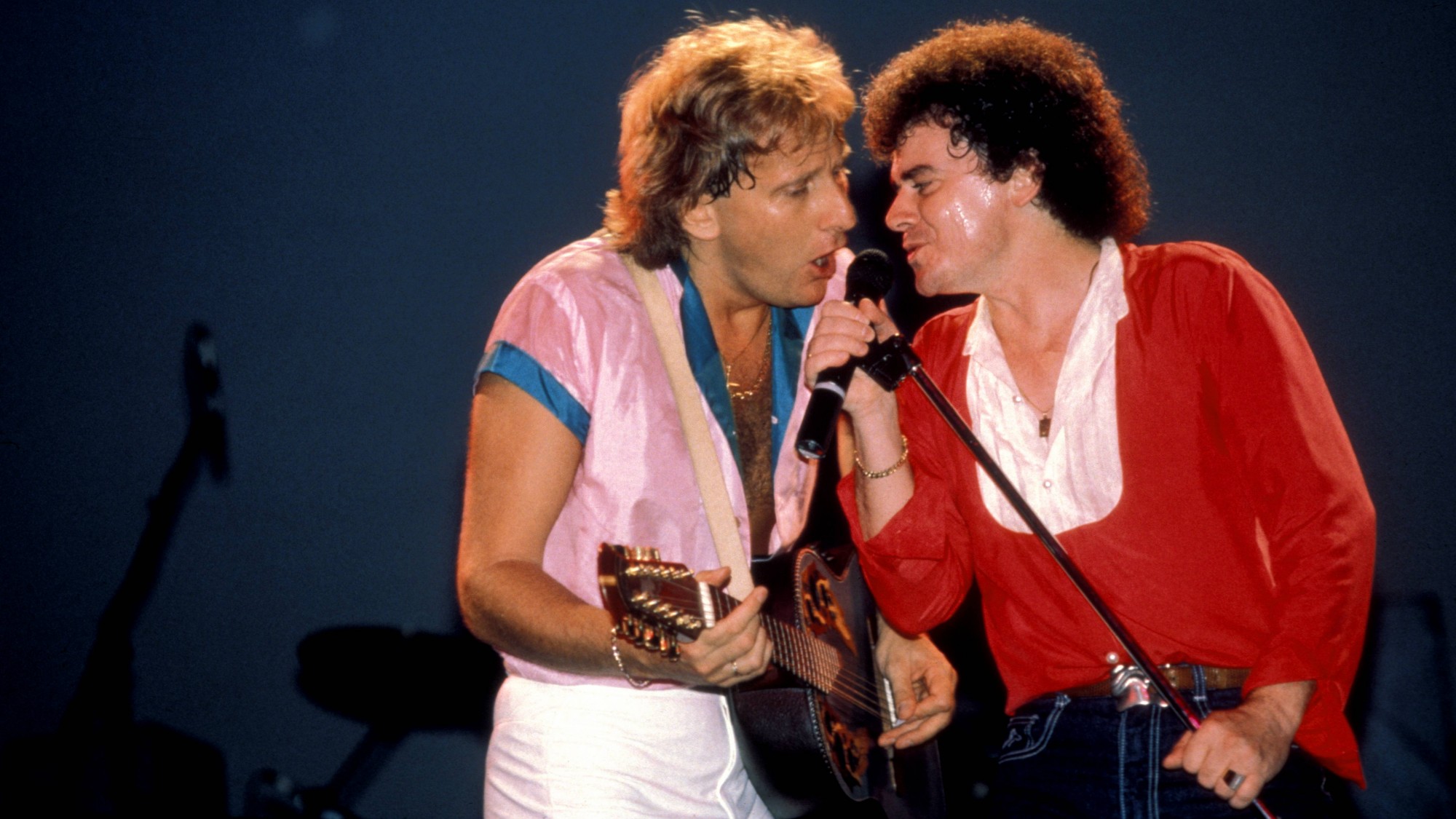
Wang Chung is an interesting band. They are an English new wave group with a Chinese name and a song about Los Angeles. Truly global.
Videos by American Songwriter
Bassist and keyboardist Nick Feldman said his bandmate, singer Jack Hues, came across the phrase “Huang Chung” in Jonathan Cott’s book of conversations with German electronic composer Karlheinz Stockhausen.
Hues explained why he chose the name on the Kickin’ It Old School blog in 2011: “The meaning in Chinese is paraphrased as Yellow (Huang) Bell (Chung), a symbolic bell that rings at the center of the universe.”
The perfect or fundamental pitch of the natural world.
On one of their biggest hits, “Everybody Have Fun Tonight”, the duo uses their band name as a verb: “Everybody Wang Chung tonight.” Let your imagination run wild as to its meaning in this context. To confuse matters more, they began as Huang Chung but changed the spelling to Wang Chung on their second album Points On The Curve.
It was a breakthrough album in 1984 and featured the hit “Dance Hall Days”. And they followed its success by writing a film soundtrack. A risky move for a pop band.
“To Live And Die In L.A.”
Director William Friedkin became a Wang Chung fan after listening to Points On The Curve. He liked it so much that he included the album track “Wait” to play over the closing credits of his 1985 neo-noir thriller To Live And Die In L.A., starring William Peterson, Willem Dafoe, and John Turturro. (For those gripped by Severance, you’ll recognize Turturro as Irving Bailiff.) Friedkin also hired Wang Chung to complete the soundtrack.
The movie is based on a 1984 novel of the same name, written by Gerald Petievich, a former U.S. Secret Service agent. However, Friedkin didn’t want a theme song. But he changed his mind after Feldman and Hues gave him a copy of “To Live And Die In L.A.”. It wouldn’t be the last time it was used as theme music, either.
“In the heat of the day, every time you go away
I have to piece my life together
Every time you’re away
In the heat of the day.”
John Mulaney‘s Resurgence
In 2024, comedian John Mulaney debuted his limited talk show on Netflix called John Mulaney Presents: Everybody’s In L.A. Six episodes aired from May 3 to May 10, with its premise being a freewheeling topical show on Los Angeles.
So, he picked “To Live And Die In L.A.” to use as the show’s intro music. The talk show features the Chicago-born Mulaney exploring the quirks of his adopted hometown. He also said in a monologue that Los Angeles is “a city that confuses and fascinates me.”
His show returned to Netflix in 2025 with a new name, Everybody’s Live With John Mulaney. In some ways, Wang Chung’s song puts to music the uncertainty of being lost inside a dense and beautifully strange place.
You can feel the anxiety of sprawling traffic, collaged neighborhoods, and sky-high cost of living. Los Angeles may be the place to pursue dreams, but “To Live And Die In L.A.” describes an “invisible vice.” Being stuck. The opposite of how one feels chasing a dream. Instead of running away to paradise, the narrator feels like he’s wasted his life in the city.
“In the dark of the night, every time I turn the light
I feel that God is not in Heaven
In the dark of the night
The dark of the night.”
A Mid-Century Modern Talk Show
Mulaney’s show, at times, feels like a jazz performance. With his sidekick Richard Kind, Mulaney intersperses each show’s blueprint with loose improvisation.
The variety talk show is a throwback medium for Mulaney to oversee guests, musical acts, pedestrian interviews, and phone calls. There’s a retro vibe to the whole thing, yet it feels unpredictably modern at the same time.
That’s pretty similar to Wang Chung’s music. Songs from the 1980s immediately recall the big hair, bigger suits, and bright patterns of the neon decade. But in 1985, Wang Chung’s synth-pop also sounded new. As synthesizers and drum machines became more ubiquitous, they merged krautrock with rock, dance, and pop music.
Still, that’s how Mulaney’s show feels. Like watching The Jetsons show us the space age in the 1960s. Or The Flintstones shot into the future.
“I wonder why I live alone here
I wonder why we spend these nights together
Is this the room I’ll live my life forever?
I wonder why in L.A.
To live and die in L.A.“
Photo by John Atashian/Getty Images


Leave a Reply
Only members can comment. Become a member. Already a member? Log in.