Your cart is currently empty!



On This Day in 1953, a Future Country Legend Became the First American To Learn of Joseph Stalin’s Death
On this day (March 5) in 1953, Soviet leader Joseph Stalin died. Air Force Staff Sergeant Johnny Cash was the first American to get the news. He learned of the Soviet leader’s death through an intercepted message. He quickly sent the information up the chain of command, which ended with President Eisenhower.
Videos by American Songwriter
Initially, Cash intercepted a message stating that Stalin was in poor health. Over the next few hours, he intercepted further updates on the Soviet leader’s health. Hours later, he learned that Stalin had died, according to Far Out Magazine. He immediately relayed the message to his superiors, kicking off a new era of the Cold War.
Today, Cash is remembered as an iconic country singer and songwriter. He wrote, recorded, and released some of the best-known songs in the genre’s history. He was also instrumental in the formation of the Highwaymen and was a beacon of empathy in an increasingly uncaring world. However, some may not realize that he also spent time in the United States Air Force, or how important that time was for him and the future of American music.
The Importance of Johnny Cash’s Military Service
There’s a chance that Johnny Cash never would have risen to fame if he hadn’t joined the Air Force. Two things that were important to his legacy formed while he was overseas–his name and one of his biggest hits.
Reportedly, his name was J.R. Cash. However, the recruiter needed a full first name for the enlistment paperwork. So, he chose to go by John. He would remain John R. Cash throughout his service. Then, he returned to the United States and started recording for Sun Records. The label’s president, Sam Phillips, called him Johnny. When he released his first album, Johnny Cash with His Hot & Blue Guitar, the name was set in stone.
Shortly after enlisting in the Air Force, Cash was deployed to Landsberg, West Germany. There, he worked as a Morse code operator intercepting Soviet transmissions, according to the Department of Defense. When he wasn’t monitoring the airwaves, he was playing with his first band, the Landsberg Barbarians. While deployed, he watched the 1951 film Inside the Walls of Folsom Prison and realized how much military life and prison had in common. This inspired him to write “Folsom Prison Blues.”
In short, Cash’s military service allowed him to be part of one of the most significant historical events of the era. It also helped shape the artist who would one day become the Man in Black.
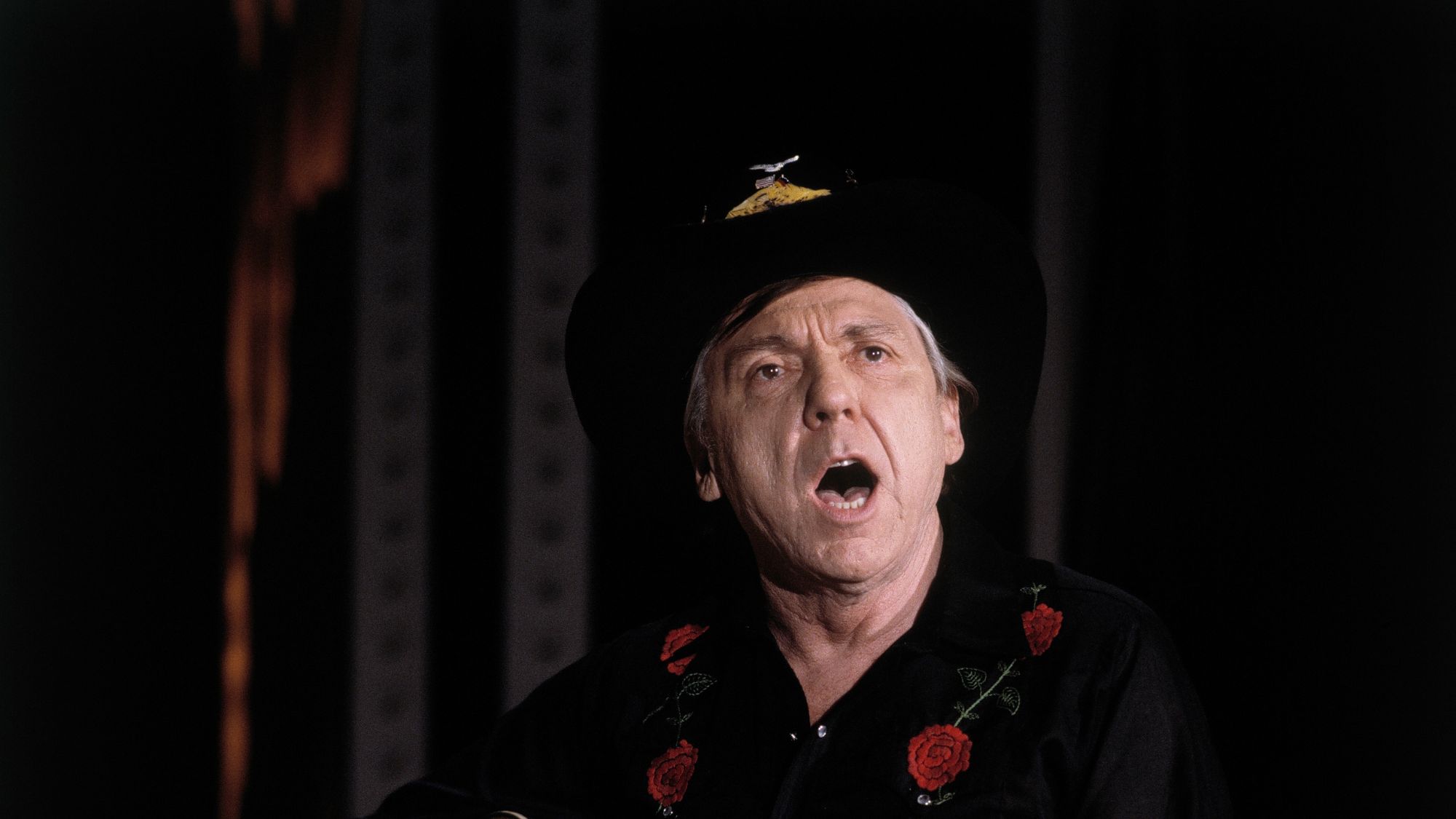
Featured Image by CBS Photo Archive/Getty Images





Leave a Reply
Only members can comment. Become a member. Already a member? Log in.