On the surface, life as we know it has changed drastically in the last 100 years. There is no need to express why that is, as the differences are stark and quite apparent. However, what often gets forgotten in the growth of the human race is the lack of growth internally. In other words, pain, joy, and all their counterparts have remained the same. That being said, the messages of these three 100-year-old country songs have remained absolutely timeless.
“Prisoner’s Song” by Vernon Dalhart
By the end of the 1920s, Vernon Dalhart had become one of the first commercially successful and well-known country musicians. While there are many factors that led to the accomplishment, there is one song that ultimately helped him get there, and that was the 1924 single, “Prisoner’s Song”.
Videos by American Songwriter
Aside from the success this single garnered, the lyrics and tropes utilized in the song are timeless. In the song, Dalhart sings primarily about one of the most common human experiences: Loneliness. You might not be a prisoner or have been to prison, but it’s easy to digest Dalhart’s words and have them strike an empathetic chord within you.
“Oh, Death” by Lloyd Chandler
The true timestamp and author of “Oh, Death” is not entirely solidified. However, reports suggest that the original author was Free Will Baptist preacher Lloyd Chandler. Reportedly written in 1916, and originally titled “A Conversation with Death,” Chandler’s tragic single is about the inevitable: Death, and the fear of it.
Popularized by Dock Boggs around 1927, other musicians who have covered this timeless self-lamentation include Ralph Stanley, Vera Hall, Rhiannon Giddens, and Sam Amidon. Thematically, this is still relevant, and unless someone finds the magic potion to immortality, it always will be.
“Will The Circle Be Unbroken” by Ada R. Habershon
“Will The Circle Be Unbroken” is arguably the cornerstone of all country songs. Originally written by Ada R. Habershon in 1907, this foundational tune became what it is when The Carter Family released their rendition of it in 1935. Since then, it has been covered by more country musicians than we can count.
Other than the embedded tradition, what else makes this song so timeless is its themes of hope, grief, loss, family, faith, and the reconnection of the afterlife. It is a quintessential Gospel hymn, and its notions still exist in every corner of life, religious or not.
More The List
-

RIO DE JANEIRO, BRAZIL – MAY 04: Madonna performs onstage during "The Celebration Tour: at Copacabana beach on May 04, 2024 in Rio de Janeiro, Brazil. (Photo by Kevin Mazur/WireImage for Live Nation) -
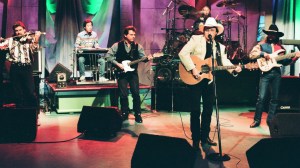
THE TONIGHT SHOW WITH JAY LENO — Episode 553 — Pictured: Musical guest Mark Chesnutt performs on October 12, 1994 — (Photo by: Margaret Norton/NBCU Photo Bank/NBCUniversal via Getty Images via Getty Images) -
Photo by Michael Ochs Archives/Getty Images -

INGLEWOOD, CALIFORNIA – JANUARY 30: (L-R) Flea, Chad Smith, John Frusciante, and Anthony Kiedis of Red Hot Chili Peppers perform onstage during the FIREAID Benefit Concert for California Fire Relief at The Kia Forum on January 30, 2025 in Inglewood, California. (Photo by John Shearer/Getty Images for FIREAID) -

NEW YORK – CIRCA 1965: Country singer Johnnie Wright poses for a portrait circa 1965 in New York City, New York. (Photo by Bruno of Hollywood/Michael Ochs Archives/Getty Images) -
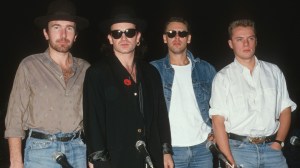
The Edge, Bono, Larry Mullen and Adam Clayton of U2 (Photo by Ron Galella, Ltd./Ron Galella Collection via Getty Images)