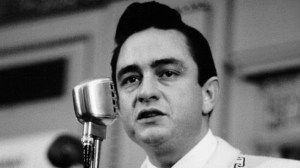
On this day (October 19) in 1945, Jeanne Carolyn Stephenson was born in the small West Texas town of Anson, roughly 25 miles north of Abilene. After getting married as a teenager, she became known as Jeannie C. Riley, whom you likely recognize from her international 1968 hit “Harper Valley P.T.A.” Although country-pop singer Billie Jo Spears recorded a version of the Tom T. Hall-penned song around the same time, it’s Riley’s rendition that remains etched into the pillars of country music history. Released in August 1968, the song topped both the U.S. country and pop charts, making Riley the first female artist ever to accomplish that feat. She would hold that title for 13 years until Dolly Parton did the same in 1981 with “9 to 5”.
Riley became a born-again Christian in the mid-1970s, pivoting to gospel music. Today, we’re highlighting her remarkable life and legacy in honor of her 81st birthday.
Videos by American Songwriter
Early Life
The daughter of a car mechanic and a nurse, Jeannie C. Riley spent part of her early childhood in a house with no foundation.
Vowing to lead a life far bigger than her rural Texas hometown, Riley often prayed she would one day make it as a singer in Nashville. She spent much of her free time memorizing country music, singing the songs of Patti Page and Connie Smith into her hairbrush.
Initially reluctant to sing for an audience, Riley gave in as a teenager and decided to perform at the local Jones County Jamboree an hour before the program started. She gave her father quite the shock when she took the stage to sing Ray Price’s “My Shoes Keep Walking Back to You” and Jean Shepard’s “If You Were Losing Him to Me What Would You Do?”
While still in high school, she married Mickey Riley, giving birth to their daughter in 1966. One day, a letter arrived in the mail from steel guitarist Weldon Myrick, who had heard Jeannie sing and believed she had what it took to become a star.
She spent her evenings listening to the Grand Ole Opry while washing dishes, her tears falling into the dishwater as she dreamed of a life in Music City. That changed when Mickey came home from work one day and declared, “Start packing your bags, I’ve quit my job. I’m tired of seeing you mope around. We’re moving to Nashville. If we’re ever going to try it, it might as well be now while we’re still young.”
Why Jeannie C. Riley Considers Her Biggest Hit A Mixed Blessing
Upon arriving in Music City, Jeannie C. Riley worked as a secretary for country songwriter Jerry Chestnut, recording demos on the side.
That went nowhere until Shelby Singleton, head of the newly founded Plantation Records, received one of her tapes. Singleton had recently heard a demo of Tom T. Hall’s song “Harper Valley P.T.A.”, and he was sure he had a star-making combination on his hands.
Riley hated it. “It sounded like some soft re-do of [Bobbie Gentry’s 1967 hit] ‘Ode to Billie Joe,’” she recalled in 2013. “I had no interest in it at all.”
Still, she begrudgingly agreed to record it at Columbia Records’ Nashville studio, spitting out the consonants with a venom she’d never known before.
Her genuine frustration helped alchemize “Harper Valley P.T.A.” into a cultural phenomenon. After debuting at number 81 on the pop chart, it jumped to number seven in its second week.
“If I’d cared about it, I’d never been able to sing it that way,” Riley said in 2019. “I needed to be mad and reckless.”
An Overnight Success
Named the Country Music Association’s Song of the Year, “Harper Valley P.T.A.” earned Jeannie C. Riley a Grammy Award for Best Female Country Vocal Performance, along with nominations for Best New Artist and Record of the Year,
“I had no idea that Harper Valley—a song I didn’t want to sing—would have the impact it did on the country, on music or on me,” Riley said. “Once it was out in the world, it took on a life of its own and carried me along with it.”
[RELATED: A Brazen Single Woman Inspired Jeannie C. Riley’s Biggest Hit in 1968]
It wasn’t Riley’s last taste of chart success. Her follow-up single, “The Girl Most Likely”, also cracked the country top 10, along with “There Never Was a Time” (1969), “Country Girl” (1970), and “Oh, Singer” and “Good Enough to Be Your Wife” (1971).
After battling mental health issues and a 1970 divorce (and remarriage and subsequent divorce), Riley recommitted to her Christian faith and pivoted to gospel music in the mid-1970s.
She married childhood friend Billy Starnes in 2012. As of 2019, the couple lived in Brenham, Texas.
Featured image by Keystone/Hulton Archive/Getty Images)
-
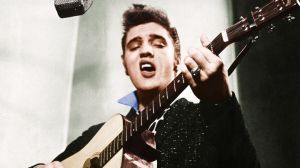
1/1956-Close up of Elvis Presley playing guitar. -
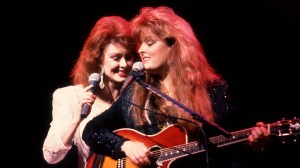
Naomi and Wynonna Judd during The Judds farewell tour. -
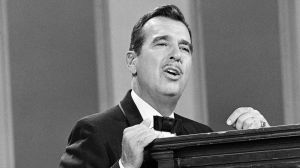
THE DEAN MARTIN SHOW — Episode 15 — Pictured: Tennessee Ernie Ford — (Photo By: NBC) via Getty Images) -
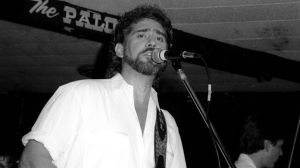
UNSPECIFIED – CIRCA 1970: Photo of Earl Thomas Conley Photo by Michael Ochs Archives/Getty Images -

UNITED STATES – JANUARY 01: NASHVILLE Photo of Alan JACKSON, Alan Jackson performing on stage (Photo by Beth Gwinn/Redferns) -
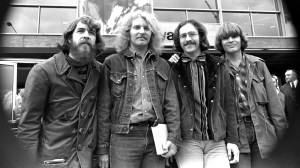
Creedence Clearwater Revival -
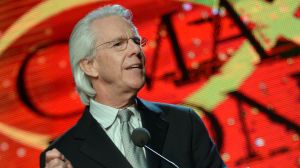
NASHVILLE, TN – Musician Jim Ed Norman speaks onstage during the GMA Honors Celebration and Hall of Fame Induction at the Allen Arena at Lipscomb University on April 29, 2014 in Nashville, Tennessee. (Photo by Rick Diamond/Getty Images for GMA)