On this day (November 5) in 1936, Billy Sherrill was born in Phil Campbell, Alabama. He was one of the handful of producers who helped create the Nashville Sound–a blend of pop and country that dominated the charts and airwaves in the 1960s. Notably, he worked closely with Tammy Wynette throughout her career. He also produced major hits for Charlie Rich. Sherrill also convinced George Jones to record “He Stopped Loving Her Today,” which became one of the greatest country songs of all time.
Sherrill learned to play piano as a child. Initially, he accompanied his evangelist father during revivals. Then, as a teenager, he toured the Southern United States in a series of rock, jazz, and R&B bands. He signed a recording contract with a small label, but saw no real success as a recording artist. Eventually, he decided to take his musical abilities in another direction. In 1962, the 26-year-old Sherrill moved to Nashville and began working for Sam Phillips at his Phillips Recording studios.
Videos by American Songwriter
According to the Country Music Hall of Fame, that position didn’t last long. Phillips sold his Music City studio. However, Sherrill had learned a great deal in his time there. As a result, Epic Records hired him as a staff producer in 1963.
Billy Sherrill’s Early Production Career
Billy Sherrill didn’t immediately become a hot-shot producer at Epic. Instead, the label handed him acts other producers didn’t want to work with. He worked with The Staple Singer and Barry & the Remains in his early days at the label. Then, he began showing potential as a country music songwriter and producer.
When Sherrill arrived in Nashville, producers like Chet Atkins and Owen Bradley had already started developing the Nashville Sound. The foundation of the style was a blend of country and pop, which replaced fiddle and pedal steel with string arrangements and backing vocals. Sherrill used that formula as a starting point. He combined it with layered production that rivaled Phil Spector’s “wall of sound.” While genre purists sneered at the sound, nearly everything he touched turned to gold.
In 1966, he co-wrote and produced “Almost Persuaded” for David Houston. It was the first of many chart-toppers Sherrill produced for the young singer. Notably, he co-wrote and produced Houston’s 1967 No. 1 single “My Elusive Dreams,” which featured an up-and-coming artist named Tammy Wynette.
Sherrill and Tammy Wynette
When Tammy Wynette arrived in Nashville, she tried and failed to get a deal with nearly every label in town. Even smaller labels like Kapp and Hickory turned her away. Then, she auditioned for Billy Sherrill at Epic Records. He saw the star she could become. He helped her write and select songs. Moreover, he helped shape her public image.
Her 1966 debut single, “Apartment No. 9,” reached No. 44 on the country chart. The next year, she released “Your Good Girl’s Gonna Go Bad,” which peaked at No. 3. Then, Wynette sang with David Houston on “My Elusive Dreams.” Her next solo single, “I Don’t Wanna Play House,” became her first No. 1.
Sherrill worked with Wynette throughout her career. Most notably, they co-wrote her signature hit “Stand by Your Man.”
Billy Sherrill and the Greatest Country Song of All Time
George Jones signed a deal with Epic Records in 1972 and began working with Billy Sherrill. After more than a decade of hits, Jones’ singles started slipping down the charts by the end of the 1970s. By 1980, he hadn’t had a top 10 hit in three years. It had been six years since his last No. 1.
Sherrill knew that “He Stopped Loving Her Today,” written by Bobby Braddock and Curly Putman, would turn things around for Jones. However, he refused to record the song. He famously said, “Nobody’ll buy that morbid son of a b**ch.” Sherrill didn’t back off, though. Instead, he kept pushing Jones to record the song for more than a year.
Eventually, Jones agreed to record the track. He released it as the lead single from I Am What I Am in April 1980. By July, it was at No. 1 on the country chart. It also won a Grammy and was the ACM Single and Song of the Year. It won Song of the Year at the CMA Awards. The track breathed new life into the legend’s career and is widely regarded as one of the greatest country songs of all time.
Featured Image by Michael Ochs Archives/Getty Images
-

NASHVILLE, TENNESSEE – Delbert McClinton performs onstage during the 2019 Americana Honors & Awards at Ryman Auditorium on September 11, 2019 in Nashville, Tennessee. (Photo by Terry Wyatt/Getty Images for Americana Music Association) -

Mark Roberts performing with Catatonia -
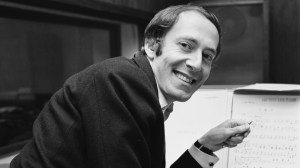
English composer John Barry (1933 – 2011) records the theme song for the James Bond film 'You Only Live Twice', London, UK, April 1967. (Photo by Evening Standard/Hulton Archive/Getty Images) -
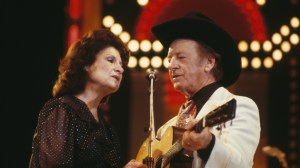
Johnnie Write and Kitty Wells -
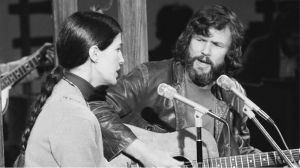
MAC DAVIS: I BELIEVE IN MUSIC — Aired 11/24/1973 — Pictured:(l-r) Singer Rita Coolidge, Kris Kristofferson (Photo by NBCU Photo Bank/NBCUniversal via Getty Images via Getty Images) -
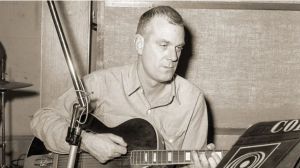
Nashville session guitarist Ray Edenton, November 3, 1926 — September 21, 2022 (Photo courtesy of the Country Music Hall of Fame via Vintage Guitar magazine)