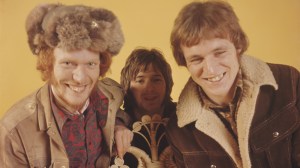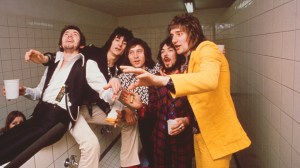
On this day (November 3) in 1965, Johnnie Wright was at the top of the country chart with “Hello Vietnam.” It spent three weeks at No. 1, giving Wright his biggest hit. Later, it was used as the opening theme of the classic Stanley Kubrick-helmed war film Full Metal Jacket. Notably, the single features guest vocals from his wife and fellow country star Kitty Wells.
The United States military’s growing involvement in the Vietnam War inspired dozens of anti-war songs across multiple genres. For instance, songs like Tom Paxton’s “Lyndon Told the Nation” and Barry McGuire’s “Eve of Destruction” were also released in 1965. The late ’60s and early ’70s brought classics like “Fortunate Son,” “War Pigs,” and “Give Peace a Chance.”
Videos by American Songwriter
Pro-war songs were less common in the Vietnam era, most of which were hits for country artists. For instance, Merle Haggard’s “The Fightin’ Side of Me” was a No. 1 single in 1970. Before that, he landed a massive hit with “Okie from Muskogee,” which became a conservative anthem. Like “Okie,” most of the conservative-leaning songs of the era were as much about being anti-hippie or anti-protest as they were about being pro-war.
Wright’s “Hello Vietnam,” penned by Tom T. Hall, stands out from other pro-war songs in that it doesn’t have any venom for the “other side.”
Looking at Johnnie Wright’s Pro-War Chart-Topper
Johnnie Wright didn’t need to tap into the Vietnam-era culture war to score a major hit. Instead, this song hits on the heartbreak young couples across the United States were facing. The track’s opening lines sum up its emotional hook: Kiss me goodbye and write me while I’m gone. / Goodbye, sweetheart. Hello, Vietnam. / America has heard the bugle call.
“Hello Vietnam” does share one major commonality with other pro-war songs of the era. Near the end of the song, Wright sings about spreading communism. One line states that stopping communism in Vietnam is the war’s main objective. Then, the lyrics evoke Eisenhower’s “Domino Theory”: That fires we don’t put out will bigger burn / We must save freedom now at any cost. / Or someday our own freedom will be lost.
Dwight D. Eisenhower justified early American involvement in the ongoing conflict in Vietnam with this “Domino Theory.” He believed that if the communist forces won in Vietnam, Laos, Cambodia, and other surrounding Southeast Asian countries would fall to communism. This also suggested that Soviet and Chinese influence would grow globally. Why, if the commies won in Vietnam, it would be no time before America was a communist country and we’d all be speaking Chinese or Russian.
[RELATED: Every Vietnam War Veteran Alive Remembers These 3 Must-Hear Anthems From 1965]
The Domino Theory led Lyndon Johnson to send ground troops to Vietnam in March 1965. Many supported the war effort because they feared the spread of communism.
After a communist victory, North and South Vietnam reunified in 1976 to form the Socialist Republic of Vietnam. While this led to numerous crimes against humanity, it is important to note that the United States is not a communist nation.
Featured Image by David Redfern/Redferns/Getty Images
-
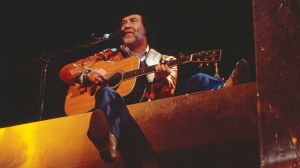
Disco, Musiksendung, Deutschland 1971 – 1982, Sendung vom 28. Mai 1977, Gaststar: Thomas Tommy Overstreet. (Photo by Arthur Grimm/United Archives via Getty Images) -
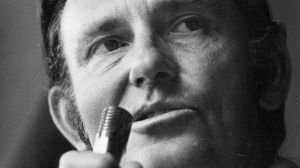
JUN 1972, JUN 26 1972, JUN 27 1972; Charlie Walker sings his biggest hit song, "Little Old Wine Drinker Me." Walker is a regular performer on the Grand Ole Opry's stage for country music, Nashville, Tenn.; (Photo By John G. White/The Denver Post via Getty Images) -

NASHVILLE, TENNESSEE – Bill Anderson accepts the ACM Icon Award onstage during the 19th ACM® Honors™ at The Pinnacle on August 19, 2026 in Nashville, Tennessee. (Photo by Jason Kempin/Getty Images for ACM) -
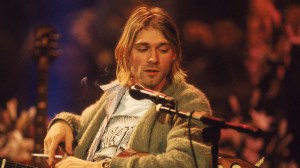
Nirvana frontman Kurt Coban during their MTV Unplugged performance -
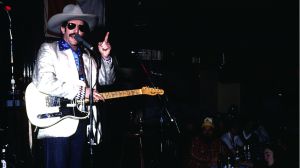
LAS VEGAS, NV – Singer Kinky Friedman on stage on November 5,1979 in Las Vegas , Nevada. (Photo by Santi Visalli/Getty Images) -

Sgt Barry Sadler portrait with a guitar in 1966. (Photo by Michael Ochs Archives/Getty Images)