
Townes Van Zandt, Hank Williams Jr., and Stevie Ray Vaughan all made their guitars sing the blues. However, none of their careers would likely have existed without Lightnin’ Hopkins. Today, we’re taking a look at the life of the country-blues icon, born on this day (March 15) in 1912 in Centerville, Texas.
Videos by American Songwriter
Lightnin’ Hopkins Truly Lived the Blues
At age 8, Samuel John “Lightnin’” Hopkins fashioned his first guitar out of a cigar box and chicken wire strings. Two years later, he was playing with the “Father of Texas Blues” himself, Blind Lemon Jefferson. They had met at a church picnic in Buffalo, Texas, and it was Jefferson who encouraged a young Hopkins to stick with music.
“Boy,” the blues icon predicted, “you keep that up, you gonna be a good guitar player.”
As a teen, he would “wander up” on little blues joints in neighboring towns on Saturday nights, where he would hone his skills. Working the fields by day, he played dances and jukes around the area by night with his cousin, blues singer Texas Alexander.
[RELATED: 3 Eternal Songs from Blues Master Lightnin’ Hopkins]
“You know the blues come out of the field, baby,” Hopkins said, according to Guitar Player. “That’s when you bend down, pickin’ that cotton, and sing, ‘Oh, Lord, please help me.’”
Breaking Out
His career was interrupted by a mid-1930s stint in Houston’s County Prison Farm. By 1946, he and Alexander had made their way to Houston, where Lola Anne Cullum of Aladdin Records happened upon him singing on the Third Ward’s Dowling Street. In no time, Lightnin’ Hopkins was a signed Aladdin artist.
He would record for more than 20 different labels throughout his career, including Houston’s Gold Star Records. In 1959, Hopkins’ partnership with legendary producer Sam Charters got his music noticed by a mainstream white audience.
Switching to an acoustic guitar, he became a leading figure of the 1960s folk-blues revival, playing Carnegie Hall with Pete Seeger and Joan Baez. He opened for bands like the Grateful Dead and Jefferson Airplane, even performing for Queen Elizabeth II in the 1970s.
Recording more than 85 albums, Hopkins’ major hits included “Shotgun Blues”, which hit No. 5 on the Billboard charts in 1950, and 1959’s “Penitentiary Blues.”
Lightnin’ Hopkins died of esophageal cancer on Jan. 30, 1982, at age 69. Fellow Texas blues musician Johnny Winter recalled him as ” a real cool guy.”
“He could do big shows and then go out and play on the corner or on a bus or in a little juke joint. It didn’t seem to bother him a bit,” Winter said. “He could go from acoustic guitar to electric guitar or from playing by himself to playing with a band. Lightnin’ was a real blues guy.”
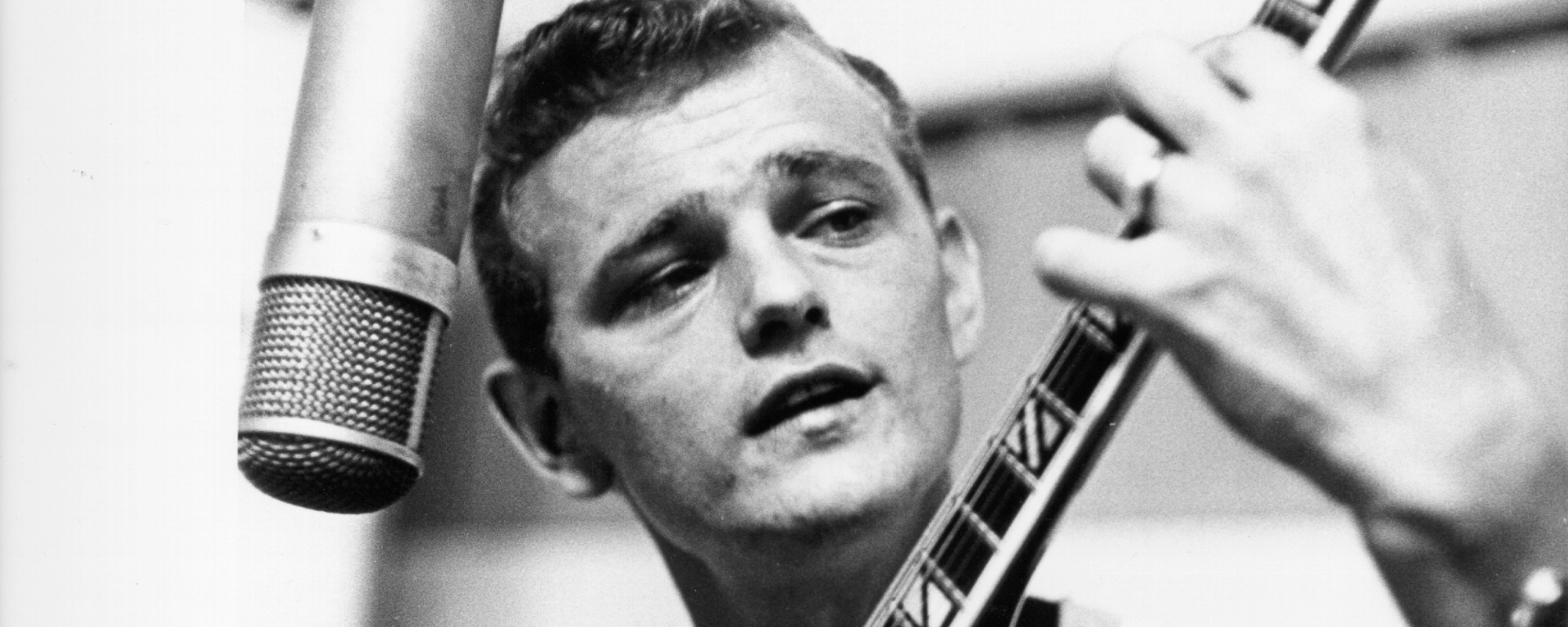
Featured image by Michael Ochs Archives/Getty Images







Leave a Reply
Only members can comment. Become a member. Already a member? Log in.