
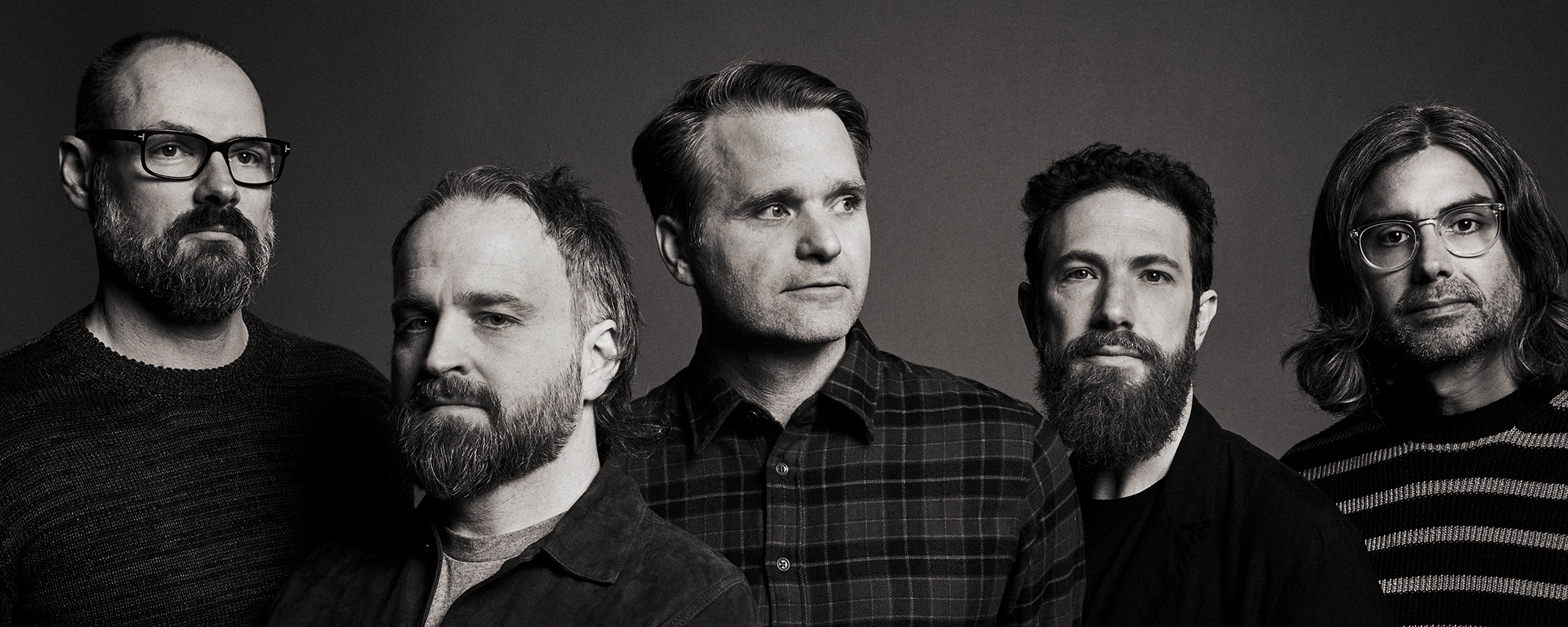
As for the craft itself, Gibbard usually writes either in his loft apartment near Seattle’s Capital Hill or at Death Cab for Cutie’s practice space. Due to the fact that the latter has no windows, it’s dire, but also ripe for introspection. The very same building where Walla’s Hall of Justice studio was formerly housed and where Nirvana’s Sub Pop debut Bleach was recorded nearly 20 years ago, Gibbard proudly describes it as “this shitty triangular building in this neighborhood north of downtown Seattle.”
Videos by American Songwriter
That working class location matches Gibbard’s self-described “working class approach to songwriting.” Although he’s prone to taking breaks in writing, specifically when he gears up for a new album release or touring initiative, he has little trouble getting to work when the time is right. “I kind of just tell myself, ‘OK…this month I’m working on Death Cab songs,’” he says. “So I get up and go running or whatever and spend the day working on something. And more times than not it’s a failed endeavor.”
“You will fail more times than you succeed,” he announces. “But I think you need those failed endeavors. During our first few records, I would just kind of wait until I felt like writing. I got some pretty good songs that way, but I firmly believe that being a writer or artist in any capacity, you have to flex that muscle. You have to kind of go to work every day and try to do what you do. And as crazy as it is for me to say out loud, I am a professional songwriter and singer, and this is what I do for a living. I get paid to do this, and I should treat this as such. It is a job…and it’s a difficult job. You have to travel all the time and be away from your loved ones. You have to go through crippling self doubt, and once in a while, that perfect song comes and it is like the best day of your life. And then the next day it starts all over again.”
Unlike a lot of bands, Death Cab for Cutie was in the unique situation of being a successful touring band with an impressive number of album sales-not to mention Gibbard’s one-off, gold certified collaboration with Jimmy Tamborello of Dntel as Postal Service-when it signed to Atlantic Records in 2004. Describing the arrangement, Gibbard explains, “Atlantic has been entirely hands-off from the beginning with us. Even with Plans, we didn’t send them demos. This was all stuff that we had been able to negotiate. We would take suggestions, but we still stuck to our guns and made the record that we wanted to make. Of course, having a record that’s approaching platinum to our credit, in this contemporary environment, and counting all of the records we sold on our own leading up to Plans…they’ve realized not to mess with a good thing.”
“Of course, if this record totally tanks and they pick up an option for a third record, maybe we could be in a different situation,” he admits. “But I feel very fortunate. They’ve been pretty fantastic. We don’t really have any complaints. They’ve been treating us with a level of respect that I think we deserve. We make our own decisions. We’re adults who have been doing this long enough, and they recognize that. There’s nothing about the experience to date that’s stunk like a rotten fish for me. I think we made the right decision.”
As for advice on how you can turn your own band into the next DCfC, Gibbard has little insight, believe it or not. “Because I live in Seattle and we’re pretty much a band of the people, we go out to see our friends play and stuff. I’ve been approached by people from time to time who ask ‘How do we do it?’ And I always feel like I’m stumped for an answer. We just found ourselves in a situation where people just liked our band, and we worked at it for a long time.”





Leave a Reply
Only members can comment. Become a member. Already a member? Log in.