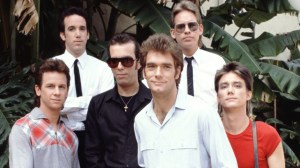
Those who have followed Eric Clapton for a while likely know him for his contributions to rock and blues. However, if you know his story, you’re also no stranger to Clapton’s personal battles with addiction.
Clapton actually revealed that, between 1973 and 1981, his addictions especially impacted him musically. He explains that this was due to “the state” he was in at the time of recording these projects.
Videos by American Songwriter
“I would like to have gone back and extracted all of the alcohol out of my body,” he said in a 1989 interview. “I can listen to that album and say, ‘Well, there’s coke on that one. There’s brandy on that.’ I can hear the state that I’m in.”
He even admitted, “It’s a little embarrassing from about 1973 to about 1981, I was engaging in a lot of stuff far beyond what my health could allow.”
Clapton’s solo albums that were released during this time included 461 Ocean Boulevard, There’s One In Every Crowd, No Reason To Cry, Slowhand, Backless, and Another Ticket, if you were curious.
Eric Clapton’s Journey to Sobriety
Real fans of the guitarist know that Clapton’s drug use really started around the late 60s. Around this time, he played for several different bands, including Cream, under which he released four albums.
In 1971, things escalated to a new level of concern when Clapton collapsed onstage during a benefit concert. At the time, he was in the early stages of heroin withdrawal. He did stop using during his relationship with Pattie Boyd in the 70s, as Transcend Clinic reports. However, Clapton was quick to substitute the drugs for alcohol.
Then, in 1986, with model Lori del Santo, Clapton welcomed the birth of his son, Conor. It was after this he realized he needed to really make a change.
In his autobiography, he writes, “By that time it had begun to sink in that I was a father, and that it was time for me to grow up. I considered all my previous irrational behavior to have been reasonably excusable because it had been conducted with consenting adults. Whereas with this tiny child, who was so vulnerable, I suddenly became aware that it was time to stop f***ing around.”
Since seeking treatment in 1987, Clapton has embraced sobriety fully, even after enduring the death of his four-year-old in 1991. He shared in 2007 that he has no regrets, except for what his addictions might have taken from him musically.
“I don’t know that I can honestly regret any of it safely,” he told NPR, “Because it’s brought me to where I am. My life would not be the same, and I would not have what I have today, were [it not] for the fact that I went through all this stuff.
But I suppose if I do have any regrets, it is that musically I lost something there.”
Photo by: Brian Rasic/Getty Images
More Features
-
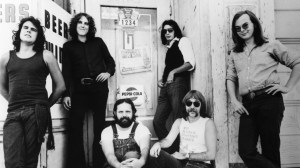
1972: (L-R) Jim Hodder, David Palmer, Denny Dias, Donald Fagen, Jeff "Skunk" Baxter and Walter Becker of the rock band "Steely Dan" pose for a portrait in 1972. (Photo by Michael Ochs Archives/Getty Images) -
Photo by Michael Ochs Archives/Getty Images -
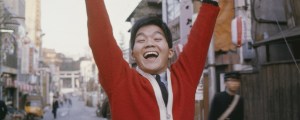
Kyu Sakamoto. (1941-1985) Japanese singer, best known outside Japan for his international hit song "Ue o Muite Aruko" (known as "Sukiyaki" in English-speaking markets), which was sung in Japanese and sold over 13 million copies. It reached number one in the United States Billboard Hot 100 in June 1963, making Sakamoto the first Asian recording artist to have a number one song on the chart. (Photo by Sjöberg Bildbyrå/ullstein bild via Getty Images) -
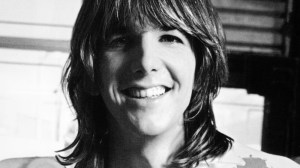
American singer, songwriter and musician Gram Parsons (1946 – 1973), circa 1969. (Photo by Silver Screen Collection/Getty Images) -

NASHVILLE, TENNESSEE – Jo Dee Messina performs during the 2026 CMA Fest at Nissan Stadium on June 05, 2026 in Nashville, Tennessee. (Photo by Taylor Hill/FilmMagic) -
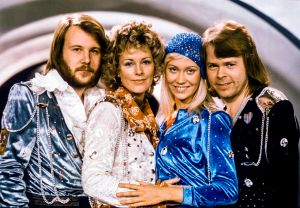
Picture taken in 1974 in Stockholm shows the Swedish pop group Abba with its members (L-R) Benny Andersson, Anni-Frid Lyngstad, Agnetha Faltskog and Bjorn Ulvaeus posing after winning the Swedish branch of the Eurovision Song Contest with their song "Waterloo". – Sweden's legendary disco group ABBA announced on April 27, 2018 that they have reunited to record two new songs, 35 years after their last single. The quartet split up in 1982 after dominating the disco scene for more than a decade with hits like "Waterloo", "Dancing Queen", "Mamma Mia" and "Super Trouper". (Photo by Olle LINDEBORG / TT News Agency / AFP) / Sweden OUT (Photo credit should read OLLE LINDEBORG/AFP via Getty Images) -
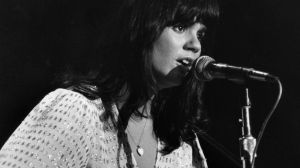
IN CONCERT – Airdate: March 1, 1974. (Photo by ABC Photo Archives/Disney General Entertainment Content via Getty Images) LINDA RONSTADT