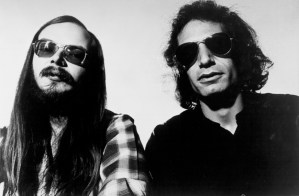
Coming up with a song title can be tricky even when the tune has a traditional verse-chorus format, but it can feel downright impossible when it comes to instrumentals. With no lyrics to pull from, naming instrumental tracks largely depends on capturing a certain feeling, vibe, or, in the case of Booker T. and the M.G.’s, a vegetable that has a funky smell to reflect a funky jam, like “Green Onions”.
When Link Wray came up with the fuzzy, menacing riff that would come to define his career in the late 1950s, he had no immediate ideas for a title. The song itself came from an improvisational jam at a gig in Fredericksburg, Virginia, after the audience requested something to which they could do a specific popular dance called The Stroll. What Wray and his backing band came up with was such an instant hit that the crowd requested it four more times.
Videos by American Songwriter
The still-untitled instrumental found its way to Cadence Records, which was the Everly Brothers’ label. Phil Everly heard Wray’s track and suggested he call it “Rumble” because the dark, foreboding groove reminded him of getting into a street fight. Thus, “Rumble” came to be the title for one of the most influential rock ‘n’ roll instrumentals of all time, which was both a blessing and a curse.
Phil Everly’s Name Suggestion Led “Rumble” to Radio Banishment
Rock ‘n’ roll and the “establishment” butting heads is nothing new these days. But back in the 1950s, the entire genre was much tamer. “Rumble” seems innocent enough now. However, radio stations weren’t quite ready for the threatening, exhilarating feelings that Link Wray’s instrumental evoked. In a testament to just how wholesome that decade was, radio stations worried that playing “Rumble” on-air would whip listeners into a violent frenzy.
If Phil Everly had come up with a different, less sinister-sounding title for Link Wray’s “Rumble”, perhaps radio stations wouldn’t have been so quick to ban it. Still, there was an audience hungry for more of Wray’s pioneering rock ‘n’ roll groove, which kept the track in the Top 20, albeit never at the top of the charts. (Wray also had the stepdaughter of Cadence Records producer Archie Bleyer to thank for the song’s success. Bleyer didn’t care for Wray’s track and didn’t want to release it, but his daughter insisted, saying it reminded her of West Side Story.)
Although “Rumble” is unique in that it’s the only instrumental to be banned from the radio, Link Wray’s groundbreaking, distortion-filled track is one of many instances where a song’s censorship only adds to its allure and popularity. Wray’s distinct guitar tone, which he achieved by poking a pencil through the cone of his amp speaker, went on to influence countless rock ‘n’ rollers, from Pete Townshend to Jimmy Page to Bob Dylan. Phil Everly’s title ended up being the perfect description of such a gritty, grimy track, even if it did cost Wray some spins on the radio.
Photo by CA/Redferns
More Behind The Song
-
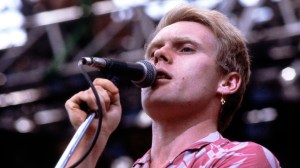
Musician Dave Wakeling, founder of 'The English Beat' performs before thousands of rock fans at the US Festival, May 29,1983 in Devore, California. (Photo by Bob Riha, Jr./Getty Images) -
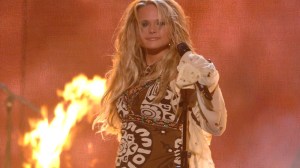
Miranda Lambert performs "Kerosene" at the Madison Square Garden in New York City, New York (Photo by Rick Diamond/WireImage) -
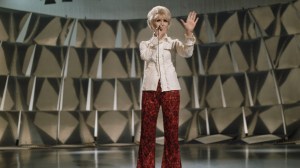
British singer Dusty Springfield (1939 – 1999) performing during a rehearsal for her TV show, 'It Must Be Dusty', at ATV Studios in Borehamwood, Hertfordshire, 1968. (Photo by Keystone/Hulton Archive/Getty Images) -

NITED STATES – JANUARY 01: Photo of Joe COCKER; Joe Cocker performing on stage (Photo by Robert Knight Archive/Redferns) -
THE TONIGHT SHOW STARRING JOHNNY CARSON — Pictured: James Young of the musical guest Styx performs on March 12, 1991 — (Photo by: NBCU Photo Bank/NBCUniversal via Getty Images via Getty Images) -
UNITED STATES – MAY 09: Photo of Bob DYLAN; performing live onstage at the benefit for ousted Chileans: Felt Forum, New York (Photo by Steve Morley/Redferns) -

NEW YORK: Janis Ian performs live on stage in New York in 1975 (Photo by Richard E. Aaron/Redferns)