In the smoke-and-mirrors world of the music industry, things are rarely exactly as they seem. Though a major commercial success might seem like something any band would be ecstatic over, The Doors frontman Jim Morrison had much different feelings about one of the band’s biggest hits, “Hello, I Love You”.
The California rock band released what would become a major pop single on their third studio album, Waiting For The Sun. The track topped the charts in the United States and Canada and enjoyed Top 20 success in the United Kingdom, South Africa, and New Zealand, and throughout Europe. In terms of mainstream successes, “Hello, I Love You” was the band’s next big follow-up to “Light My Fire”.
Videos by American Songwriter
For Elektra founder Jac Holzman, “Hello, I Love You” came with a sigh of relief. With Morrison growing increasingly more erratic, Elektra was understandably concerned that The Doors as a whole were going off the rails. With another pop hit under their belts, Elektra could breathe easy once more. Morrison, however, did not share that sentiment.
Jim Morrison Initially Disliked The Doors’ “Hello, I Love You”
Compared to other Doors tracks, “Hello, I Love You” was certainly more simplistic and naive in nature. Even Bruce Botnick, The Doors’ studio engineer, described the track as “so teenage.” (That would make sense, too, considering Jim Morrison wrote the song after becoming infatuated with a teenage girl he saw walking down the beach. Social norms, particularly in the world of rock ‘n’ roll, were very weird and absolutely problematic in the 1960s.)
While Morrison might have felt passionate enough about his subject matter when he first wrote “Hello, I Love You”, he grew to resent the fact that Elektra was favoring singles like that over Morrison’s other, moodier works. In Mick Wall’s Love Becomes A Funeral Pyre: A Biography Of The Doors, he described Waiting For The Sun as a “bitter disappointment” and “embarrassment” for Morrison. The track, Wall argued, was perceived by Morrison as “the end of The Doors as a viable vehicle for his boundless talents.”
That “boundless talent” included a lengthy avant-garde number titled “Celebration Of The Lizard”, which Morrison regarded as a “masterwork.” Elektra, of course, disagreed. To put it in the words of Wall, the label told the band there was to be “no more f***ing around.” That included songs about lizards with no real pop sensibility.
“I like the other side better,” Morrison once said about “Hello, I Love You”’s B-side, “Love Street”. “I was hoping they would flip it and play that. But they haven’t. But now that we have got our foot in the door, perhaps they will listen a bit more.”
If the rest of The Doors’ career—and their increasingly off-the-wall releases—were any indication, Morrison was absolutely right.
Photo by Elaine Mayes/Getty Images
More Behind The Song
-
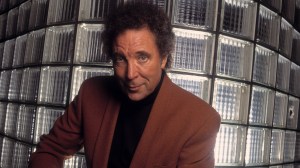
Tom Jones at the Metro in Chicago, Illinois, December 2,1994. (Photo by Paul Natkin/Getty Images) -
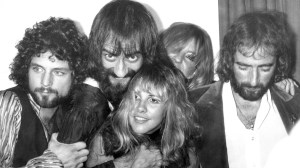
LOS ANGELES – SEPTEMBER 1: Fleetwood Mac (L-R Stevie Nicks, Lindsey Buckingham, Christine McVie, John McVie and Mick Fleetwood) backstage at the Los Angeles Rock Awards on September 1, 1977 in Los Angeles, California. (Photo by Richard Creamer/Michael Ochs Archives/Getty Images) -
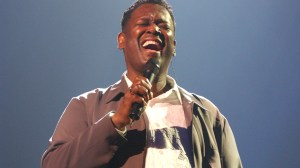
Luther Vandross on stage at the 2002 American Music Awards at the Shrine Auditorium in Los Angeles January 8, 2002 (Photo by KMazur/WireImage) -
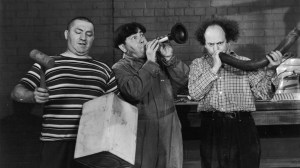
circa 1940: The Three Stooges turn plumbing equipment into musical instruments in a still from an unidentified film. L-R: Curly Howard (1903 – 1952), Moe Howard (1897 – 1975) and Larry Fine (1902 – 1975). (Photo by Hulton Archive/Getty Images) -
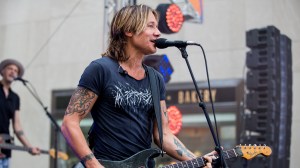
TODAY — Pictured: Keith Urban on Thursday, August 2, 2018 — (Photo by: Nathan Congleton/NBCU Photo Bank/NBCUniversal via Getty Images via Getty Images) -
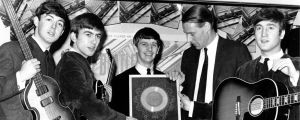
LONDON – 1964: Rock and roll band "The Beatles" poses for a portrait with their producer George Martin. (L-R) Paul McCartney, George Harrison, Ringo Starr, producer George Martin, John Lennon. (Photo by Michael Ochs Archives/Getty Images) -
Musician Dave Wakeling, founder of 'The English Beat' performs before thousands of rock fans at the US Festival, May 29,1983 in Devore, California. (Photo by Bob Riha, Jr./Getty Images)