
These pop songs from the 1970s were successful upon their release, and they’re still popular among listeners today. However, the true meanings behind these songs remain somewhat ambiguous. Let’s dive into a few hit pop songs from the 1970s that seem to defy direct explanation!
“Starman” by David Bowie (1972)
It was the glam rock art pop tune that changed it all for David Bowie. “Starman” was a massive success upon its release, reaching the Top 10 in the UK and propelling Bowie to international fame. And yet, today, “Starman” remains a bit on the ambiguous side. It’s a space-age novelty, of course, but the real narrative behind the song is quite murky. Is it a song about a literal alien who has come to earth to save humanity? Is the “Starman” himself just a metaphor for the rock and roll lifestyle? Is there a spiritual element to this song? Who knows? It’s still a bop.
Videos by American Songwriter
“Dancing Queen” by ABBA (1976)
This disco pop hit from 1976 appears to be pretty direct in its meaning, at least on the surface. It’s a song about a 17-year-old “dancing queen” dominating the dancefloor during the most dance-friendly decade of pop music. Even the members of the band, including songwriter Björn Ulvaeus, have confirmed that “Dancing Queen” is simply about how great it is to be young.
Some listeners, though, believe that the song has darker undertones. The line “You can dance, you can jive / Having the time of your life” is one line that has led some to believe that this song is more of a self-reflective, existential song about how youth slips away quickly, and death comes knocking for us all. Either way, “Dancing Queen” is quite a fun song, even today.
“Pop Muzik” by M (1979)
A lot of early new wave songs had a sort of cryptic ambiguity to them. That’s certainly the case for “Pop Muzik” by M, released in 1979. This entry on our list of difficult-to-decipher pop songs from the 1970s is certainly catchy, but its duality is where the confusion often lies. Robin Scott, the project’s creator, said that the song was a celebration of pop culture, but also a comment of sorts on how capitalism had more or less ruined pop culture.
So, is “Pop Muzik” a celebration of pop music, or a condemnation of then-modern commercialized pop culture? Personally, I think it’s more of a commentary on how pop culture is used as escapism, particularly during the rise-and-grind era of commercialism and climbing the corporate ladder in the 1980s, which was just around the corner when this song dropped.
Consider this line: “Radio, video / Boogie with a suitcase / You’re living in a disco / Forget about the rat race.”
Photo by Richard Creamer/Michael Ochs Archives/Getty Images
More The List
-
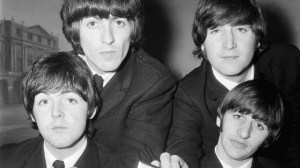
The Beatles pose with their MBEs at a press conference held at the Saville Theatre, London, following their investiture at Buckingham Palace. Top left to right: George Harrison, John Lennon. Bottom: Paul McCartney and Ringo Starr. 26th October 1965. (Photo by Mirrorpix via Getty Images) -

George Michael performing in 1989. (Photo by Jim Steinfeldt/Michael Ochs Archives/Getty Images) -

American singer-songwriter Donna Summer (1948 – 2012) performing on stage, USA, July 1979. (Photo by Michael Putland/Getty Images) -

Photo by Michael Ochs Archives/Getty Images -
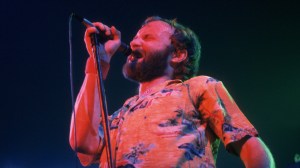
ROSEMONT, IL – JUNE 7: Phil Collins of Genesis performs at the Rosemont Horizon on June 7, 1980 in Rosemont, Illinois (Photo by Paul Natkin/WireImage) -
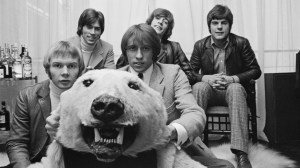
Pop group the Bee Gees posed with a stuffed polar bear in an office in London circa April 1968. Members of the band are, from left, Colin Petersen, Barry Gibb, Maurice Gibb (1949-2003), Robin Gibb (1949-2012) and Vince Melouney. (Photo by Ivan Keeman/Redferns) -

Singer, songwriter and musician Eric Stewart performing with English rock band 10cc, February 1976. (Photo by Michael Putland/Getty Images) -

Patrick Swayze and Jennifer Grey in a scene from the film 'Dirty Dancing', 1987. (Photo by Vestron/Getty Images)