In one of the final interviews before his death in 2003, Johnny Cash declared, “There’s no greater country singer than Marty Robbins.” Quite a bold statement from the Man in Black, but Robbins lived up to it, landing 17 No. 1 singles throughout his nearly four-decade career. But the Glendale, Arizona-born artist also had a knack for storytelling, which he displayed in his 1957 song “The Story of My Life.” On this day (Jan. 25) in 1958, “The Story of My Life” reached No. 1 on the country music charts.
Marty Robbins Enjoyed Crossover Success With This Song
Penned by two songwriting greats—Burt Bacharach and Hal David—our narrator of “The Story of My Life” speaks of a love lost and rekindled: I’ve got to take you for my wife / So the story of my life can start and end with you / The sorrow when our love was breaking up / The memory of a broken heart / Then later on the joy of making up / Never, never more to part.
Videos by American Songwriter
Marty Robbins cut the song in 1957 for his compilation album Marty’s Greatest Hits. It ascended to the top of Billboard’s Hot Country Songs chart, where it remained for four weeks.
Notably, “The Story of My Life” wasn’t only a hit among country listeners. It also reached No. 15 on the pop charts and found substantial success Down Under, reaching No. 2 on the Australian singles chart.
Other Versions of “The Story of My Life”
Just a few months after Marty Robbins’ recording, English singer Michael Holliday put his own spin on “The Story of My Life.” While Holliday apparently wasn’t happy with the end result, UK listeners disagreed, giving the pop singer his first No. 1 hit. Interestingly, the song replaced Perry Como’s “Magic Moments,” also written by Burt Bacharach and Hal David. This made the duo the first songwriters ever to score back-to-back chart-toppers in the United Kingdom.
In particular, Bacharach would go on an impressive run in the ’50s and ’60s, penning hits including “This Guy’s in Love with You” (1968), “Raindrops Keep Fallin’ on My Head” (1969), “(They Long to Be) Close to You” (1970), “Arthur’s Theme (Best That You Can Do)” (1981), and “That’s What Friends Are For” (1986).
Connie Francis, Gary Miller, and Alma Cogan are among other artists to cover “The Story of My Life.”
Featured image by Michael Ochs Archives/Getty Images
-

UNSPECIFIED – Photo of Lynn Anderson (Photo by Michael Ochs Archives/Getty Images) -
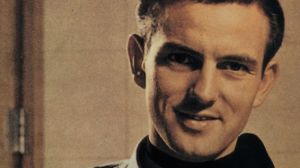
Tommy Collins, September 28, 1930 — March 14, 2000 (Photo courtesy of the Nashville Songwriters Hall of Fame) -

CHEYENNE, WY – Singer-songwriter-actor Kris Kristofferson (b. 6-22-36) performs with his band at the Cheyenne Civic Center on October 29, 1986 in Cheyenne, Wyoming. The image was tinted by the photographer. (Photo by Mark Junge/Getty Images) -

CANADA – AUGUST 28: Country Star Hank Snow during Toronto taping session. He sees no end to the country and western song boom (Photo by Ted Dinsmore/Toronto Star via Getty Images)