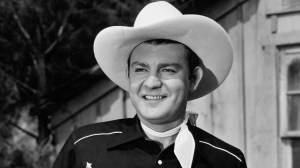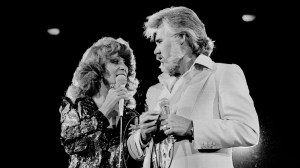
Loretta Lynn proved she was not a woman people should trifle with when she released her seventh studio album, You Ain’t Woman Enough, in the fall of 1966. Five months later, on February 6, 1967, Lynn shot it straight yet again—to the men this time. The country star’s eighth album showed that while she was more than willing to defend her relationship, she wasn’t about to be a doormat for the man that that other woman wasn’t “woman enough” to steal.
Lynn’s follow-up to her 1966 hit album was the even more successful and equally sassy Don’t Come Home A-Drinkin’ (With Lovin’ On Your Mind). Once again, Lynn offered her brazen songwriting perspective, pushing back against the expectations that a woman should submit to her husband, even when he’s rip-roaring drunk. And indeed, Lynn’s take is so refreshing because it’s honest. She was living under those expectations, too.
Videos by American Songwriter
“If a man drinks, he’s gonna come home drinking,” Lynn once said in a 2010 interview with NPR. “Doo [Lynn’s late husband, Doolittle Lynn] liked to drink.” In her memoir Coal Miner’s Daughter, Lynn confirmed, “That’s really about me and my marriage.”
And as she would soon find out, that authenticity paid off.
Loretta Lynn’s 1967 Album Earned Her a No. 1 Single
To be clear, Loretta Lynn wasn’t the first woman to air her grievances with the opposite sex through music. Kitty Wells predated Lynn by several years with “I’m fed up” songs like “It Wasn’t God Who Made Honky Tonk Angels”. In fact, Don’t Come Home A-Drinkin’ wasn’t even the first time Lynn offered a sexually independent, unapologetic female’s perspective. She had already done that to great effect—and controversy—with “The Pill”.
But something about the raw honesty of “Don’t Come Home A-Drinkin’ (With Lovin’ On Your Mind)” grabbed listeners and didn’t let go. Was it because so many women could relate to the delegation of an on-call lover by a partner who prioritizes drinking brews with the boys? Probably. Is that a depressing thought? Certainly. Nevertheless, it worked in Lynn’s favor.
Don’t Come Home A-Drinkin’ (With Lovin’ On Your Mind) soared to the top of the Billboard Hot Country Albums chart and even broke into the Top 100 of the Top LP’s chart, peaking at No. 80. Lynn also earned her first No. 1 single with the title track, which she released on its own in October 1966, one month after she put out You Ain’t Woman Enough. (Lynn was taking no one’s s*** that year.)
Even more impressively, Lynn’s eighth album became the first country music album by a woman to reach a gold certification. It remains a beloved track in the country music star’s catalogue, encapsulating the way Lynn managed to give a voice to the internal thoughts of women all over the country.
Photo by Michael Ochs Archives/Getty Images
-
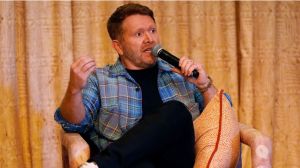
NASHVILLE, TENNESSEE – Shane McAnally speaks onstage during GLAAD's Pride & Progress Event at Soho House Nashville on June 05, 2026 in Nashville, Tennessee. (Photo by Erika Goldring/Getty Images for GLAAD) -
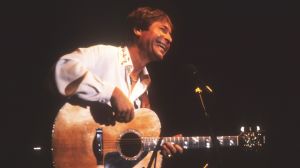
MINNEAPOLIS, MN – John Denver performs at the Northrup Auditorium in Minneapolis, Minnesota on October 5, 1991. (Photo by Jim Steinfeldt/Michael Ochs Archives/Getty Images) -
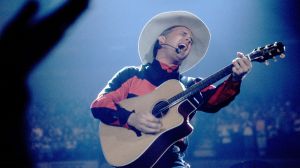
American country musician Garth Brooks performs onstage, Chicago, Illinois, October 1, 1993. (Photo by Paul Natkin/Getty Images) -
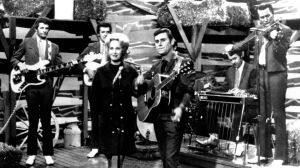
Tammy Wynette and George Jones Perform on stage with the Jones Boys in circa 1972. (Photo by Michael Ochs Archives/Getty Images) -

American Folk musician Todd Snider plays guitar as he performs onstage at Medinah Temple, Chicago, Illinois, November 27, 1997. (Photo by Paul Natkin/Getty Images) -
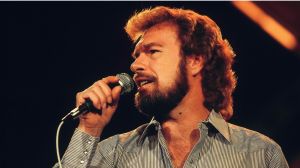
UNITED KINGDOM – WEMBLEY ARENA Photo of Gene WATSON, Country Music festival (Photo by David Redfern/Redferns)