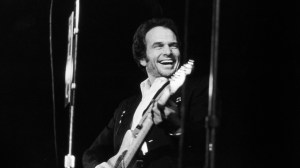
In September 1969, as a wave of anti-Vietnam War sentiment swept the nation, Merle Haggard released a song that flew in the face of the dominant countercultural narrative. “Okie From Muskogee” established the California native as a hero for the strait-laced, blue-collar working man. Just three months later, Haggard doubled down on that reputation with “The Fightin’ Side of Me” off his album of the same name. Hitting No. 1 on this day (March 15) in 1970, the patriotic anthem seemingly left no doubt about on which side of the line Haggard stood: When you’re running down our country / You’re walking on the fighting side of me.
One of Haggard’s best-known songs, Toby Keith later dubbed “The Fightin’ Side of Me” as “the original Angry American song.” However, as with most things concerning Haggard, the reality was a bit more complicated.
Videos by American Songwriter
Merle Haggard Struck a Chord With the Anti Anti-Vietnam Crowd
“The Fightin’ Side of Me” resonated with a listenership that likely felt alienated by the Vietnam War protest songs pouring from the music industry at the time. Merle Haggard threw his weight firmly behind “our fighting men” while sending a clear message to the “longhairs” speaking out against the U.S. conflict: If you don’t love it, leave it.
In a 1988 interview with Spin, Haggard reflected on “Okie From Muskogee” and “The Fightin’ Side of Me.” Ultimately, he said, freedom of expression was paramount in recording both songs.
“It wasn’t popular to be patriotic then,” he said. “I had a brother who was a Marine and I grew up saluting the flag. I believed in it, I really did. So, I just didn’t go along with it. I didn’t give a s— how long their hair was. But the fact that the ones with long hair were the ones burning the damn flag — I didn’t like it. I still don’t.”
He continued, “See, I’ve got to go with this flag until they hang up one that’s better. It seemed like everyone had a problem and was disagreeing with everything. But, no one had a solution to anything — and it certainly wasn’t burning the flag.”
Haggard took the same approach with “The Fightin’ Side of Me.”
“We put it out and it started following in the patriotic tradition of ‘Okie.’ But it probably raised more difficulty because it insinuated some kind of violence,” he said. “To me, it’s a matter of freedom of song — just like freedom of speech. There’s really no difference. Besides, people who complain about stuff like that are also likely to get on my fightin’ side.”
Featured image by ABC Photo Archives/Disney General Entertainment Content via Getty Images
-
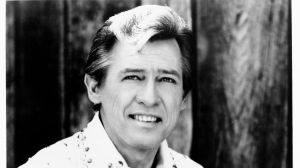
UNSPECIFIED – CIRCA 1970: Photo of Cal Smith Photo by Michael Ochs Archives/Getty Images -

American Country musician Tanya Tucker performs onstage at the Bottom Line, in Greenwich Village, New York, New York, December 13, 1978. (Photo by Gary Gershoff/Getty Images) -
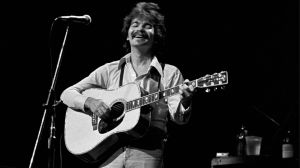
ATLANTA – Singer-songwriter John Prine performs at Atlanta Symphony Halll on April 23, 1975 in Atlanta, Georgia. (Photo by Tom Hill/Getty Images) -
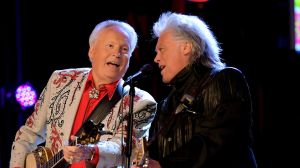
NASHVILLE, TENNESSEE – Buck Trent performs with Marty Stuart and his Fabulous Superlatives at the second of three Marty Stuart Artist-in-Residence Shows at Country Music Hall of Fame and Museum on September 18, 2019 in Nashville, Tennessee. (Photo by Jason Kempin/Getty Images for Country Music Hall of Fame and Museum)