Ziggy Marley opens his 2026 album with the song “JAH We Give Glory,” which features a bold declaration, What we have in our hearts is love and happiness / Can’t tear us apart / We know our identity.
It shouldn’t feel like such a significant statement. Afterall, it’s not too different from the ethos that defines much of his discography, especially as he goes on to sing about nations around the world and urge interconnectedness. But here, in a time when division and strife feel inescapable, focusing on love being the key to overcoming conflict is something revolutionary.
Videos by American Songwriter
Brightside is Marley’s ninth studio solo album and his first since 2020. “Brightside represents me well, and I think people need a bright side in the world today,” he tells American Songwriter. “There’s too much negativity, so I didn’t overthink it—it just felt right.”
He explains that when working on a collection of music, Brightside included, he doesn’t begin the process with a specific theme in mind. Rather, a central concept tends to emerge organically. The writing and recording process for this LP, in particular, proved to be therapeutic.
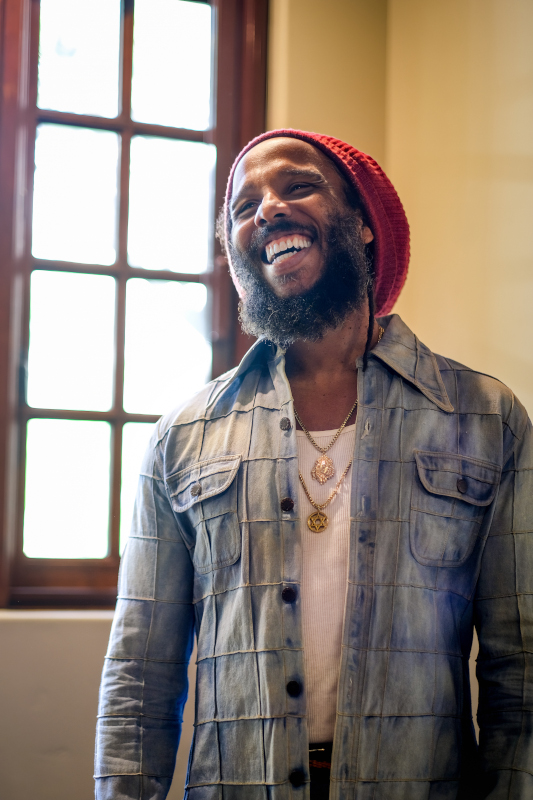
“I think I was going through some emotional, mental things,” he says. “The songs I was writing were therapy, even though we didn’t think about it that way. But they definitely helped me get some things out of my system and lifted me out of feeling bad sometimes.”
Notably, 2026 marks the 20th anniversary of Marley’s second solo project, Love Is My Religion. While the world around him has changed in many ways in the decades since that release, much of Marley’s creative process has stayed the same. He says he has 10 books full of thoughts, half-formed ideas, scrapped lyrics, and notes. He always writes with a pen and paper.
“Sometimes I’ll be working on a song, and then I’ll go back and find words I wrote 10 years ago that work perfectly with a new song,” he says. “Not everything we write makes it into the song, but they’re all good ideas and good concepts.”
Like Love Is My Religion, Brightsideis a thoughtful, gentle, and somewhat introspective body of work. The lyrics on many tracks across both albums read like poetry, and there are clear thematic parallels. Take “Be Free” (2006), where Marley sings: The politics of fear and oppression is everywhere now / The law is closing in, just take what you can bring / Be free.
Twenty years later, he’d release the Brightside track “Racism is a Killa” as a single. Some people have got that hateful disease / Their hearts are rejected, their minds are infected / And if you think you′re coming down with it, see the good doctor please,” he implores the listener.
As so much of Marley’s creative process has remained consistent, there was a significant difference in the construction of Brightside. The project was recorded at 432 Hertz, a soothing frequency commonly associated with meditation and other mindfulness practices.
“Usually, we tune to 440 hertz, which is typical in music today,” he says. “But I wanted to try 432 hertz, which I heard about years ago and started exploring.”
He floated the idea to his fellow musicians and collaborators, recalling a number of surprised reactions. “But we figured it out, and I really liked how it felt, the vibes,” he says. “To me, it felt something. When I traveled and started doing shows tuned to 432 Hertz, I felt a difference with the audience. The audience vibed, too. It’s a frequency closer to the frequency that human beings vibrate at.”
The recording frequency wasn’t the only difference behind Brightside. The project was assembled and recorded at Red Lion Studio in Los Angeles, which had completed construction shortly before going into production on the album. “The person who built the studio also recorded and mixed the album, so from start to finish, it’s all connected,” Marley says.
But long before it was time for Brightside to be shaped in the studio, the foundation of the project was already substantial and solid in Marley’s many notebooks.
For this record, he says he spent more time than ever focusing on the songwriting before stepping into the studio—a marked shift from some of his previous projects. It’s not unusual for him to begin with the seed of a song and build the melodies and rhythm around it later. But on Brightside, the lyrics came first. He says he gave them his “full attention,” ensuring they were fully complete before musical elements took shape.
But even slower moments of the creative process carry meaning for Marley.
“I like the journey,” he says. “I like that it’s a struggle sometimes, because when it’s over, you’re happy you went through it. You think, ‘I made it through.’ I like that aspect—the journey of it. It’s never a straight or smooth road. The lessons you learn along the way are important. I keep learning, because sometimes I’m impatient. Learning patience is what I enjoy about songwriting.”
Marley says his relationship to songwriting has continued to evolve over the years. At times, he says, the process can even feel mysterious.
“There’s a spiritual aspect,” he shares. “Sometimes I feel like the words coming out of my head aren’t just from me. I don’t know where they come from, but there’s an influence on me that isn’t within myself.”
That sense of connection to something larger than himself is part of what keeps Marley returning to the studio after decades of writing songs. For him, the process remains as joyful as it is reflective.
“What brings me joy? I think faith,” he says. “Knowing that humanity is going to come out in a better place gives me confidence and joy. Making music is one of my greatest joys, whether that’s recording or playing songs. Music is a joy for me.”
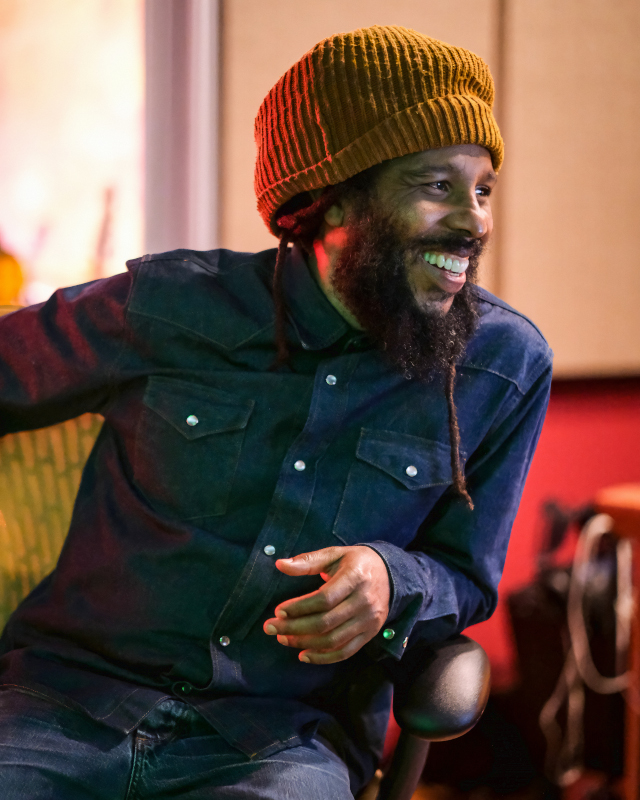
When it comes to the optimistic outlook, he isn’t alone. Over the years, he’s surrounded himself with collaborators who share that spirit—musicians and producers who approach songwriting and recording with the same sense of purpose, curiosity, and belief in the transformative power of music.
He says that the core musicians on Brightside are people he’s known and played with for some time (alongside a few younger players added to the mix). When it comes to guest artists, he looks for people who can “feel the vibe,” so to speak. For Marley, the priority runs deeper than chasing commercial success; he’s searching for something genuine.
“Sheila E. is a real one, Trombone Shorty is real, and Nikka Costa is real,” he says of some of the players appearing on Brightside. “These are real people you have a genuine connection with, and they’re not just doing a song for career reasons, but because it’s real.”
That same spirit is what he loves about being on stage, too. He cherishes getting to create communal listening experiences and watching audiences connect with the music born in the studio. Writing and recording can sometimes be an isolating process, but the end result, he believes, is meant to be shared, especially with the themes of his music.
He compares the process of making an album to cooking a warm meal to share with guests. “Maybe they’ll like the taste,” he says with a smile. “And maybe it can help them with something they’re going through.”
Brightside was released first as a vinyl exclusive and hit digital streams weeks later (May 1). A vinyl collector himself, Marley says there’s something special about being able to physically hold an album in your hands, and this connection shaped how the project was shared with listeners. In fact, he notes, the record was designed with vinyl lovers in mind.
“I grew up with vinyl, and to me, it still sounds better than streaming or digital,” he says. “There’s a connection to it. Just like I talk about making an album through physical means, it’s different when it’s on something made from Earth. It feels different, and I like that feeling.”
For Marley, making music is only one part of a larger practice, which includes mindfulness and connection to the world around him. Even so, there are certain things that still feel wonderfully mysterious to him, like the source of creativity. His commitment to remaining open is partially forged in meditation.
“Meditation is a big part of my life, but I don’t set a specific time to do it,” he notes. “I could be driving and meditating, or on stage and meditating. It’s a constant part of my day, flowing in and out.” It’s these moments of clarity that often lead to moments of imagination and innovation.
“For me, meditation is like a conversation with my own self, with the consciousness within me,” he continues. “It helps me understand myself better. Being out in nature, seeing the greenery, is another form of meditation for me.”
It’s this blend of curiosity, reflection, groundedness, and joy that seems to hum through all of Marley’s work, from the lyrics on Brightside to his collaborative energy in the studio or the communal energy of a live show. In the end, it all comes back to the optimism at the album’s heart, underscored by notes of resistance and resilience. Not everyone can manage to look on the bright side these days. But through it all, Ziggy Marley still can.
All photos by Tuff Gong Worldwide-Zach Weinberg
More Features
-

NASHVILLE, TN – Singer/Songwriter Whitey Shafer performs during the All-Star Whitey Shafer Benefit, Hosted By Moe Bandy at The Nashville Palace on March 18, 2015 in Nashville, Tennessee. (Photo by Rick Diamond/Getty Images for Webster PR) -
THE JOHNNY CASH SHOW – "History of Country Music" – Airdate: January 21, 1971. (Photo by ABC Photo Archives/Disney General Entertainment Content via Getty Images) MERLE HAGGARD -
UNSPECIFIED – CIRCA 1970: Photo of KC & Sunshine Band Photo by Michael Ochs Archives/Getty Images -
ATLANTA – August 8: Commodores with Lionel Richie perform at The Omni Coliseum in Atlanta Georgia. August 8, 1980 (Photo By Rick Diamond/Getty Images) -
Photo by Michael Putland/Getty Images -
LOS ANGELES – AUGUST 22: American folk-pop musicians (from left) Art Garfunkel and Paul Simon, of the duo Simon and Garfunkel, sing and play guitar as they perform on the CBS variety program 'The Red Skelton Hour,' USA, August 22, 1966. (Photo by CBS via Getty Images)