On this day (September 10) in 1988, Guns N’ Roses reached the top of the Hot 100 for the first time with “Sweet Child o’ Mine.” It spent three weeks at the top of the chart and helped solidify the band’s mainstream success. The hit ballad started out as a poem written by frontman Axl Rose for his then-girlfriend Erin Everly, the daughter of Don Everly of the Everly Brothers.
“Sweet Child o’ Mine” was GNR’s third single. The first two–“It’s So Easy” and “Welcome to the Jungle”–flopped upon release. They released the hit in June 1988, and it steadily climbed the chart. After it topped the chart, Geffen re-released “Welcome to the Jungle.” It debuted on the Hot 100 on October 22, 1988. On Christmas Eve, it peaked at No. 7.
Videos by American Songwriter
According to Songfacts, Axl Rose wrote “Sweet Child o’ Mine” for his then-girlfriend and future wife, Erin Everly. They started dating in 1986 and tied the knot four years later. However, their marriage didn’t last. Rose filed for divorce weeks after they said, “I do.” They were able to patch things up, but after a miscarriage and alleged abuse, Everly left him in late 1990. Their marriage ended in annulment in January 1991.
The music video, which helped propel the song, was shot in 1987. It features Everly and the other band members’ girlfriends. Additionally, Izzy Stradlin’s dog makes an appearance.
This Is Slash’s Least Favorite Guns N’ Roses Song
“Sweet Child o’ Mine” was a massive success. It was the only Guns N’ Roses single to reach the top of the Hot 100. However, Slash was never a fan of the song.
He was initially displeased with the three-chord progression that Izzy Stradlin wrote for the song. Bassist Duff McKagan recalled that Slash wanted to “get rid of” the song. He hoped that intro that McKagan called “this twisted, just atonal thing,” would sour everyone else on the tune. Decades later, that “atonal” intro is iconic.
“I always complain about it because it was so uptempo, ballad-y kind of thing. It really rubbed me the wrong way. Even though I made up the riff, I didn’t know what it was going to turn into,” Slash said about the track. He also wrote the chord progression that plays under his solo, which he called “the only redeeming part of the song.”
Featured Image by Paul Natkin/Getty Images
-

Steve Lukather of Toto performs live on stage at 'Muziekcentrum Vredenburg', Utrecht, Netherlands, 26th September 1982. (Photo by Rob Verhorst/Redferns) -

LAS VEGAS, NEVADA – Kane Brown performs onstage during the 61st Academy of Country Music Awards at MGM Grand Garden Arena on May 17, 2026 in Las Vegas, Nevada. (Photo by Kevin Mazur/Getty Images for ACM) -

Sandy West performing with the Runaways -

Roy Nichols with Merle Haggard and the Strangers -
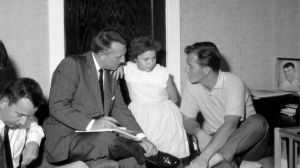
Country singer songwriter and producer Owen Bradley takes notes while collaborating with child country singing superstar Brenda Lee and Pat Boone circa 1960 in Nashville, Tennessee. (Photo by Bob Grannis/Getty Images) -

Photo by Michael Ochs Archives/Getty Images