On this day (September 24) in 1991, Nirvana released their sophomore album Nevermind. It made the band an international success. Moreover, it introduced Seattle’s grunge scene to a wide audience and opened the door for other bands in the scene to find mainstream success. It also put a global spotlight on frontman and songwriter Kurt Cobain. He was dubbed the voice of a generation, a title he was never comfortable with.
Nirvana’s 1989 debut album, Bleach, had more in common with the Seattle sludge metal scene, pioneered by bands like the Melvins, than with Nevermind. Feeling pressured by their label, Sub Pop, Cobain kept his songwriting stripped-down and abrasive. Then, when they signed with a major label, Geffen Records, Cobain was under much less pressure.
Videos by American Songwriter
When he began writing for the band’s sophomore album, he allowed his pop and alt-rock influences to show. The result was a winning combination of heavy music and pop sensibility. Cobain’s songwriting, though, was the key ingredient. His angst and anger echoed Generation X’s feelings in the early 90s.
Nirvana Finds Mainstream Success
Nevermind sold so quickly in the Northwest that Geffen halted production on all other albums to meet demand. Then, led by the popularity of lead single “Smells Like Teen Spirit,” the album began to catch on across the country. Soon, it received a Gold certification from the RIAA, an achievement about which the band was largely apathetic. By November, the album had gone Platinum. It has since been certified 13x Platinum for sales of 13 million copies in the United States alone.
Nevermind didn’t just open the door for other grunge bands to find success. It eclipsed the glam and hair metal that had dominated much of the late 1980s and bled into the ’90s. It was more than a new sound that caught on. Cobain’s songwriting was raw, sensitive, and personal. At the same time, his lyrics tackled several social issues. It resonated with listeners around the world.
Those listeners began looking for other music that did the same and found Seattle bands like Alice in Chains, Pearl Jam, and Soundgarden. Nevermind was also many listeners’ gateway to punk rock.
Kurt Cobain Didn’t Want to Be the Voice of a Generation
During a 1992 interview with Rolling Stone, Curt Cobain discussed how he felt about Nirvana’s rise to fame after Nevermind. Moreover, he revealed how he felt about the spotlight that had been focused on him.
“I don’t blame the average 17-year-old punk rock kid for calling me a sellout,” he told the publication. “I understand that. And maybe when they grow up a little bit, they’ll realize there’s more things to life than living out your rock and roll identity so righteously,” he added.
He accepted fame and all that came with it. However, he chafed at being called the voice of a generation. “I’m a spokesperson for myself. It just so happens that there’s a bunch of people that are concerned with what I have to say, and I find that frightening at times because I’m just as confused as most people,” he told the publication. “I don’t have the answers for anything. I don’t want to be a f***ing spokesperson.”
Nevermind producer Butch Vig explained how that mantle came to be thrust upon Cobain. “That ambiguity or confusion, that’s the whole thing. What the kids are attracted to in the music is that he’s not necessarily a spokesman for a generation, but all that’s in the music–the passion, the fact that he doesn’t necessarily know what he wants but he’s pissed. It’s all these things working at different levels,” he explained. “It’s not real cut and dried. I don’t know exactly what ‘Teen Spirit’ means, but you know it means something and it’s intense as hell.”
Featured Image by Paul Bergen/Redferns
-

ATLANTA – SEPTEMBER 30. 1976: Actor and singer Mary Kay Place appears on WAGA-TVs “Jacquie's Corner" to promote her new country album, "Tonight at the Capri Lounge! Loretta Haggers" on September 30, 1976 in Atlanta, Georgia, United States. (Photo by Tom Hill/WireImage) -
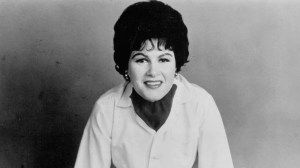
Bob Moore played on most of Patsy Cline's recordings for Decca Records -
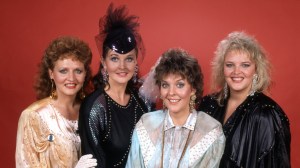
NASHVILLE – OCTOBER 13: Pictured is The Forester Sisters for the Country Music Association Awards, 1986. (Photo by CBS via Getty Images)