Frank Zappa was as influential as he was divisive, which is to say, immensely. Despite the Rock and Roll Hall of Fame rejecting him twice for admission to its musical ranks during his lifetime, Zappa proved to be a significant inspiration to others who found their way into the hallowed halls of rock history. From The Beatles to Alice Cooper to one of the most memorable and ubiquitous classic rock songs of all time, the shockwaves rippling from Zappa’s work permeated nearly every corner of 20th-century rock.
Describing Zappa’s music has been a historically challenging task, which is undoubtedly what the avant-garde rock ‘n’ roller preferred. Zappa incorporated elements of blues, rock, jazz, doo-wop, classical, pop, and comedy into his distinct musical style. His songs were often satirical, and some were so heady they practically repelled the mainstream market. Still, Zappa received eight Grammy nominations while he was alive and won another posthumously. The Rock and Roll Hall of Fame finally inducted Zappa, but not until three years after his death.
Videos by American Songwriter
That would come on December 4, 1993, after a lengthy battle with prostate cancer. His wife, Gail Sloatman, and his children, Moon, Dweezil, Ahmet, and Diva, were with him when he passed. Zappa’s family interred the composer’s remains in an unmarked grave in Los Angeles’ Westwood Village Memorial Park Cemetery.
Frank Zappa Was a Massively Influential Rock ‘n’ Roll Icon
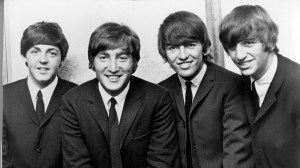
For as much as Frank Zappa disliked the mainstream musical machine, he served as a tremendous influence on those who were dominating its charts and radio stations. Paul McCartney once compared The Beatles’ 1967 album Sgt. Pepper’s Lonely Hearts Club Band to Zappa and the Mothers of Invention’s debut album, Freak Out!, saying that Sgt. Pepper’s was the Fab Four’s version of Zappa’s experimental and highly influential debut. After The Beatles split, Lennon established a working relationship with Zappa, although it wasn’t always a harmonious one.
Zappa is also largely responsible for Alice Cooper’s career, as he was the one who offered them a record deal in the late 1960s. Music manager Shep Gordon arranged the band’s meeting with Zappa, who was then running two record labels for avant-garde and more standard musical fare. Listening to their music shortly after the “disastrous” set, Zappa told them, “I’m going to sign you because I don’t get it.” When frontman Cooper was accused of killing a chicken and drinking its blood on stage (which he didn’t do), Zappa told him not to tell the press it was a lie, solidifying Cooper’s shock rock image.
And finally, Zappa is the rockstar behind Deep Purple’s iconic classic rock track, “Smoke on the Water”. The song with the ubiquitous guitar intro recounts an actual fire at the Montreux Casino where Zappa was playing, which, coincidentally, happened on the same day he would die 22 years later. “Frank Zappa and the Mothers were at the best place around / But some stupid with a flare gun burned the place to the ground / Smoke on the water / Fire in the sky.” Indeed, even when Zappa didn’t mean to, he was shaping the sound of 20th-century rock ‘n’ roll.
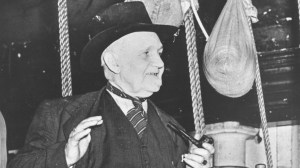
Photo by Ron Case/Keystone/Hulton Archive/Getty Images
-

UNITED KINGDOM – NOVEMBER 16: WEMBLEY ARENA Photo of RADIOHEAD and Thom YORKE, Thom Yorke performing live onstage (Photo by Patrick Ford/Redferns) -
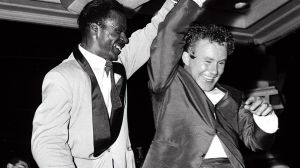
Photo by The Sydney Morning Herald/Fairfax Media via Getty Images