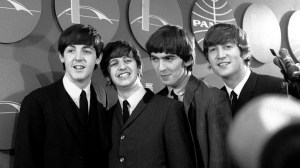
The Beatles constantly innovated with their music. Thus, it’s not surprising that they also managed to do that when it came to their promotional activities. They constantly stayed ahead of the game when it came to making the masses aware of their music.
One such innovation was a performance-based promotional clip for the song “Hey Jude” in 1968. Only it wasn’t a full performance but rather a clever way for the group to get around some arcane musicians’ union rules.
Videos by American Songwriter
Video Pioneers
The Beatles captured the world’s attention when they burst on the scene. They haven’t really given it back, even now more than 50 years since they played their last note as a quartet. Beyond the quality of the music itself, they proved savvy in figuring out how to let the masses know whenever they had something new in the pipeline.
That task became more important once they decided to stop touring in 1966. No longer could they rely on concerts to do the marketing for them. But they had other tricks up their sleeves to promote their stuff.
For example, 1967 brought the singles “Strawberry Fields Forever” and “Penny Lane”. The group hit upon the idea of making artsy video clips to accompany the music to the songs. They sent these mini-movies out to the world to replace the touring experience. In that way, they helped usher in the age of the music video.
Plugging the Single
After releasing a double album (The White Album) in 1968 that featured no singles, The Beatles were ready to make a bid for radio supremacy with a single later that year. And “Hey Jude” was a monster of a single, a stately ballad that exploded into an inspirational singalong.
The Beatles correctly sensed that a surreal video clip, à la what they did for those two songs in ’67, wasn’t the right fit for this earnest song of profound empathy. But they didn’t want to mess around with anything resembling a proper live performance. They had shut that door a few years earlier.
They came up with the idea of filming what would be a kind of quasi-performance. The band would sit at their instruments and pretend to play them. But instead, the backing track of the studio recording would actually be heard.
A One-Man Band
Meanwhile, The Beatles did make one slight adjustment to this arrangement out of necessity. The musician’s union in Great Britain had a strict policy that disallowed anyone miming musical parts on camera.
Their solution? Paul McCartney’s microphone would be live, allowing him to sing along to the track. The Beatles did something similar with the clip for “Revolution”, which they filmed the same night as they did the “Hey Jude” clip.
Complete with an introduction from famed British television presenter David Frost, “Hey Jude” came out in conjunction with the release of the single. Fans crowded around the Fab Four as McCartney ad-libbed through the extended refrain. The clip acted as the perfect complement to one of the finest singles ever released.
(Photo by Keystone Features/Hulton Archive/Getty Images)
More Features
-
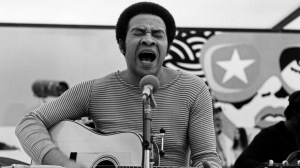
Der amerikanische Sänger und Songschreiber Bill Withers, Deutschland 1970er Jahre. (Photo by Schweigmann/United Archives via Getty Images) -
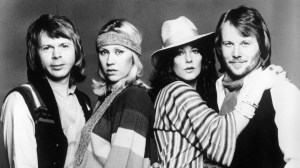
UNSPECIFIED – CIRCA 1978: Photo of ABBA Photo by Michael Ochs Archives/Getty Images -
Unspecified – 1974: Charlie Pride performing on the ABC News tv series about race relations in America 'Americans All'. (Photo by American Broadcasting Companies via Getty Images) -
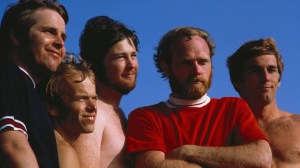
July 1967, California Beach Boys L-R: Wilson, Al Jardine, Brian Wilson, Mike Love, Dennis Wilson -
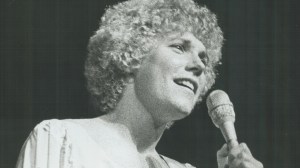
CANADA – JANUARY 16: Anne Murray 1974 – 1977 (Photo by Jeff Goode/Toronto Star via Getty Images)