
It’s the trio’s tribute to the power of song

It’s Cargo Cult’s tribute to the power of song. Sidestepping their usual originals, it’s a journey by this great jazz trio into a cycle of remarkable songs, merging the music of Donizetti with Rodgers & Hart, Robert Johnson, Kurt Weill, Leadbelly to Neil Young and beyond. Tomas Ulrich’s rich cello lines lead the way, and unifies this song cycle with warm whimsy and soul.
Had Coltrane never recorded “My Favorite Things,” it’s quite possible that his genius might have gone unheard by millions of his fans who were drawn in by the famous melody. This album by the trio (cellist Tomas Ulrich with Rolf Sturm on guitar & banjo and Michael Bisio on bass) might work the same way, bringing in a lot of people who loves those beautiful famous melodies, which then expand into improvisational multitudes, with the cello being the lead singer.
Videos by American Songwriter
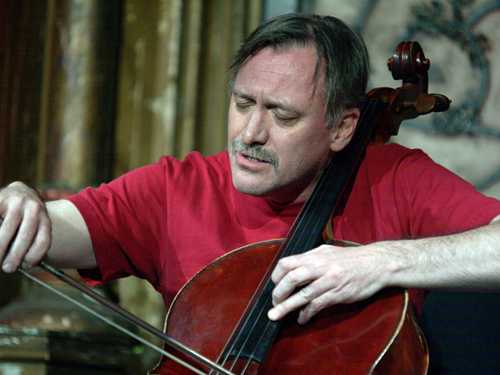
Lonely House, named for the Kurt Weill-Langston Hughes song, goes a long way in proving that which has been known for some time, which is that Tomas Ulrich is the Miles Davis of the cello. Like Miles, Tomas is fluent in every musical language, and distinguishes everything he touches with the rich warmth of his tone. To that he brings a remarkable depth of expression which lets you know it’s him and nobody else playing. His voice on the cello is poignantly human; he can sing with the warm tonality of a human voice, inhabiting famous melodies with power and grace. But he’ll then veer off into realms voices can never reach.
He’s also a composer of unbound and poignant melodies, and a band-leader who brings the best musicians together always. On their previous albums and other solo projects by Ulrich, the music performed is original. But this time around Tomas turned to timeless melodies that he’s loved his whole life, and it’s there the journey starts. And from there that he explores with his band the many dimensions of these songs, and soars.
He knows the meaning of silence, something Miles always reveled in, the spaces between. His playing is expansive yet personal, on the razor’s edge between bliss and abandon. Whether playing a melody by Donizetti, Cole Porter or Neil Young (all of whom are represented here), the Ulrich spark – the ocean of deepest sorrow linked to limitless elation – is there.
From the opening cut here – “Una Furtiva Lagrima” by Donizetti — we are alerted to something special. Set against the ostinato bass line of Bisio with eloquent guitar coloring by Sturm, Tomas takes the beautiful melody and soars. Long revered for his own beautiful Mingus-meets-Zappa compositions and his improvisational brilliance on cello – an instrument on which musicians rarely improvise, and never with the confidence and complexity he easily summons – here on this album of covers, he shows his reverence for the purity of melody by bringing his full-bodied tone to this timeless beauty.
He gently introduces the melody, singing its soul on the cello strings, before he deconstructs the whole affair, and lands it in unimagined places. This might be the best Ulrich group effort yet to introduce new listeners to the dimensional soul of his music, proving that the cello, in his hands anyway, is perhaps the most expressive instrument in existence. It’s range is unlike any other, with the high frequency clarity of a violin or soprano sax, the mid-frequency agility of an alto sax or guitar, and the deep amber colors of bassoon and bass.
The song choice is unusual and fun – a standard like Weill’s “September Song” might be expected (though they take it to unexpected and great places) but who would expect Leadbelly’s “Goodnight Irene” from a jazz group? Though simple and diatonic, Ulrich bends the notes of the tune like a drunken sailor trying to walk home after a whole night of drinking, and Bisio plays the part of the friend keeping his pal from falling face-down with his steady and comforting bass line.
Sturm’s playing throughout is joyful, with hints of country and folk mixed in with jazz voicings and eloquently clean solo lines. On “September Song,” as Tomas sings the famous and beautiful melody underscored lovingly by Bisio’s bowed bass, Sturm shines brilliantly in his accompaniment, which is quirky and great, and then solos with an inspired blend of Django, Chet Atkins, and more.
When Cargo Cult takes on the blues, as they do here with Robert Johnson’s classic “Come On In My Kitchen,” suddenly we’re in the Mississippi Delta at the intersection of old folk music, blues and soul. This isn’t an elitist jazz journey to the blues. This is authentic, as Sturm brings the metallic shimmer of banjo into the mix. When they take on the sophisticated changes of Stevie Wonder’s “’Cause We Ended As Lovers,” they bring out the soulful splendor of its great melody, and then open up to one of Tomas’ most exquisite solos.
The entire album, as produced by Robert Rusch, was recorded live – and preserves and celebrates the tonal purity of these three musicians so intimately that you can hear one exhale on a furious lead line, or the occasional sounds of fingers sliding on strings. Rusch wisely didn’t tamper with the intimate immediacy of Cargo Cult’s dynamic of three musicians inspiring each other. The guitar and bass are panned to opposite stereo sides, while Ulrich remains in the middle, linked by spirit, rhythm and harmony with his band mates.
Eden Ahbez’s delightful “Nature Boy” shows off Tomas emotional versatility, from gently stating the elegiac tune to a solo which is both brash and delicate, skating through the changes with poignant dynamism.
A jaunty swing melody, without the need for drums, on Monk’s “Let’s Cool One” shows off Tomas’ vibrant Grappelli-like verve, while Neil Young’s “Cortez The Killer” has him burning like Hendrix on cello, somehow producing currents of distortion and overdrive with incendiary bowing and overtones, without any electronics.
If you’re needing some substance in your musical diet this summer, this is a good place to be. It’s not background music or cocktail time jazz. It’s too transcendent and timeless for that.
More Reviews
-

John Oates performs with The Good Road Band on March 15, 2026, at The Cabaret Theatre at Mohegan Sun in Uncasville, Connecticut (Photo by Khoi Ton/Courtesy of Mohegan Sun) -

Boy George and members of Culture Club perform at Mohegan Sun Arena in Uncasville, CT, on March 1, 2026 (Photo by Khoi Ton/Courtesy of Mohegan Sun) -

Sting and Dominic Miller perform at Mohegan Sun Arena in Uncasville, CT, on November 18, 2025 (Photo by Khoi Ton/Courtesy of Mohegan Sun)