
If not for “What Made You Say That”, Shania Twain may not have even had a career in country music. Her debut single, Twain includes “What Made You Say That” on her eponymous freshman album.
Written by Tony Haselden and Stan Munsey, Jr., the clever song says, “What made you say that? / Was it the moonlight, was it the starlight in your eyes? / What made you say that? / Have you been listening to your heart? / It’s too late now, you don’t wanna take it back / ‘Cause I know love’s what made you say that.”
Videos by American Songwriter
“What Made You Say That” did not even become a Top 40 single, nor did the two follow-up singles, “Dance With The One That Brought You” and “You Lay A Whole Lot Of Love On Me”. But without “What Made You Say That”, it’s likely Twain’s career would have never reached the superstar status she managed to achieve.
“What Made You Say That” came out in 1993. Twain shot a somewhat sexy video, at least by the standards of the early 90s. The video caught the attention of rock producer and songwriter Robert “Mutt” Lange. Lange contacted Twain’s manager, which is what ultimately led them to connect.
Of course, it didn’t take long for their relationship to go from professional to personal. Together, Twain and Lange co-wrote nearly all of her biggest hits, including “Whose Bed Have Your Boots Been Under”, “You’re Still The One”, “You Win My Love”, and more. In addition to co-writing together, Lange also began producing Twain as well.
Shania Twain’s First No. 1 Single With Robert “Mutt” Lange
By the end of 1993, Twain and Lange were married and working on her music career together. In 1995, Twain released “Any Man Of Mine”, the song that became her first of many No. 1 singles. “Any Man Of Mine” is on Twain’s sophomore The Woman In Me album, produced by Lange. The entire record helped Twain find her niche in country music, paving the way for other female artists as a result.
“The Woman in Me was, for the most part, very upbeat,” Twain says. “And there were a lot of kick-ass attitudes and very straightforward lyrics. So in that sense, it was very liberating for a lot of people who maybe were a little more insecure about expressing their opinions and being a little bit different.”
“We all have something to say,” she continues. “But I think that we need others to sometimes open those doors for us and to be vessels for us, to be communicators for us. So I think the album did that a lot for people — and for me, too. It was liberating for me.”
Photo by Ron Galella, Ltd./Ron Galella Collection via Getty Images
More Behind The Song
-
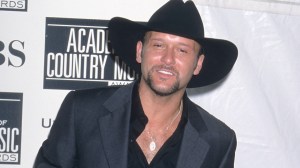
UNIVERSAL CITY, CA – MAY 3: Singer Tim McGrawl attends the 35th Annual Academy of Country Music Awards on May 3, 2000 at the Universal Amphitheatre in Universal City, California. (Photo by Ron Galella, Ltd./Ron Galella Collection via Getty Images) -
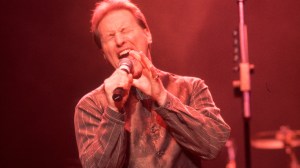
American country and western music singer Collin Raye performs at the Rialto Theater in Joliet, Illinois, November 25, 1996. (Photo by Paul Natkin/Getty Images) -
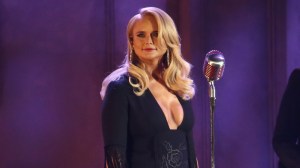
NASHVILLE, TN – NOVEMBER 08: (FOR EDITORIAL USE ONLY) Miranda Lambert performs onstage during the 51st annual CMA Awards at the Bridgestone Arena on November 8, 2017 in Nashville, Tennessee. (Photo by Terry Wyatt/FilmMagic) -
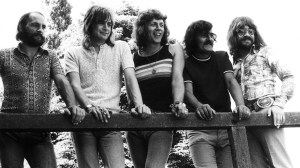
English pop group The Moody Blues, group portrait, 1972, (L-R) Mike Pinder, Justin Hayward, John Lodge, Ray Thomas and Graeme Edge. (Photo by Michael Putland/Getty Images) -
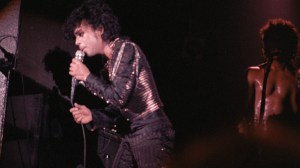
MINNEAPOLIS – AUGUST 3: Prince performs a benefit concert for the Minnesota Dance Theatre at First Avenue nightclub in Minneapolis, Minnesota on August 3, 1983. (Photo by Jim Steinfeldt/Michael Ochs Archives/Getty Images) -
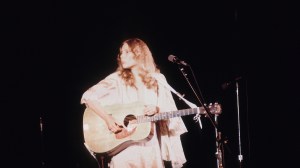
LOS ANGELES – 1974: Singer Joni Mitchell performs in 1974 in Los Angeles, California. (Photo by Donaldson Collection/Michael Ochs Archives/Getty Images) -
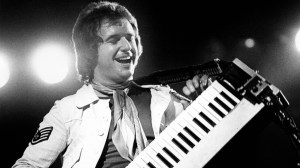
DETROIT, USA – 1st FEBRUARY: Gary Wright performs live on stage in Detroit, Michigan in February 1976. (Photo by Fin Costello/Redferns) -
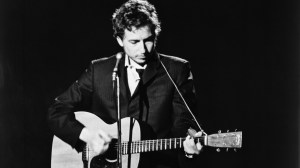
ASHVILLE, TN – JUNE 07: Bob Dylan appearing on "The Johnny Cash Show" for ABC/TV taped at Ryman Auditorium on June 7, 1969 in Tennessee, Nashville. (Photo by Michael Ochs Archives/Getty Images)