Your cart is currently empty!



Songwriter Sandy Knox Reinvents the Memoir by Combining Narrative and Song in a First-Of-Its-Kind Audiobook Musical
Sandy Knox, the Grammy-nominated songwriter behind many of Reba McEntire’s hits, laughs as she recalls the first song she wrote at age 11. It was a song titled, “Oh Since We Broke Up, Chuck.”
Videos by American Songwriter
“I called it, ‘Up Chuck,’” she tells American Songwriter. “It was so bad, but it was clever.”
Knox’s parents fostered her love of music and bought her a guitar before she penned her first song. She recalls many days sitting on the floor with headphones on while listening to her parents’ vast collection of 78 records. Early songwriting influences include Rupert Holmes, Johnny Mercer, and Roger Miller.
“I vividly remember falling in love with the musical stylings and songs of Roger Miller,” she says. “I resonated with his rhyme pattern, his style, and his meter quite a bit when I was young.”
Knox also cites Holmes’ writing style and rhyme pattern as inspiration. She bought everything he released and saw him live when he toured in Houston.
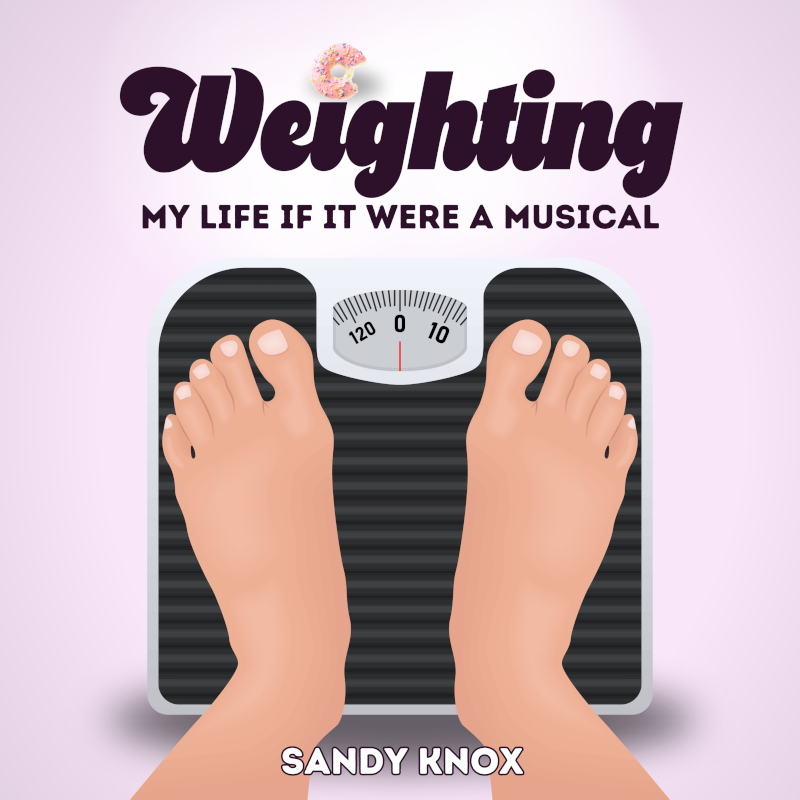
While music was a significant part of her childhood, so was theater. Knox wrote plays as a child, and the neighborhood kids would help her put them on. She was also involved in children’s theater, and when enrolled in college for a year, chose theater as her major. Consequently, the creation of Weighting: My Life If It Were A Musical is a natural extension of Knox’s writing career.
As Knox explains, Weighting: My Life If It Were A Musical was initially conceived as a Broadway musical for live theater until the pandemic. While the future of live theater was uncertain in 2020, Knox embraced the idea of an audiobook musical. Weighting serves as a memoir and an audiobook interwoven with songs that relate to the chapter the listener just heard.
“The more research I did, I found out no one had ever done that before, and that made me want to do it even more,” Knox says. “I was like, ‘I want to be the first one to test this.’”
Knox’s initial idea for the audiobook came nearly 30 years ago. When leaving a diet center where she had gone “to have a healthy vacation” in 1998, the concept for the audiobook musical and its accompanying 21 songs slowly came to fruition.
“I left that place thinking, ‘This is the seed for something. What is this?’” she says. “I kept thinking about all the people that were there, and their stories, and then the song ideas started bubbling up. I think the first song idea was either ‘Shut Up and Eat It’ or ‘The Salsa’ as I was driving away from the place.”
Weighting: My Life If It Were A Musical takes place at Foundation House, a facility that helps people with dieting. “To me, it was really more like a diet college,” Knox narrates in the second chapter. “I had chosen to come to this place for a couple of reasons. I wanted to lose 20 pounds, and I was recovering from a bad and scary breakup with a very abusive man. Going away to a place that would be a safe and healthy change of surroundings was just what I needed at that point in my life.”
The characters within Weighting are loosely based on composites of people Knox met during her stay and throughout her life. One of the most poignant storylines is that of Glenna, a mother who lost her 17-year-old daughter to an overdose. Knox wrote its accompanying song, the heartbreaking “Condolences and Casseroles,” with Mark Prentice. Lyrics on the soaring piano ballad, from the perspective of Glenna, include Condolences and casseroles will never mend my broken, broken, barely beating heart. Knox says the character of Glenna is based on a situation she witnessed years ago.
“I’ve had three or four friends lose their child to drug overdose, and that has been really hard to watch these people deal with that,” she says. “That scene, that situation, I was attending a visitation at someone’s house for one of their children, and I was watching all these people, husbands and wives, get out of their cars with the casserole.
“I remember thinking, ‘Condolences and casseroles are not going to get them through this.’ That’s when that line, condolences and casseroles, came into my head,” she continues. “I jotted it down, and I had already been working on that character of Glenna and her story, and I went, ‘Oh my God, there’s my song. There’s the hook for that.’”
Other songs, like “Shop On,” penned with Steve Rosen, Knox pulled from her catalog. Written several years ago, “Shop On” is a song Knox always found fun and playful. While imagining the character of Cozy, a woman who married a rich, older man who became very controlling and cruelly commented on her weight, Knox realized she already had a song that embodied the character.
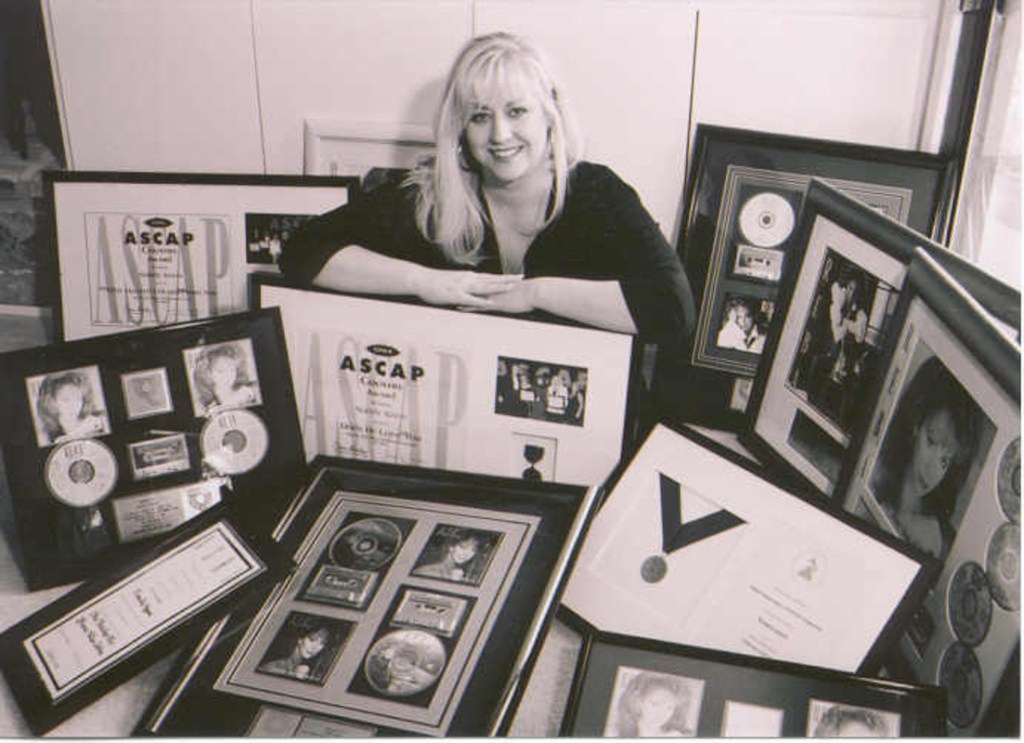
Before I met you, I was constantly overdrawn / But now I’ve found a financially sound man who worships the ground that I shop on, Jackie Wilson, who portrays Cozy, sings on the upbeat track. The lyric worships the ground that I shop on came to Knox years ago.
“That was something I said flippantly to a friend, like, 25 years ago in a conversation,” she says. “When I realized what a great hook it was, and I started writing the song, I never said it again because I never wanted anybody to steal it.”
While Knox has seen success writing songs in the country genre for acts like McEntire, Martina McBride, Dolly Parton, and Carrie Underwood, there is not one country song on the soundtrack. Instead, R&B, pop, American standards, and several bluesy duets make up the 21-song soundtrack, all co-written by Knox.
“I have never, ever pinpointed country as my style of music,” Knox says. “In my ears all my life, since I was a child, I loved so many different genres that I wanted to write different genres. In this book, I purposely thought, ‘I’m going to write the style of song that fits the story or chapter.’ None of the chapters were conducive to a country song. That was really important to me—to be all over the map musically.”
Knox candidly shares her own story of childhood food battles and an abusive ex, which is interwoven alongside composite characters of people she met at her diet retreat. She says it was important not to sugarcoat things.
“I’m known for writing pretty direct and honest spins,” she says. “I don’t shy away from stuff like that. When this thing got close to being finished, there was a lot of fear that started bubbling up in me. Then it morphed into, ‘My God, I’m 66 years old. What do I have to be afraid of?’ I’ve survived this life so far.”
Knox was aware of her audience, though. It was important to her that the storylines and songs were appropriate for teenagers.
“Because body image is so prevalent among young people, particularly women and girls, it was important to me that anyone from 13 years old on up could listen to it and understand it,” she says. “I wanted to make sure that parents would not have a problem letting their tween child listen to it.”
Knox says the response to the audiobook musical has been incredible. Many people have already sought her out to share their story and association with food.
Now that Weighting: My Life If It Were A Musical is out in the world, Knox has begun work on her second “boo-sical.” She has already started developing her characters and says this musical will focus more on the music business side of her life.
Knox, who moved to Nashville to pursue songwriting at age 24, saw major success with McEntire. The country legend released three of her songs as singles in the early 1990s. Knox penned McEntire’s No. 1 Grammy-nominated Best Country Song “Does He Love You,” a duet with Linda Davis, as well as “She Thinks His Name Was John,” and “Why Haven’t I Heard From You.”
The poignant “She Thinks His Name Was John” is a powerful story song about a woman dying from AIDS. The song was inspired by Knox’s brother, who died of AIDS following a blood transfusion while undergoing cancer treatment. Knox says she whittled down 17 pages of lyrics for the song.
“He was a straight man battling cancer; he needed a platelet transfusion,” she says of her late brother. “Five years after he got the transfusion, he developed AIDS, and he died two weeks before his 29th birthday. That’s how the song came about. I put myself in his shoes: ‘What if I got that news? How would that affect me as a straight woman in my life now?’”
Knox likens songwriting to “a big, wonderful jigsaw puzzle.” While some songs are created by editing down 17 pages of lyrics, at other times, inspiration strikes from a magazine article. McEntire’s 1994 single, “Why Haven’t I Heard From You,” came together after Knox read a story in National Geographic, which printed an issue devoted to Alexander Graham Bell in September 1988.
Knox says she started reading about all the things Bell had done and had invented. She notes that by Bell inventing the telephone, he changed the trajectory of courting.
“When he invented the phone, people didn’t date, they courted,” she explains. “A man would bring his calling card, which was a precursor to a business card, to the home, and he would leave it and say, ‘Please tell Isabel that I’d like to call on her on Friday afternoon, at five o’clock.’ That was how romance was kindled. Then I started thinking about how it morphed through the years, how the invention of the telephone changed relationships happening or beginning. That’s where the seed for that song came from.”
Well, back in 1876, an ol’ boy named Bell / invented a contraption that we know so well / By the 1950s, they were in everybody’s home / There’s a crazy little thing they call the telephone, McEntire sings in “Why Haven’t I Heard From You.”
Knox, who taught a songwriting class at the University of Texas for eight years, advises young writers to be readers. “You can’t write unless you read,” she says. “That’s so important to develop the writer’s mind.”
As Knox continues her next writing endeavor, she remains positive about the experience of creating Weighting: My Life If It Were A Musical. She hopes the lessons she’s learned along the way will be transferred to the listener.
“I hope it resonates with people and lets them know that they’re not alone and they’re just fine the way they are,” she says.
Main photo by Libby Danforth


Leave a Reply
Only members can comment. Become a member. Already a member? Log in.