Your cart is currently empty!



Songwriter’s Column: Nicolle Galyon and Ernest Discuss the Art of the Intro
Videos by American Songwriter
THE ERNTRO.
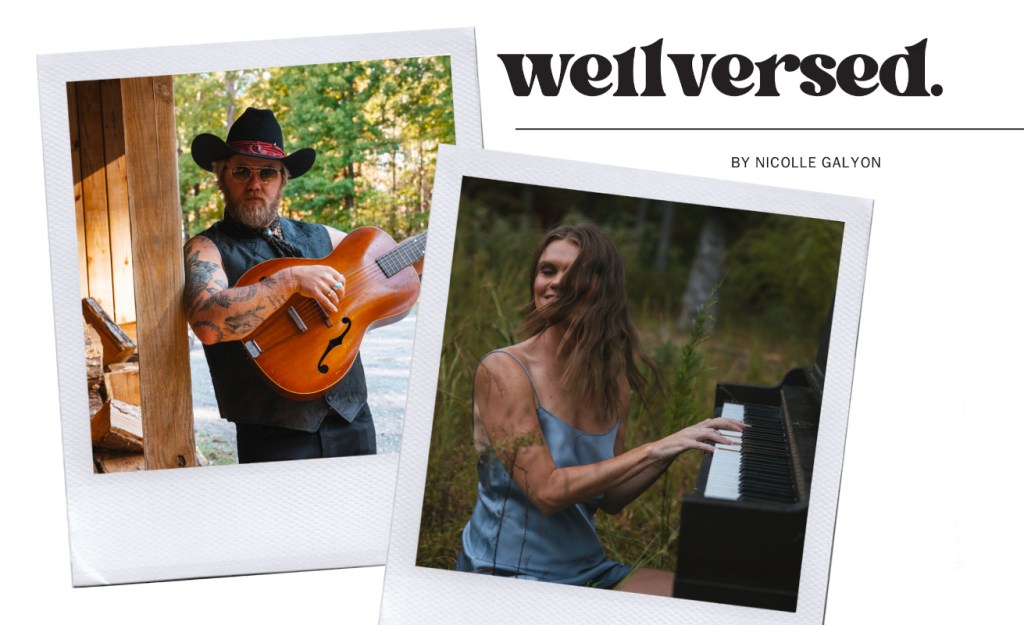
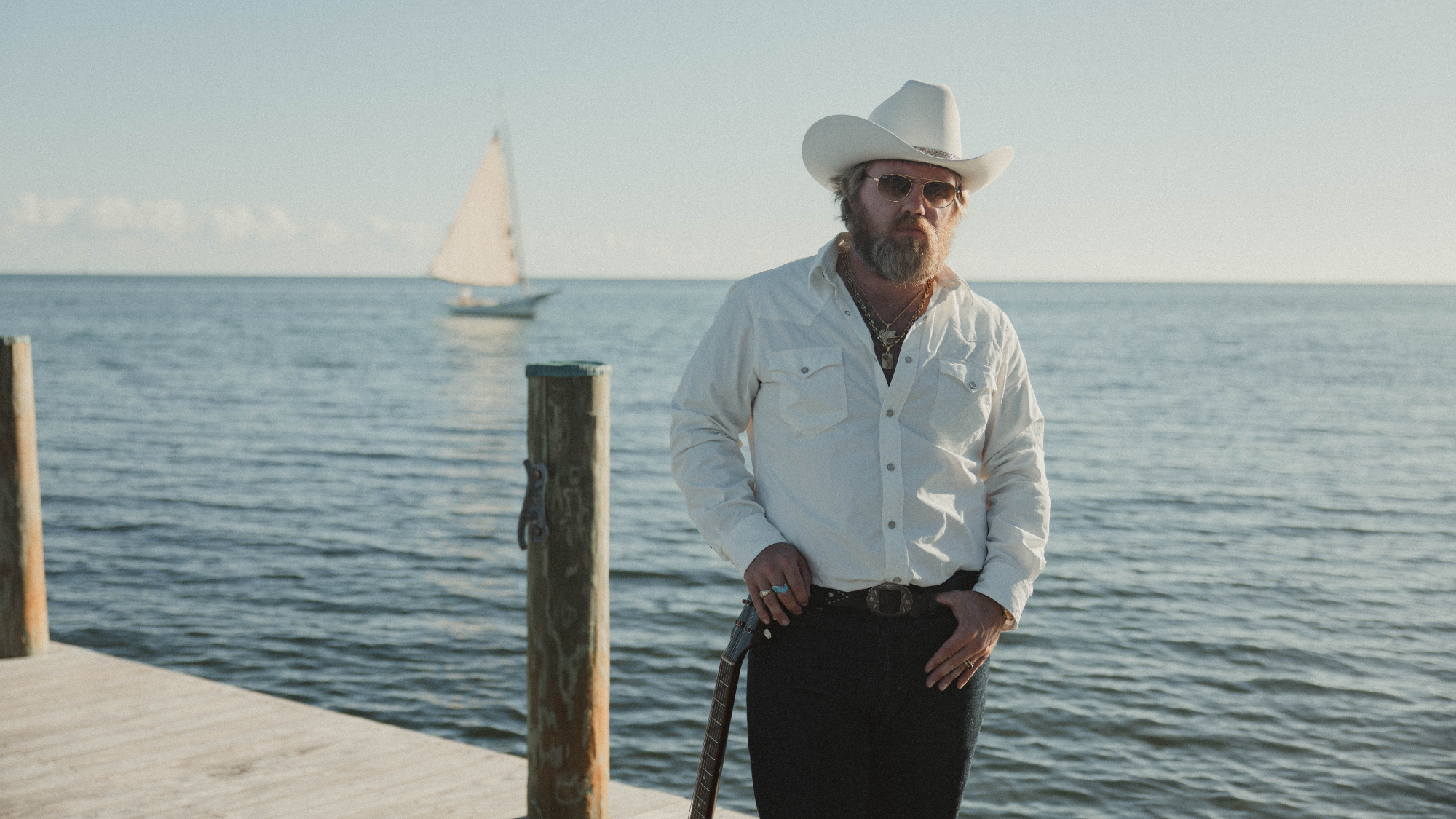
To know the songwriter Ernest is to not only know Ernest, but it is also to know the kid called Keith, the rapper named SNO, the often abbreviated and pun-affiliated Ern, and, of course, as it reads on his BMI awards, Ernest K. Smith. So when we sat down to discuss the concept of intros in songwriting, it quickly dawned on me that I wasn’t sure how he himself would most want to be “intro’d” to the world. But for a creative savant with such chameleonic tendencies, our conversation mainly revealed that his evolution and expertise as a songwriter are rooted more in tradition and timeless practices than the changing tides of trends. In this first installment of Well Versed: The Intro (or should I say The Erntro?), we covered everything from his introduction to Nashville (they go way back), how his songs introduce themselves to him out of thin air, and the hand he is now playing in introducing the world to the next wave of creators in Nashville. I introduce you to Ernest.
Nicolle: Who gave you your first real intro to Music Row?
Ernest: I would say growing up with Mitchell Tenpenny and Rafe Tenpenny in the Tenpenny house. I slept on their couch, and that was my home away from home. Donna Hilley was their grandmother, so most of our hangs were at her house. I grew up not knowing anything about the music business, but I had a Sony ATV hoodie that I wore all the time in seventh and eighth grade, saw all the Brooks & Dunn plaques on her wall, and heard all the stories. She was just this iconic fixture that I knew of. Five or six years later, when I turned 20, the Warren Brothers were the ones who really introduced me into the [songwriting] world and believed in me. I had nothing but a handful of shitty songs, halfway wrapped songs on guitar, and I connected the dots because they were like, “Oh, Donna Hilley signed us to our first deal,” so it automatically felt like home. And then through them, it was Seth England and Big Loud. They took me into Big Loud for my first meeting with them. So I’d say between Donna Hilley and the Warren Brothers, they were my segue into Nashville.
Nicolle: Looking back, did you realize the power of those early introductions — or did that only come in hindsight?
Ernest: In the moment, being just a hungry kid kind of chasing my own tail through this whole thing, I was very thankful for each introduction, but those introductions don’t level you up immediately—all they can do is get you in the room. The one consistent thing I’ve always done is that I’m the same guy in every room. Once I got in the room with Brian [Kelley] and Tyler [Hubbard] and was able to freestyle rap and do that stuff on an FGL-type beat, that’s when things started clicking. In hindsight, yes, I can connect the dots perfectly—it’s truly a constellation of core moments. But in the moment, and I’m still this way, I’m just head down, foot forward.
Nicolle: I always say the intro of any song isn’t actually the intro of the song—it’s the flow of conversation, the stuff that’s happening in the writing room before you even start writing. And the song, in hindsight, is kind of starting to write itself. What kind of environment is most conducive to sparking ideas and getting a song off the ground?
Ernest: When it doesn’t feel like a 9–5. Some of the harder days were my first writes at Sony ATV, where you show up to an office at 10 a.m. and there’s a hard out at 3 p.m. Especially at the time, everybody knows their first pub deal is going to be speed dating. But now I love that I can show up, it’ll be a hang, we’re sitting on couches, smoking a joint, somebody’s making coffee, somebody’s playing FIFA. Grab a guitar and kind of just start making something up, just to make noise, and then every now and then it’s a good idea, and we can sit down and write it right there.
Nicolle: Once an idea clicks, how important is finding that first line—the tone-setter?
Ernest: So many great songs start with iconic first lines—It was all I could do to keep from crying [“You Never Even Call Me By My Name” by David Allan Coe] or The bars are all closed and it’s four in the morning [“If Drinkin’ Don’t Kill Me (Her Memory Will)” by George Jones] Those openings set the tone. But for me, when I’m in that free-flow state—whether I’m in my office or anywhere with a guitar—I don’t really plan the first line. Sometimes I’ll have notes, but most of the time it just pours out from the feel of the music.
Nicolle: Well, that’s why I bring it up with you, because from writing with you, you are one of the best at it. It just seems to fall from the sky, whereas it seems like other writers are just laboring over it, grinding to get to a starting point. It feels like you just wake up, kinda all queued up every day, like you’re tee’d up with first lines.
Nicolle: You mentioned 9–5, and we’ve all been in situations where the chemistry just isn’t there. It’s nobody’s fault. I’ve had times where there’s no reason to be annoyed with someone, but I just shut down creatively or emotionally, and it blocks the whole process. What’s a big non-starter for you in a co-write? What kills your vibe the fastest?
Ernest: Say I freestyle a verse/chorus and if somebody’s like, “yeah, no,” and immediately starts judging…if you’re countering just with a “no” or “that’s not it” but don’t have the answer, I’m just like, “Alright then; I would have figured out that that wasn’t it.”
Nicolle: Yeah, Jimmy Robins always says, “Be a ‘yes, and’ person,” like “Yes, I like that, and what about this.”
Ernest: Yes, tact is everything. We all wanna get the best song at the end of the day. And I’m sometimes bad about that, I’ll put the mirror on myself because I’m so ADD that it’s hard for me, and it’s great when I’m with a Craig [Wiseman] or a Dean [Dillon] and they go off without you for like 10 or 15 minutes. My nature is trying to write 25 verses during the silence, but then they’ll come back with a beautifully structured verse, and it’s just like, “Hell yeah, that was perfect.” Everybody’s different. I work great with you because if I’m in a flow state, you’re like gutter guards, and it’s a true game of tennis, rather than “I got the ball.”
Nicolle: Well, I do think when you write with somebody as free-flowing as you, there’s this tendency to feel like you need to contribute—because we’re all trying to get our equal third or fourth of the song. But with someone like you, you have to take a different approach and just let the plane take off, be air traffic control, and say, “Keep going, you’re already off the ground.”
Ernest: I’ve had to learn that role. When I write with HARDY, I’m more of a co-pilot. He’ll already have the concept, title, and rhyme scheme going, and I’m like, “bro, don’t let me mess that up—I’ll just ‘hell yes’ you all the way through.” Sometimes, being a good vibe in the room matters more than adding words.
Nicolle: What do you do when you’re in that situation when someone is using judgment or being critical? What have you found yourself doing to cope? Are you somebody who walks out of the room, or do you just try to grind and get the song done, so you can get out of there?
Ernest: I’ve done both. My goal is to get a song done, and I can put my pride aside and finish it, and it’s not like I’m gonna be moody all day. But I will definitely go take a long piss. I’ll go step outside, smoke a joint, and make a phone call. If I’m in that room, I can’t help but put out ideas, so I’m gonna remove myself from the room for 10 or 15 minutes, and I hope y’all got something while I’m gone. Not in a mean way, just don’t let me distract you from getting your thoughts out because if I’m here, I’m gonna make noise.
Nicolle: In your opinion, what are some of the most iconic intros? Is there an iconic intro of a song, before the lyric starts, that comes to mind?
Ernest: “The Chair” is one of the first ones that comes to mind. “Pickup Man,” “Miami, My Amy.” The intro is so important because there are so many, especially in country music, where it’s like, you hear that Brent Mason lick, you know it’s time to honky tonk. Or “The Grand Tour.”
“Your Body Is A Wonderland,” John Mayer. You know it when you hear it. “Slow Dancing In A Burning Room,” you know it.
Nicolle: Since we’re talking about intros, you started Cadillac Music. You have a label and a publishing venture where you’ve created this entire culture around introducing new talent to the world. What is it in a writer that you see that turns your ear or makes you want to go into a long-term partnership with them? What is it that you notice in somebody that really gets you?
Ernest: Well, with Chandler [Walters], we basically lived together every day for two years. I met him when he was 18, and he was already super musically inclined, a great player, and a human jukebox. He has a deep well of musical information in him. I started putting him in rooms on the road, and he was so natural with being the right guy in the room, always having guitar parts—like good guitar parts, and he’s also able to pick out a melody. I saw it in him so young, and I was like, OK, if we water this, he’s going to be just fine.
Same with Rhys [Rutherford]. Rhys is obviously a great singer; his dad is a legendary songwriter. I think the common denominator in all of these people I’m talking about—and maybe just people I get along with in general—is old souls. People that I know are going to be good storytellers. Cody Lohden, a man of very few words, but an old soul, a sweet guy, a great singer, and good instincts. I think it matters what you listen to and the variety of stuff you listen to. Your music taste definitely matters when it comes to whether I want to write songs with you. It’s not just like, “Oh, I listen to Merle Haggard.” No, I hope you know the Space Jam soundtrack. R&B. I hope you have a wide variety of stuff you listen to, so that way you can get in any room and go any direction.
Nicolle: You see that with writers or artists who sign others—there’s usually a shared set of values. The “old soul” thing makes total sense as your common thread. Everyone always asks what advice you’d give new writers, but I’m curious—what would you tell them not to do in a room? Sometimes that’s the most helpful.
Ernest: I wish somebody had told me these because I did them. If you’re a young, new writer, don’t get drunk in your write. Get a verse chorus done before, at least.
Don’t ask a million questions, get in where you fit in, and be more observant, but also be confident. It’s easier said than done, but don’t walk into a room nervous or excited. You belong in that room, you got in that room, and that should be your demeanor.
If you’re the new writer, don’t be the first one to leave and get there early. If your write is at 11, you should be on Music Row an hour before. If you’re writing at a publishing house, there’s no reason you can’t get there 45 minutes early and hang out because you’re going to meet somebody, and you could start another idea. Getting there early is always the move.
Nicolle: I’m going to name off one of your songs, and I want you to reply with just one word that comes to mind with that song. Completely out of context, just whatever word comes to mind.
Nicolle: “Son Of A Sinner”
Ernest: Magic.
Nicolle: “I Had Some Help.”
Ernest: Quick.
Nicolle: “Somebody’s Problem”
Ernest: Nostalgic. I remember that day like it wa yesterday. Nostalgic.
Nicolle: “Flower Shops”
Ernest: Monumental.
Nicole: “Breaking Up Was Easy In The ‘90s”
Ernest: LOL
Nicolle: You’ve had so many iterations of you as an artist and a writer. You can listen back through the SNO era to now, and you’ve worn so many hats. At the end of it all, if you were being inducted into the Songwriters Hall of Fame, how would you want to be introduced? And who would you want to be introduced as?
Ernest: I’d be introduced as Ernest Keith Smith. Probably just a kid that was born and raised in Music City. Grew up not knowing what he wanted to do besides this, and was willing to try every avenue to get here. And as I got older, I became more aware and passionate in the belief that
country music is an eternal flame, and it is our job to pass that torch down. And through writing songs, I got to experience this life in a way that a lot of people will never get to, and I’m forever blessed for it. And with that torch, I was able to spread it to as many people as possible to ignite that fire so that it can live on forever.
Nicolle: If you had to write a song right now about where you are in your life, what would it be called?
Ernest: “Always Almost There”

Leave a Reply
Only members can comment. Become a member. Already a member? Log in.