
Getting to the top of the charts is easy compared to the second challenge waiting just on the other side of this accomplishment: staying there. The Beatles were discovering how difficult this follow-up hurdle was in 1964, months after “I Want To Hold Your Hand” hit No. 1 in the States. Beatlemania might have been in full swing, but the band was responsible for keeping that fire going.
Eager to recreate their success and linger on the charts a little longer, The Beatles followed up with “Can’t Buy Me Love”. With George Harrison on a jangly twelve-string guitar, the song fit perfectly in the musical zeitgeist. And indeed, it was a hit. “Can’t Buy Me Love” topped charts worldwide, cementing itself among the most ubiquitous early Fab Four tunes.
Videos by American Songwriter
Interestingly, producer George Martin played a significant role in the writing process, adding the intro and outro tag and essentially framing it as a 12-bar blues number. But lyrically, neither Martin nor anyone else involved thought to double-check the track for any double entendres.
No, “Can’t Buy Me Love” Wasn’t About That
The “my love is free” trope has become commonplace in modern pop music, but even a seemingly innocent idea like that could be taken the wrong way in the ultra-conservative world of 1964. Some critics accused The Beatles of singing about sex work in “Can’t Buy Me Love”, despite the very nature of the line “money can’t buy me love” directly negating that business model (but we digress).
Discussing this hidden meaning, Paul McCartney later said, “Personally, I think you can put any interpretation you want on anything. But when someone suggests that ‘Can’t Buy Me Love’ is about a prostitute, I draw the line. That’s going too far.”
McCartney’s defense against the more salacious interpretations of his songs was indicative of the times—and of The Beatles’ career progress. In 1964, The Beatles were on the verge of becoming global phenomena. But their fame was still in its infancy. In this way, they were more beholden not to upset the pearl-clutchers of the world.
Two years later, a journalist asked McCartney about what his intentions were when writing “Day Tripper”. Critics also thought this track was about prostitution. McCartney slyly told the journalist his intentions behind the song were “to write songs about prostitutes,” per The Beatles: Off The Record. In just a year, The Beatles’ fame had grown so immensely that McCartney felt comfortable making jokes about topics that could have toppled their burgeoning career months earlier.
John Lennon later said of “Can’t Buy Me Love”, “This is better than our other records. It’s certainly the one we most enjoyed doing. This is a 12-bar number, which is what we’ve always wanted to do.”
Photo by Michael Ochs Archives/Getty Images
More Behind The Song
-
MINNEAPOLIS – AUGUST 3: Prince performs a benefit concert for the Minnesota Dance Theatre at First Avenue nightclub in Minneapolis, Minnesota on August 3, 1983. (Photo by Jim Steinfeldt/Michael Ochs Archives/Getty Images) -
LOS ANGELES – 1974: Singer Joni Mitchell performs in 1974 in Los Angeles, California. (Photo by Donaldson Collection/Michael Ochs Archives/Getty Images) -
DETROIT, USA – 1st FEBRUARY: Gary Wright performs live on stage in Detroit, Michigan in February 1976. (Photo by Fin Costello/Redferns) -
ASHVILLE, TN – JUNE 07: Bob Dylan appearing on "The Johnny Cash Show" for ABC/TV taped at Ryman Auditorium on June 7, 1969 in Tennessee, Nashville. (Photo by Michael Ochs Archives/Getty Images) -
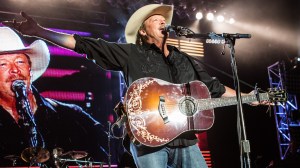
OS ANGELES, CA – JULY 25: Musician Alan Jackson performs at The Greek Theatre on July 25, 2012 in Los Angeles, California. (Photo by Chelsea Lauren/WireImage) -
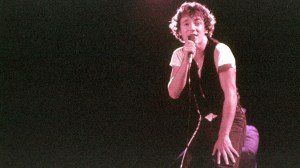
Singer and songwriter performs in 1975 in Los Angeles, California. (Photo by Suzan Carson/Michael Ochs Archives/Getty Images) -
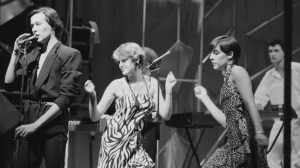
The Human League performing to their single 'Love Action (I Believe In Love)' on the BBC TV music show, 'Top Of The Pops', London, 6th August 1981. Left to right: Phil Oakey, Susanne Sulley and Joanne Catherall. (Photo by Michael Putland/Getty Images) -
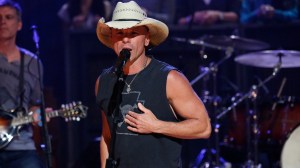
LATE NIGHT WITH JIMMY FALLON — Episode 825 — Pictured: Musical guest Kenny Chesney performs on April 30, 2013 — (Photo by: Lloyd Bishop/NBCU Photo Bank/NBCUniversal via Getty Images via Getty Images)