
David Bowie did an interview with NPR back in 2002, where he was interviewed by Terri Gross about his music, legacy, and then-current tour. Somewhere in the interview, Gross asked Bowie what music he often listened to as a teenager. Bowie responded that he listened to just about anything… except for country music. But he made time for Tibetan horns, apparently.
“Oh, wow. It was so… I think the only music I didn’t listen to was country and Western, and that holds to this day,” said Bowie. “It’s much easier for me to say that. The kind of music I didn’t listen to was pretty much that. I mean everything, from jazz to classical to popular. And Tibetan horns were a great part of it in 1966, [19]67. (Laughter) I love Tibetan horns. I think Tibetan horns are one of the most wonderful sounds in the world, and Tibetan chanting. It’s great.”
Videos by American Songwriter
So not only did Bowie not particularly enjoy country music in his youth, but he never really got into it as an adult. Look back at his career, too. Plenty of his contemporaries, from Ringo Starr to The Rolling Stones to Bob Dylan, all touched on country music at some point in their careers. Bowie never did.
Could there be a reason for that? Well, actually, there are probably a few reasons.
Why David Bowie Never Went Country
To start… if David Bowie didn’t have any interest in the genre in his youth or in his adulthood. So why “go country” as an artist at any point? Bowie was a dynamic artist who changed up his aesthetics and music in various ways throughout his career, but he always stuck to what he was artistically interested in. Country music just didn’t vibe with him, it seems.
It’s also worth noting that Bowie’s style of songwriting and musicality wasn’t really in line with country music in the 1970s and 1980s. During those eras, country music (at least, popular country music) was very direct in its narratives and storytelling. David Bowie was known to flirt with stories but remained more poetic and ambiguous with his lyrics. Country music wasn’t, admittedly, a very theatrical genre during the 1970s and 1980s. It was about the music first. Bowie definitely focused on music first, but so much of his greatest work relied on a theatricality that made his work (and personas) so much more memorable.
Bowie wasn’t hostile toward country music at all. He just wasn’t interested in checking all the boxes of an aging rock star attempting to stay relevant. He stuck to his guns, and that yielded one of the most incredible careers in rock history.
Photo by Michael Putland/Getty Images
More Features
-
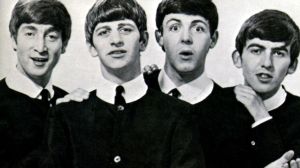
Photo by Fireshot/Universal Images Group via Getty Images -
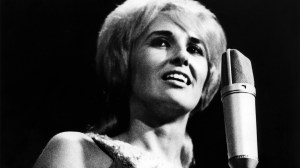
UNSPECIFIED – JANUARY 01: Photo of Tammy WYNETTE; Portrait performing at microphone (Photo by Charlie Gillett/Redferns) -
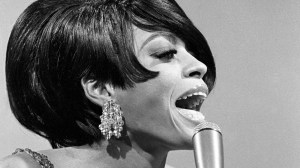
UNSPECIFIED – CIRCA 1970: Photo of Diana Ross Photo by Michael Ochs Archives/Getty Images -

Singer Tiffany performing on stage at the Midem Music Conference in Cannes, February 4th 1988. (Photo by Dave Hogan/Getty Images) -
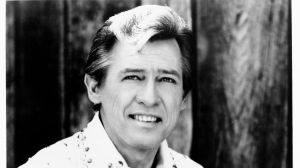
UNSPECIFIED – CIRCA 1970: Photo of Cal Smith Photo by Michael Ochs Archives/Getty Images -

Cyndi Lauper performing at a WNEW Christmas Concert at Madison Square Garden in New York City on December 19, 1986. -
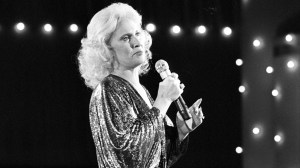
UNSPECIFIED – CIRCA 1970: Photo of Tammy Wynette Photo by Michael Ochs Archives/Getty Images