
Rolling Stones multi-instrumentalist and founding member Brian Jones died at the age of 27 on July 3, 1969. Later that same year, singer-songwriter and actress Marianne Faithfull spent time with Jones in a nameless, formless world reminiscent of an Edmund Dulac illustration. Or, at least, so she thought—that posthumous visit was made possible by the coma she slipped into after taking over 100 barbiturate pills in a hotel room in Sydney, Australia.
When she awoke, she fed Mick Jagger a line that would go on to form the basis of one of the band’s most iconic songs of all time.
Videos by American Songwriter
Marianne Faithfull Imagined Seeing Brian Jones After Overdosing
By the time Marianne Faithfull and Mick Jagger got to Australia in the latter half of 1969, they were both worse for wear. As Faithfull recalled in her autobiography, looking in the mirror frightened her. The thin, scared, and nervous individual who stared back at her reminded Faithfull of Brian Jones. She began to equate herself with the late Stones member in her mind: expendable martyrs the band was willing to part with. Then, she made what was meant to be a fatal decision. If she and Jones were now the same person, then she needed to die, too, to complete their conjoining.
While Jagger was asleep in the hotel bed, Faithfull consumed over 100 sleeping pills. She attempted to open a window to jump out. But thankfully, the windows wouldn’t open far enough for her to do so. Instead, she slipped into a coma that lasted for almost an entire week. At some point, Jagger woke up and found Faithfull unresponsive and rushed her to the hospital. Meanwhile, Faithfull was having a vision of walking with Jones through a shapeless, “quivering” world. She wondered if he knew he was dead. She wondered if she was, too.
Eventually, Faithfull wrote, “We came to the edge of the Dulac landscape. It dropped off abruptly and completely. There was a very obvious point where you chose whether to go over the edge or not. Brian said, ‘Coming?’ and slipped off the cliff. I drew back. I heard a chorus of voices calling to me. But I wasn’t ready just yet.”
When She Finally Woke up, She Inspired “Wild Horses”
After six long days in a Sydney hospital, Marianne Faithfull woke up from her coma. “The first person I saw was Mick,” she wrote in her autobiography. “He held my hands in his and said, ‘You’ve come back!’ ‘You can’t get rid of me that easily,’ I replied. ‘Don’t be so silly, darling. God, I thought I’d really lost you this time.’ ‘Wild horses,’ I said, ‘wouldn’t drag me away.’”
Any Rolling Stones fan will recognize this post-coma line as the refrain of the band’s 1971 track, “Wild Horses”, off Sticky Fingers. Although Mick Jagger would later claim the song itself wasn’t about Faithfull, it would appear that she at least inspired the main hook. Such was her way in the late 1960s, serving as a creative muse (a job she described as lousy) for The Rolling Stones’ vocalist.
The incident widened the already growing divide between Faithfull and Jagger. But that brief, tender moment in the hospital lives on forever through this iconic Rolling Stones track.
Photo by Mark Hayward Archive/Redferns
More Behind The Song
-
Singer Leo Sayer performing at the Greek Theatre, Los Angeles, California. 26th July 1977. (Photo by Kent Gavin/Mirrorpix via Getty Images) -
NASHVILLE, TN – APRIL 24: Singer-songwriter Eric Church and Katherine Blasingame Church attend Best Cellars Wine Dinner hosted by T.J. Martell Foundation on April 24, 2017 in Nashville, Tennessee. (Photo by Jason Davis/Getty Images for T.J. Martell) -
Keith Whitley Portrait Session Country singer and songwriter Keith Whitley poses for and RCA Records publicity still in 1984. (Photo by Michael Ochs Archives/Getty Images) -

Musician Toby Keith performs on stage during the 2009 CMT Music Awards at the Sommet Center on June 16, 2009 in Nashville, Tennessee. (Photo by Jeff Kravitz/FilmMagic) -
(Original Caption) 2/17/56-Hollywood, California: Singing actress Doris Day models one of the American-girl-look outifts she's designing for Little Miss English Ltd. The full skirt and matching sleeveless camisole blouse are of silk-finish cotton satin in a leaf print on soft blue. The companion sweater, a feature of all Miss Day's designs, picks up one of the leaf colors and is trimmed with French cuffs and Peter Pan collar of the print material. The three pieces may be bought separately. -

Tom Jones at the Metro in Chicago, Illinois, December 2,1994. (Photo by Paul Natkin/Getty Images) -
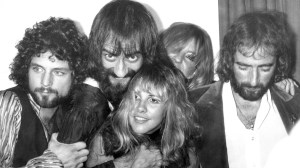
LOS ANGELES – SEPTEMBER 1: Fleetwood Mac (L-R Stevie Nicks, Lindsey Buckingham, Christine McVie, John McVie and Mick Fleetwood) backstage at the Los Angeles Rock Awards on September 1, 1977 in Los Angeles, California. (Photo by Richard Creamer/Michael Ochs Archives/Getty Images) -

Luther Vandross on stage at the 2002 American Music Awards at the Shrine Auditorium in Los Angeles January 8, 2002 (Photo by KMazur/WireImage)