
Some of what the 1970s deemed as acceptable, albeit risky, publicity stunts would be grounds for a swift and immediate cancellation these days, and the Rolling Stones billboard that spurred a wave of feminist protests in 1976 was certainly no exception. The protests evolved into a years-long boycott of Warner, Elektra, and Atlantic Records, a successful rescission of the ad campaigns, and a public apology from the band.
The Rolling Stones’ career didn’t suffer too terribly from the incident. But in today’s modern hindsight, the fact that anyone would have ever approved the campaign in the first place is pretty mind-boggling.
Videos by American Songwriter
The Rolling Stones Billboards That Ended In Protests
The Rolling Stones’ 13th studio album would be an especially critical one in their career. Their second guitarist, Mick Taylor, recently left the band, making the record the Stones’ first with a new lineup. Black and Blue featured Keith Richards on the bulk of the guitar parts, with extra assistance from Canned Heat’s Harvey Mandel and future permanent Stones member Ronnie Wood. With so much riding on this album, the band sought to make a memorable ad campaign to get the word out.
And indeed, they did. The Stones’ promotional team hung a billboard on Sunset Boulevard in Los Angeles, California that depicted a lace-clad blonde covered in bruises and tied up with rope. Her legs were spread on either side of a platform she was sitting on that had the cover image of Black and Blue superimposed on it. Beneath the model were the words “Black and Blue. The Rolling Stones” in cursive. It didn’t take long for people to notice the scandalous advert. Outcry soon followed.
In a 1976 edition of the newsletter Breakthrough, the WAVAW, or Women Against Violence Against Women, argued the Stones’ billboard “exploits and sensationalizes violence against a woman for the purpose of increased record sales.” They added that the billboard “contributes to the myth that women like to be beaten, and condones a permissive attitude towards the brutalization of women” (per The Guardian). The WAVAW took their protests to the street, too. Five women involved with the WAVAW splashed red paint over the billboard, writing, “This is a crime against women” across the bottom of the advertisement.
Responses To The Successful Protest Campaign
The Rolling Stones’ record label, Atlantic Records, quickly responded to the WAVAW protests by taking down the billboard on Sunset Boulevard. After the WAVAW maintained a boycott over Atlantic and other record labels, like Elektra and Warner, for several years, the labels’ parent company eventually agreed to institute a sensitivity training program for advertising executives. The Rolling Stones also apologized for the controversial billboards. They claimed that they didn’t intend to demean the model or, more broadly, women in general.
The model in the scandalous advertisement, Anita Russell, didn’t harbor any resentment for the gig. “I didn’t mind at all,” she later told the Observer. “In fact, I was happy for the work. I knew about ‘I’m black and blue from the Rolling Stones.’ And I knew that the bruises meant I’d been beaten and tied. But I wasn’t a model who could only pose and look pretty.” Russell said that the content of the advertisement didn’t bother her because she knew it was tongue-in-cheek.
The scandal surrounding the billboard advertisement largely overshadowed the music itself. But history would show that it didn’t affect the Rolling Stones’ ability to dominate the rock ‘n’ roll scene for the rest of the 20th century and beyond. Instead, the billboards that led to protests are merely an artifact from the band’s past, proving just how much the times have changed from the 1970s to now.
Photo by Gie Knaeps/Getty Images
More Features
-

Photo by Rick Diamond/WireImage for BMI Nashville -
IN CONCERT – From London – Shoot Date: June 13, 1974. (Photo by ABC Photo Archives/ABC via Getty Images) BLUE SWEDE -
30th January 1969: British rock group the Beatles performing their last live public concert on the rooftop of the Apple Organization building for director Michael Lindsey-Hogg's film documentary, 'Let It Be,' on Savile Row, London, England. Drummer Ringo Starr sits behind his kit. Singer/songwriters Paul McCartney and John Lennon perform at their microphones, and guitarist George Harrison (1943 – 2001) stands behind them. Lennon's wife Yoko Ono sits at right. (Photo by Express/Express/Getty Images) -
MELBOURNE, AUSTRALIA – Keith Urban performs during "The Songs Of John Farnham, The Celebration Concert" at Rod Laver Arena on September 20, 2026 in Melbourne, Australia. (Photo by Graham Denholm/Getty Images) -
3rd September 1968: American psychedelic rock band, The Doors during a press conference at Heathrow Airport, London (left to right); drummer John Densmore, keyboard player Ray Mansarek, vocalist Jim Morrison (1943 – 1971) and guitarist Robby Krieger. (Photo by Central Press/Getty Images) -
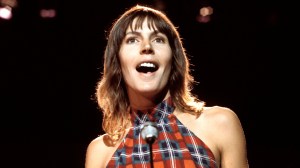
Australian-American singer, songwriter, author, actress, and activist Helen Reddy (1941 – 2020), 1975. (Photo by Tony Russell/Redferns) -
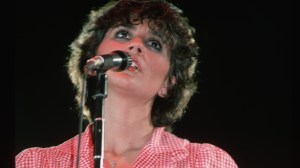
Original Caption) : 1980-Pop singer Linda Ronstadt is shown singing on stage, holding the microphone stand. She wears a gingham shirt with a tie front and askirt with flowers on it in this waist-up portrait. (Photo by Lynn Goldsmith/Corbis/VCG via Getty Images) -
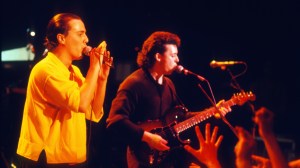
Tears for Fears – Koninklijk Circus – Brussel – Belgium – 21/04/1985 Roland Orzabal, Curt Smith Photo gie Knaeps