Your cart is currently empty!



Travis Bolt Reaches Rock, and Redemption, on New Album ‘Burning Bridges’
Travis Bolt’s 2023 viral single “Never Tried Cocaine” chronicles a series of actual events for the East Texas-based singer-songwriter. He was in the middle of a divorce and traveling around to get his mind off things, prompting the story of a guy who travels to New Orleans and goes on a bender.
“He’s heartbroken,” says Bolt. “He’s talking to all these women, he’s drinking, but he doesn’t get to the point where he tries any of the hard stuff.” The track is one that connected with fans and made its way onto Bolt’s new album, Burning Bridges.
Produced by Jason Burt (Leon Bridges, John Mayer), the 14-track album is a timeline of events, pulled from real-life heartaches, misunderstandings, and a newfound heightened self-awareness in his 26 years. Within all the mess of “figuring things out,” Bolt has written a songbook of anthems of determination and redemption.
“This album has a lot more redemptive quality than a lot of my music,” shares Bolt. “There’s still some of the heartbreak stuff in there, but it’s more the light at the end of the tunnel of heartbreak than just getting into the tunnel.”
Though written within two years, Burning Bridges was nearly a decade in the making, following life, experiences, and Bolt evolving the sound he wanted.
Opening on the full-bodied soul-search of “Seasons,” and pangs of love on “Last Goodbye,” Burning Bridges makes plenty of way for Bolt’s soulful vocals to wander around the country-rock and harder points on “Nothing’s Gonna Stop Us,” “Wasting My Time,” and “Six Shooter,” something Bolt has gravitated toward more.
“I really want to lean more into the rock,” says Bolt. “I want to lean more into the blues and the soul. I really want that Nickelback, [Chris] Stapleton, Teddy Swims altogether.”
Videos by American Songwriter
A perfect start is “Blues at My Funeral,” a broodier foreshadowing of the end, and how he’d like to go out—Tell my mama I found peace / Tell my brothers I’m set free / Give my baby what I got left / And leave my Bible on the shelf. One of a few honest self-assessments, circling back to burning bridges, is the honest “You Shoulda Known”—I tried to tell you I was bad news, you tried to love me anyway after everything.
“This is something I go through all the time, being single, divorced, trying to navigate the dating world again, not really having the time, but wanting companionship and things,” shares Bolt. “I’m very honest and upfront with my intentions and everything, as everyone should be. Some people might think it’s harsh, but it’s true. It’s something I go through every day. I try to explain myself to people, and they think that they get it, and then they’ll be let down.”
“Heartache Mixtapes” chronicles more miscommunication. “The guy in the song is himself a song,” says Bolt. “He’s trying to explain himself as a song would explain itself, and she doesn’t understand the song, so she’s never gonna get him right. And I really wanted that ‘Scotty Doesn’t Know,’ ‘90s ‘American Pie’ rock. Jason and I started very traditional, more my style of music, and as it kicks in, it’s just hardcore ‘90s.”
Before leaving off on the sentimental “Coming Home,” Burning Bridges mixes in some telling ballads with “Home Is Where The Hard Is,” and “That’s When I Run,” another cautionary message. “I’m trying to explain myself to people, and everyone says they get it, until they don’t, and then I’m the problem,” shares Bolt. “A lot of these songs are about relationships coming and going, and I do have two older sisters that I talked to about all of this, so if this comes off as me being just a jerk, it’s not. I’m just trying to figure it all out myself.”
A turning point on the album for Bolt was jumping into the co-writing circles in Nashville, something he had been reticent to try earlier in his career. “I got to write with some wonderful people who helped me get these songs dialed in,” he says, “and written in a way that tells the story how I wanted it to be told.”
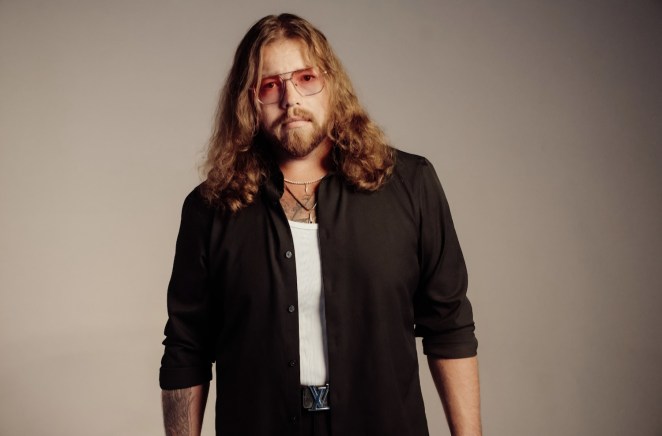
Nowadays, years since Bolt’s 2017 debut, Aquamarine, and earlier EPs—Don’t Care No More (2023) and East Texas Elegy (2025)—there’s no need to be as protective of songs. Now, it’s more a fear of missing out on telling them in the best way he can.
“Being younger and writing, I’ve definitely had my speed bumps with it,” says Bolt, citing the first song he wrote, the moodier blues and harmonica-soaked “Cherokee Winter” and “Colorado Rain,” both from Aquamarine. “When I was younger, I just wrote about what I knew,” he adds. “I was definitely poetic, and I knew how to put something on paper where it could be a song.”
Bolt wrote “Colorado Rain” while sitting on the bank of the Colorado River in Bend, Texas. At the time, a girl he says he was infatuated with flew to New York, and he didn’t know if she was ever going to come back. “If you listen to that song, while I’m sitting on the bank, it’s right in between trying to rain and the moon rising up, so it’s a little cloudy, a little overcast,” he says, “and there’s a line in there that says that ‘Memory creeps up just like the moon over these hills.’”
Back then, some lyrics were written as they happened, whereas now, Bolt is surveying the larger panoramic of the song. “Coming to Nashville and writing, I was never a co-write guy when I was younger,” he says. “It was like ‘This song’s mine. I wrote it myself. I don’t want anyone else touching it.’ It’s like you’re a toddler. I wanted everything to be mine and didn’t want anyone to take any of my credit.”
He continues, “As you start writing with people, it’s three other very talented writers and me, and we all have a line for this verse, and chair number two may have the better line, and make this piece so much better. I started learning how these songs would benefit from having other people on them.”
Working with Burt also allowed Bolt to reach other marks, sonically, that he wanted to hear across the album. “Having a producer as skilled as Jason really helped me break into some of this new stuff that I’m doing,” says Bolt, who recorded the album in between Texas and Los Angeles. “His approach to things really helped me navigate this new project. I’m growing into myself as an artist as well, so getting to work closely with him pushed me a lot in the studio.”
Part of Bolt’s journey around Burning Bridges has been his work with the Tourette Association of America. Diagnosed with Tourette Syndrome as a child, Bolt found the best treatment against facial tics by playing guitar and singing, and is dedicated to sharing his story and the message that others with these symptoms can do the same.
“It’s the best medicine I’ve found,” Bolt said in a previous statement. “And I’ve taken all of them.”
As an advocate, Bolt recently went to Capitol Hill in D.C. to meet with representatives to explore more support for TX education and research. While there, Bolt also performed for and spoke to kids and parents of kids with Tourette’s about his own experiences growing up with the condition, and how he found his strength in music.
“It was tough,” recalls Bolt. “You get picked on. I was overweight and played the tuba, so I already had it bad, and then I had Tourette’s, too. Kids are mean, and I had teachers and doctors telling me I wouldn’t be able to do what I’m doing now, my whole life, because it’s a neurological thing, and there are some things you’re just not able to grasp.”
Bolt says it’s something he had to consistently fight through with the help of music. “I’m not on any medication for years now,” shares Bolt. “Music calms my Tourette’s down. I want to tell those kids, the ones that are going through what I went through, that are getting picked on and beaten up in the bathroom, ‘Look, everyone told me I wouldn’t be able to do it, and I’m out here traveling the world playing music. Don’t let anyone tell you can’t.’ I wish I had someone to tell me that, apart from my family.”
He adds, “I want to be for those kids and those parents, what I didn’t have when I was a kid.”
Moving toward his next album, Bolt wants to continue in the direction of more blues and soulful rock. “This album is exiting out of that phase of my life where I was sad and depressed, and the music was reflective of that more redemptive stage,” says Bolt. “So, the next album is going to be happy, fun, celebratory.
This is what life is now.”
Photo: Sean McGee


Leave a Reply
Only members can comment. Become a member. Already a member? Log in.