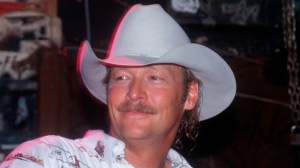
When it comes to success in the music industry, a large percentage of it boils down to being in the right place at the right time. But sometimes, a big break comes along because someone else sets it up before you. For Waylon Jennings, that “someone else” was Bobby Bare, an RCA Victor signee by way of Chet Atkins.
By the time Bare saw Phoenix perform live for the first time at JD’s in Phoenix, Arizona, Bare was already familiar with Jennings’ vocal talent. After hearing Jennings’ song “Just To Satisfy You” on the radio, Bare cut a version of the track himself. Bare and Jennings sang a duet of the song when Bare visited him at his local haunt, which was enough to convince Bare of the Texas native’s star potential.
Videos by American Songwriter
Despite the potential risk to his career, Bare decided to call Atkins and encourage him to secure a record deal with Jennings. “I said, ‘I know I’m cutting my own throat by doing this,’” Bare recalled in a 2026 interview with Dillon Weldon, “‘because we’ll be doing the same kind of songs with the same audience.’ But I said, ‘He needs to be on a major label.’” Bare gave Jennings’ contact information to Atkins, and Atkins wasted no time in calling the regional Southwest star.
Bobby Bare Welcomed His New Competition, Waylon Jennings
The music industry—and, more broadly, the entire entertainment business—can be a jealous, ruthless environment. With so many artists competing for so few chart positions and radio rotations, gatekeeping and sabotage are all too common. Still, there are artists who remain in the business who can see the importance of getting truly talented people in front of the masses. Bobby Bare was certainly acting as one of those artistically minded industry vets when he told Chet Atkins he should sign his future competition to RCA Victor.
“He’s the best thing since Elvis,” Bare had told Atkins, according to Waylon Jennings’ eponymous autobiography. “I know he and I are doing the same kind of songs, the same kind of material for the same kind of audience. But I dug everything about him. His voice, the way the band stays out of his way so you can hear him sing, his hold on the audience. He is so good. He deserves to be on a major label.”
Jennings recalled the shock he felt upon receiving that first Atkins call in his autobiography. It was an offer he couldn’t refuse, so he didn’t. However, history would show that his time in Nashville wouldn’t last long. Eventually, his defiance against the countrypolitan style would lead to his branching out into the outlaw country subgenre.
Still, had it not been for Bobby Bare, there might have been no chart-topping, pop country accolades from which to escape.
Photo by Michael Ochs Archives/Getty Images
More Features
-
Blink 182 during MTV New Year's Eve Bash 2000 at MTV Studios in Times Square in New York City, New York, United States. (Photo by KMazur/WireImage) -
Photo by Adam Ritchie/Redferns -
UNSPECIFIED – CIRCA 1970: Photo of Charley Pride Photo by Michael Ochs Archives/Getty Images -

English rock band Procol Harum posed outside the Centre Point office building at St Giles Circus in London in May 1967. Members of the group are, from left, Ray Royer, Bobby Harrison (1939-2022), David Knights, Gary Brooker (1945-2022) and Matthew Fisher. (Photo by Ivan Keeman/Redferns) -
NASHVILLE, TENNESSEE – Buck Trent performs with Marty Stuart and his Fabulous Superlatives at the second of three Marty Stuart Artist-in-Residence Shows at Country Music Hall of Fame and Museum on September 18, 2019 in Nashville, Tennessee. (Photo by Jason Kempin/Getty Images for Country Music Hall of Fame and Museum) -
MINNEAPOLIS, MN – JULY 11: Dwight Yoakam performs at Northrup Auditorium at the University of Minnesota in Minneapolis, Minnesota on July 11, 1993. (Photo by Jim Steinfeldt/Michael Ochs Archives/Getty Images)