Classic rock songs are usually quite simple in nature. Sure, you have the occasional complex prog composition or a hard rock tune with a very complex guitar solo. But for the most part, the biggest hits of the genre have been simple and smart pieces of work. And if you’re a beginner guitarist, there are actually quite a few classic rock chord progressions out there that are very easy to play. Let’s look at just a few examples, shall we?
“My Generation” by The Who (1965)
How about some simple power chords? “My Generation” by The Who is one of the classic rock outfit’s most famous tunes, and it also happens to be incredibly easy to play. This song uses a simple V-IV chord progression from F# to E. It’s doesn’t get easier than that!
Videos by American Songwriter
And despite being such a simple song, “My Generation” was quite a hit upon its release in 1965. This song peaked at No. 2 on the UK Singles chart and has since been regarded as The Who’s signature song.
“Whole Lotta Love” by Led Zeppelin (1969)
That rhythm is wild, but the riff behind Led Zeppelin’s “Whole Lotta Love” is surprisingly simple. It’s a repetitive and predictable pattern of D5 to E5. And you’ll hear this very rhythm in tons of rock songs that followed in the 1970s and beyond. Led Zeppelin really formed the blueprint for rock music post-1960s.
“Whole Lotta Love” was Led Zeppelin’s first US hit, peaking at No. 4 on the Billboard Hot 100 chart. Today, it’s one of Led Zeppelin’s most instantly recognizable songs.
“Hotel California” by Eagles (1977)
While this example of classic rock chord progressions is on the more complex side, it’s actually still a very easy and simple song to play. This classic from hard rock band Eagles followings a pattern of Bm + F#7 + Asus2 + E7 (G#) + G + D + Em7 + F#7. Those are a lot of chords to memorize, but once you’ve got them down, “Hotel California” is one of the easiest songs of its kind to play.
“Hotel California” was a smash hit upon its release in 1977, peaking at No. 1 on the Hot 100 and No. 8 on the UK Singles chart.
Photo by The Visualeyes Archive/Redferns
More The List
-
Bruce Springsteen -
Photo by Larry Hulst/Michael Ochs Archives/Getty Images -
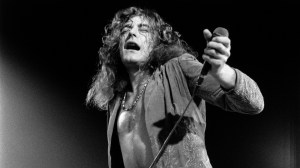
DENMARK – MARCH 02: Photo of LED ZEPPELIN; Robert Plant – Led Zeppelin, March 2, 1973 in Copenhagen, Denmark (Photo by Jorgen Angel/Redferns) -
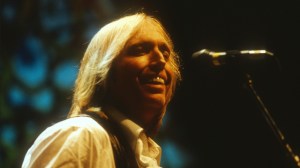
IRVINE, CA – AUGUST 14: Tom Petty and The Heartbreakers in concert at Irvine Meadows Amphitheater on August 14, 1989 in Irvine, California. (Photo by Jeffrey Mayer/WireImage) -
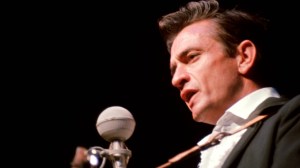
UNITED STATES – JULY 24: Photo of Johnny CASH; Johnny Cash performing on stage, (Photo by Gai Terrell/Redferns) -
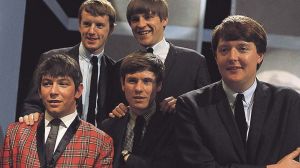
UNITED KINGDOM – JANUARY 01: BBC STUDIO Photo of ANIMALS, L-R: Eric Burdon, John Steel, Hilton Valentine, Alan Price, Chas Chandler, posed, group shot on set of TV Show (Photo by David Redfern/Redferns) -
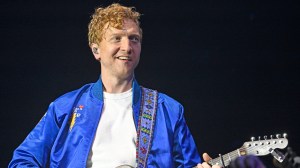
LEXINGTON, KENTUCKY – JUNE 07: Tyler Childers performs during Day 2 of the 2026 Railbird Music Festival at The Infield at Red Mile on June 07, 2026 in Lexington, Kentucky. (Photo by Stephen J. Cohen/Getty Images)