
What makes a perfect song? Is it the hook? Is it the perfect balance of beautiful vocals and pristine instrumentation? Maybe it’s the lyrics, or maybe it’s the overall sound. When it comes to country music, a good country song can be broken down into good vocals, great storytelling, and an all-American vibe. But in the 1970s, there were some noteworthy elements that made a country song successful. Let’s take a look at those elements and the songs that successfully used them to become hits.
The Storyline
In the 1970s, country music was all about the narrative. You really couldn’t hit the charts or get radio play without at least a little bit of storytelling in your country tune in that decade. What was unique about 1970s country storytelling, though, was that you could really explore different things. Much of the 1960s showcased country storytelling’s focus on heartbreak and love. In the 1970s, a lot of artists were singing songs about their childhood, poverty, the Vietnam War, working blue-collar jobs, personal struggles, and beyond. When you get into the 1970s outlaw country movement, that storytelling dives straight into cowboy narrative and concept album territory.
Videos by American Songwriter
It was quite a time for storytelling in music. A few examples include “Coat Of Many Colors” by Dolly Parton (1971) and “Blue Eyes Crying In The Rain” by Willie Nelson (1975).
Sound Quality and Good Acoustic Instruments
Recording equipment had become more sophisticated in the 1970s compared to previous decades. Listen to two records, one pressed in the 60s and the other in the 70s, and you’ll hear the difference. Sound quality had improved in the 70s, but to many, it might seem like the instruments of country music had not changed in the 70s. That’s not entirely true.
While the pedal steel guitar had been around for quite some time, the instrument experienced a revival or renaissance of sorts in the 1970s. Listen to songs like “Willin’” by Linda Ronstadt (1974) and others, and you’ll hear how 1970s country artists reached back in time to bring something important to folk music into the then-modern era.
The Outlaw Attitude
I mentioned outlaw country earlier, but it’s worth noting that the music movement did bleed over into Nashville country music in the 1970s, even though the core elements of outlaw country were the antithesis of Nashville’s polished sound. The attitude of outlaw country was what was highly influential in the 1970s.
A rebellious spirit, an independent attitude, a disinterest in the slick, pretty, clean image of the typical Nashville musician… Those were the core elements of outlaw country, and those elements can be found in songs like “Mammas Don’t Let Your Babies Grow Up To Be Cowboys” by Willie Nelson and Waylon Jennings (1978) and “Take This Job And Shove It” by Johnny Paycheck (1977) among others.
Photo by Tom Hill/WireImage
More The List
-
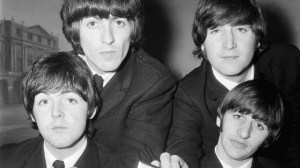
The Beatles pose with their MBEs at a press conference held at the Saville Theatre, London, following their investiture at Buckingham Palace. Top left to right: George Harrison, John Lennon. Bottom: Paul McCartney and Ringo Starr. 26th October 1965. (Photo by Mirrorpix via Getty Images) -
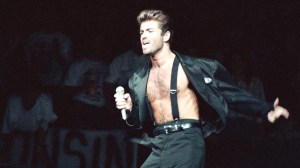
George Michael performing in 1989. (Photo by Jim Steinfeldt/Michael Ochs Archives/Getty Images) -
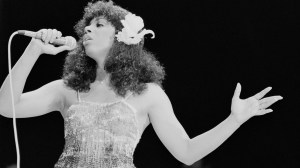
American singer-songwriter Donna Summer (1948 – 2012) performing on stage, USA, July 1979. (Photo by Michael Putland/Getty Images) -
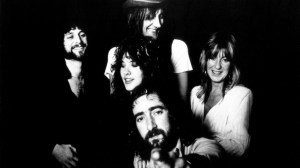
Photo by Michael Ochs Archives/Getty Images -

ROSEMONT, IL – JUNE 7: Phil Collins of Genesis performs at the Rosemont Horizon on June 7, 1980 in Rosemont, Illinois (Photo by Paul Natkin/WireImage) -
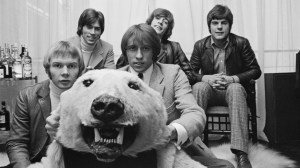
Pop group the Bee Gees posed with a stuffed polar bear in an office in London circa April 1968. Members of the band are, from left, Colin Petersen, Barry Gibb, Maurice Gibb (1949-2003), Robin Gibb (1949-2012) and Vince Melouney. (Photo by Ivan Keeman/Redferns) -
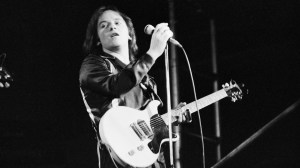
Singer, songwriter and musician Eric Stewart performing with English rock band 10cc, February 1976. (Photo by Michael Putland/Getty Images) -

Patrick Swayze and Jennifer Grey in a scene from the film 'Dirty Dancing', 1987. (Photo by Vestron/Getty Images)