Your cart is currently empty!



3 Songs From 1976 That Sounded More Like the 1980s
By 1976, popular music was already beginning to sound like the music of the 1980s. The synthesizer became a common instrument in rock bands. And disco, regardless of its detractors, had connected dance hall scenes with pop audiences in a way similar to how Motown had advanced soul and R&B.
Videos by American Songwriter
Once the decade began angling toward its conclusion, punk reacted to legacy rock acts while legacy acts attempted to reinvent themselves to stay relevant. So let’s look at three songs from 1976 that helped propel pop music from one decade to the next. With hints of the kind of production we now associate with the 1980s.
“Dancing Queen” by ABBA
Massive hooks largely defined pop hits in the 80s. And there aren’t many hooks bigger than “Dancing Queen”. The Europop production still feels timeless because, at the time, it sounded like the future. I’m not sure how one defines the best pop song ever written, but this one would certainly be in that conversation. The track’s swirling synthesizers evoke 80s nostalgia while still placed firmly in its own era’s dance culture. Many artists experimented with synths in the late 70s, but here, the airy keys seemed to reveal where the synthesizer might take pop music.
“Say You Love Me” by Fleetwood Mac
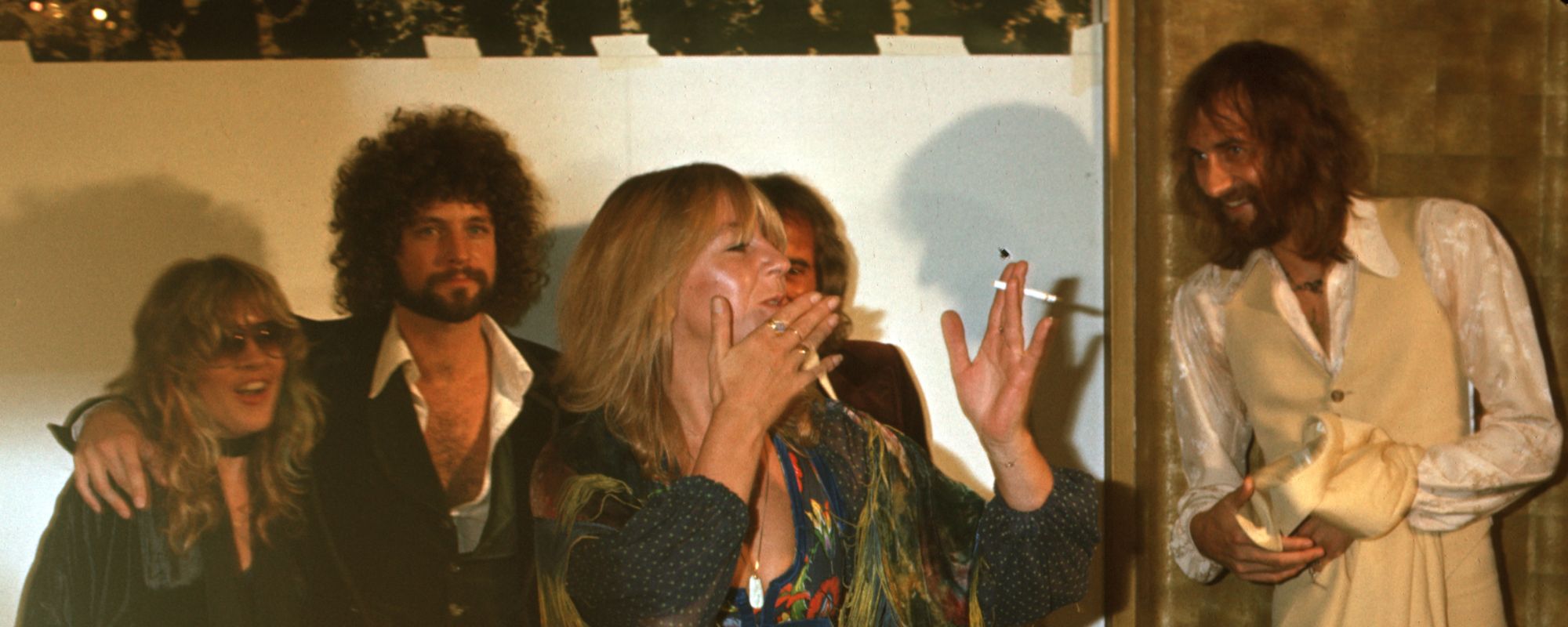
Stevie Nicks and Lindsey Buckingham transformed Fleetwood Mac from a British blues revivalist band into a pop-rock sensation. The 1975 self-titled album felt more akin to a debut, even though Fleetwood Mac had been around since 1967. It felt entirely cut off from its past, and you can imagine hearing Christine McVie’s smooth love song in an 80s rom-com. In a scene where the fumbling character begins to turn their fortunes around. The psychedelic edges of Peter Green’s Fleetwood Mac were long gone. Released as a single in 1976, “Say You Love Me” helped launch soft rock into its pop-rock future.
“Silly Love Songs” by Wings
Like many soft rock tracks from 1976, “Silly Love Songs” foreshadows the glossy production of the following decade. But what’s most striking is the drum intro. The industrial clanking and programmed groove wouldn’t be out of place among the drum machines and sequencers in 80s new wave and synth-pop. Paul McCartney wrote the song in response to his critics, including John Lennon, who often panned his knack for sappy tunes. It was a massive hit, and listeners proved they hadn’t tired of McCartney’s light sentimentalism.
Photo by Michael Ochs
Leave a Reply
Only members can comment. Become a member. Already a member? Log in.