
Mick Jagger proves that technical vocal perfection is not a prerequisite for being an outstanding rock and roll singer. Jagger uses every weapon in his arsenal to deliver the spirit of the lyrics to The Stones’ songs.
That arsenal includes a very effective falsetto that he dusts off now and again. Here are four occasions when Mick’s register went up into the rafters to bring a song home.
Videos by American Songwriter
“Fool To Cry”
Black And Blue gets unfairly maligned, mainly because people somehow associate the story behind its creation with the quality of the music. It’s the record where the Stones hired a bunch of guitarists to play so that they could judge who was worthy of joining the band, with Ronnie Wood ultimately winning out. Aside from that, it’s a particularly strong effort from Mick Jagger and Keith Richards in terms of the strength and variety of their songwriting. That includes, in “Fool To Cry”, a song indebted to the Philly Soul sounds of the era. Jagger saves his falsetto for the chorus, and it’s a sweet technique that hits the mark continuously throughout the track.
“Miss You”
On “Miss You”, Mick Jagger exerted his growing influence on the band’s artistic direction by taking the band to the discotheque. Remember that Keith Richards was dealing with legal problems during the making of the Some Girls album, preventing him from putting up too much of a fight. (That dynamic would change soon enough, causing some real friction in the group.) On “Miss You”, Jagger uses his falsetto as a kind of vocal hook. It’s almost as if the sway of the rhythm coaxes the sound out of him involuntarily. Realizing its effect, he’d return to falsetto “ooo-ooo” vocals on subsequent Stones’ tracks like “Waiting On A Friend” and “Undercover Of The Night”.
“Emotional Rescue”
The album Emotional Rescue is another one that doesn’t get the credit it deserves when compared to others in the Stones catalog. Many heard the title track, which also nodded to disco with its bopping bass line and silky strings playing about the edges, as just a more restrained version of “Miss You”. That’s short-changing what the band, particularly Jagger, pulls off with this track. Instead of saving the falsetto until later on in the song, he hits the audience with it early and often. The technique helps to emphasize the depth of the devotion the narrator feels towards his significant other. When Jagger then switches to a lower register later in the song, it’s a seductive surprise.
“Worried About You”
On Tattoo You, The Rolling Stones proved that musical leftovers can make for quite the sumptuous meal. The band, unable to stand each other long enough to write new stuff, went back through their vaults to find unfinished music that could use some sprucing. In the case of “Worried About You”, the track dates back to the sessions for Black And Blue. The song’s winding solo is played by Wayne Perkins, who was one of the auditioning guitarists who were beaten out by Ronnie Wood for the gig. Mick Jagger ultimately takes the spotlight, using his falsetto liberally to express the frustration that he feels when trying to get through to the girl that he’s addressing.
Photo by Michael Ochs Archives/Getty Images
More The List
-
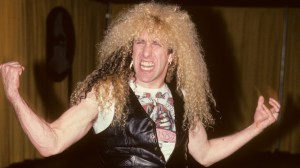
(Photo by Richard E. Aaron/Redferns) -
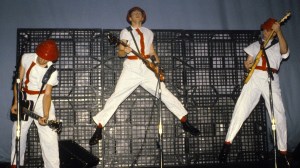
Photo by Ed Perlstein/Redferns/Getty Images -
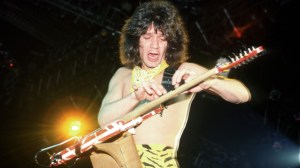
Credit: Ross Marino/Icon and Image/Rock Negatives -
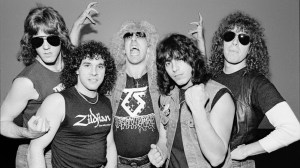
Photo By Larry Busacca/Getty Images -
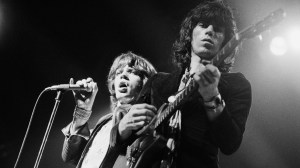
Singer Mick Jagger and guitarist Keith Richards performing with the Rolling Stones at the Empire Pool, Wembley, London, 9th September 1973. (Photo by Michael Putland/Getty Images) -
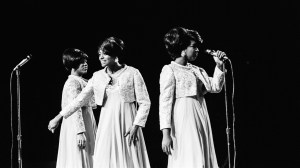
Photo by David Hume Kennerly/Getty Images -
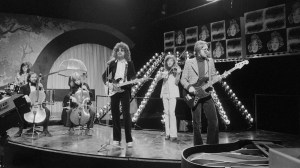
English pop group Electric Light Orchestra (ELO) rehearsing for their appearance on the BBC TV music show 'Top Of The Pops', London, 11th October 1973. The band are miming to their single 'Showdown'. Left to right: Bev Bevan (drums), Mike Edwards (1948 – 2010), Rick Pannell, Jeff Lynne, Mik Kaminski and Mike de Albuquerque. Pannell is the band's sound engineer and is standing in (miming only) as second cellist after the departure of Colin Walker from the group. (Photo by Michael Putland/Getty Images) -
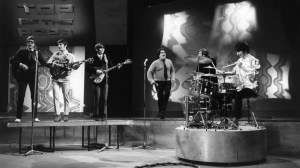
American rock and pop group The Turtles perform the song 'She'd Rather Be With Me' on the set of the BBC Television pop music television show Top Of The Pops at Lime Grove Studios in London on 8th June 1967. Members of the band are, from left, Jim Pons, Jim Tucker, Al Nichol, Mark Volman, Howard Kaylan and John Barbata. (Photo by Ivan Keeman/Redferns)