Janis Joplin’s star burned briefly, but brightly. Growing up an outcast in the oilfields of Southeast Texas, she left a psychedelic imprint on the music industry that still lingers more than five decades after her untimely death at age 27. Joplin’s unmistakable raspy wail and uncompromisingly brash persona made her covers of songs like “Piece of My Heart” and “Cry Baby” forever part of the musical canon. On this day (September 5) in 1970 — almost exactly one month before she was found dead of a h*roin overdose in a Los Angeles hotel — Janis Joplin stepped into the studio to record the definitive version of a Kris Kristofferson classic, “Me and Bobby McGee”.
The Relationship Between Janis Joplin and Kris Kristofferson
For a brief time, Janis Joplin and Kris Kristofferson’s colorful paths collided. The pair met in the spring of 1970 through a mutual friend — folk singer Bobby Neuwirth.
Videos by American Songwriter
With Neuwirth’s encouragement, the “Help Me Make It Through the Night” crooner boarded a plane for Los Angeles after playing a show in New York City. The two spent several weeks at Joplin’s home, likely bonding over their love of storytelling and shared experiences as native Texans.
“I dug her, but I had itchy feet,” Kristofferson later recalled, per Far Out magazine. “I’d get up intending to get out, and in she comes with the early morning drinks and pretty soon you’re wasted enough and you don’t care about leaving.”
Behind the Song: “Me and Bobby McGee”
During their short-lived fling, Kris Kristofferson encouraged Janis Joplin to record one of his recent compositions, “Me and Bobby McGee”.
Running with a title suggestion from Monument Records founder Fred Foster, Kristofferson also drew from the 1954 Italian film La Strada. The movie’s closing scene finds its main character — played by Oscar-winning actor Anthony Quinn — drunk and sobbing alone on the beach years after leaving his female companion behind.
“To me, that was the feeling at the end of ‘Bobby McGee.’ The two-edged sword that freedom is,” Kristofferson told Performing Songwriter. “He was free when he left the girl, but it destroyed him. That’s where the line ‘Freedom’s just another name for nothing left to lose’ came from.
The Rhodes scholar wasn’t aware of Joplin’s decision to record “Me and Bobby McGee” until after her death.
“Afterwards, I walked all over L.A., just in tears,” he recalled. “I couldn’t listen to the song without really breaking up.”
Janis Joplin wasn’t the first to record “Me and Bobby McGee”, but the song belongs to her. Record World said it best when it called the song a “perfect matching of recorder and material.”
By March 1971, “Me and Bobby McGee” had climbed to number one on the U.S. pop chart. It gave Joplin the only chart-topper of her career.
Additionally, “Me and Bobby McGee” marked only the second time an artist had posthumously reached the top of the Hot 100.
Just three years earlier, Otis Redding became the first to achieve this milestone with “(Sittin’ On) The Dock of the Bay”.
Featured image by John Byrne Cooke Estate/Getty Images
-
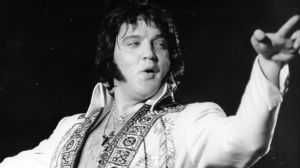
UNSPECIFIED – CIRCA 1977: Elvis Presley in concert circa 1977. (Photo by R.D/Images Press/Getty Images) -
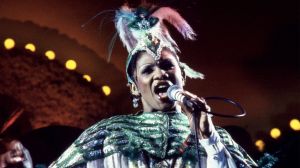
LONDON, ENGLAND – Jamaican-British singer Marcia Barrett, of the German vocal group Boney M., sings during a concert in London, England, December 1, 1978. (Photo by Soxphotos/Getty Images) -
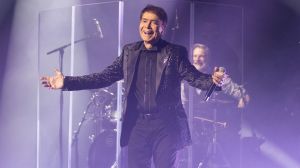
LONDON, ENGLAND – Cliff Richard performs onstage during a concert at Royal Albert Hall on December 08, 2025 in London, England. (Photo by Jo Hale/Redferns) -

LOS ANGELES, CALIFORNIA – Natalie Maines of The Chicks at The Chicks concert held at Yaamava' Theater on June 12, 2026 in Los Angeles, California. (Photo by Katie Flores/Billboard via Getty Images)