Your cart is currently empty!



4 of the Most Musically Adventurous Songs Ever Recorded by Simon & Garfunkel
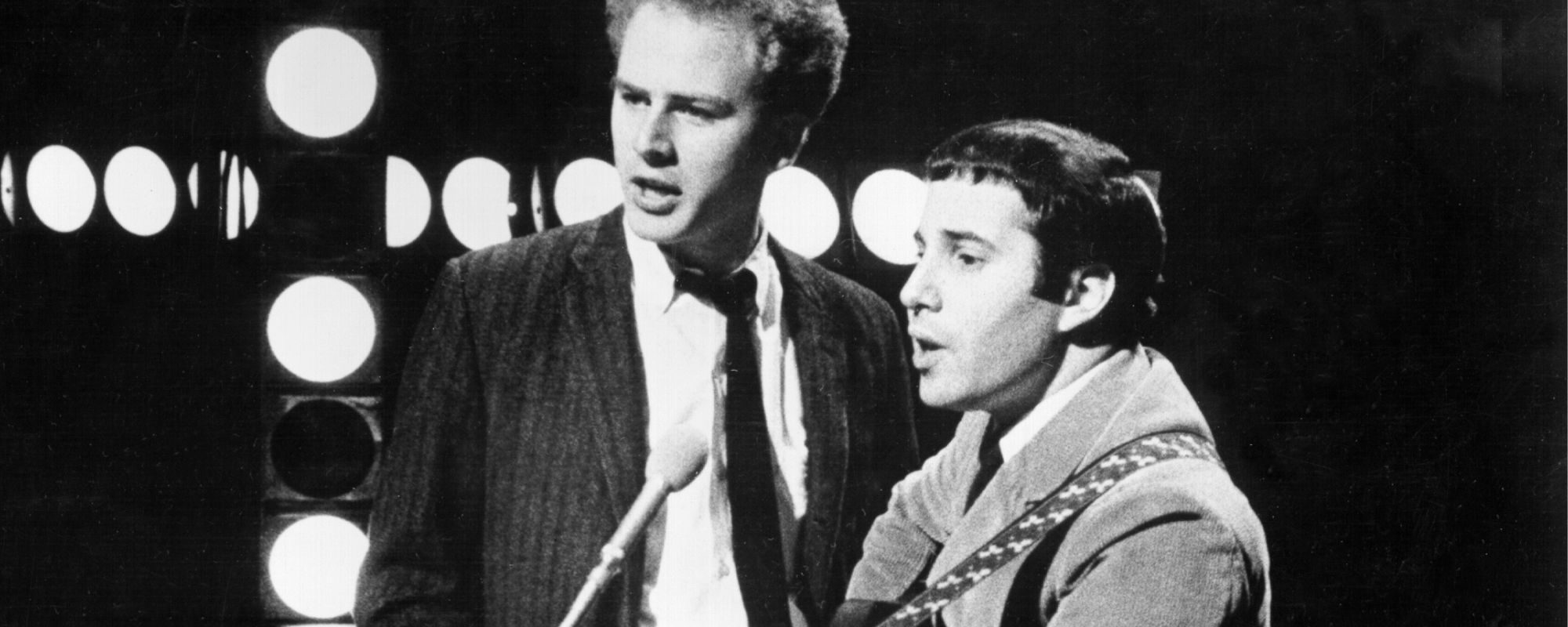
Paul Simon came to fame as one half of the beloved folk-rock duo Simon & Garfunkel. Simon, of course, wrote nearly all of the act’s original tunes while sharing vocal duties with longtime friend Art Garfunkel.
Videos by American Songwriter
The songs on Simon & Garfunkel’s first two albums featured relatively simple arrangements, with acoustic and/or electric instruments accompanying the duo on Simon’s introspective and melodic folk and folk-rock creations.
Starting with their 1966 album Parsley, Sage, Rosemary and Thyme, Simon & Garfunkel’s music began to feature more studio experimentation.
Parsley, Sage, Rosemary and Thyme, and the duo’s final two albums—1968’s Bookends and 1970’s Bridge Over Troubled Water—included multiple tunes with inventive and unusual instrumentation, arrangements, and production elements.
Here are four of the most musically adventurous songs recorded by Simon & Garfunkel:
“Scarborough Fair/Canticle” (1966)
Simon had learned the traditional English folk ballad “Scarborough Fair” from British folk artist Martin Carthy in 1965. The following year, Simon & Garfunkel recorded their own version of the tune, combining it with an original song called “Canticle.”
“Canticle” was a reworked version of “The Side Of A Hill”, an anti-war song composed by Simon in 1963. Paul included that tune on his debut solo album, The Paul Simon Songbook, which was released in 1965.
Garfunkel helped revise the lyrics of “The Side of A Hill” and came up with a counterpoint melody that he sang. “Scarborough Fair/Canticle” also featured baroque harpsichord played by John Meszar. The result was a melodically beautiful but eerie track blending the nostalgic “Scarborough Fair” with the ominous “Canticle,” whose lyrics alluded to the then-current Vietnam War.
“Scarborough Fair/Canticle” became a hit in 1968 when it was included on the soundtrack of the popular film The Graduate. It peaked at No. 11 on the Billboard Hot 100.
“Save The Life Of My Child” (1968)
Bookends was probably Simon & Garfunkel’s most experimental album. It was the first album the duo released after the June 1967 arrival of The Beatles’ classic Sgt. Pepper Lonely Heart’s Club Band and certainly bears the influence of that trailblazing recording.
Bookends was a concept album that looks at a life journey from childhood to old age. It featured songs that transitioned into each other, various musical influences, and a variety of studio effects.
Simon and Garfunkel co-produced Bookends with help from multiple studio collaborators, including Roy Halee, Bob Johnston, and John Simon.
One of the tracks co-produced by John Simon was “Save The Life Of My Child”. The song tells a chaotic, surreal story about a boy who’s threatening to jump from the ledge of a building. The track begins with a distorted Moog synthesizer and includes spoken-word asides, soaring gospel interludes, and sound effects.
At the end of the tune, when a spotlight is shined on the boy, he flies away. As the song fades out, a snippet of Simon & Garfunkel’s 1966 breakthrough hit “The Sound of Silence” is heard.
“Bridge Over Troubled Water” (1970)
The title track of Simon & Garfunkel’s final studio album, “Bridge Over Troubled Water” was probably the duo’s crowning creative and commercial achievement. Simon’s beautiful, spiritual-themed ballad about comforting and supporting a friend or loved one was elevated by Garfunkel’s soaring, angelic vocal performance.
Paul wrote “Bridge Over Troubled Water” on guitar. Simon, Garfunkel, producer Roy Halee, and session pianist Larry Knechtel took a couple of days to transform the tune into a piano-driven song. Garfunkel suggested that the track feature a big dramatic ending.
The arrangement, which included a string crescendo, was said to be modeled after Phil Spector’s “Wall of Sound” production on The Righteous Brothers’ dramatic 1965 cover of “Old Man River.”
“Bridge Over Troubled Water” topped the Billboard Hot 100 for six weeks in 1970. In 1971, it won five Grammy Awards—including Record of the Year and Song of the Year.
“Bridge Over Troubled Water” became one of the most-covered tunes of the 20th century.
“El Condor Pasa (If I Could)” (1970)
“El Condor Pasa (If I Could)” was another tune from the Bridge Over Troubled Water album. Perhaps foreshadowing Simon’s later world music explorations, the song actually is a cover of a 1913 tune written by Peruvian composer Daniel Alomia Robles based on a traditional Andean folk song. Paul wrote English lyrics for the song.
Simon first heard “El Condor Pasa” in 1965, performed by the Paris-based Andean folk group Los Incas. Simon & Garfunkel hired Los Incas to provide the music for their version. Among the interesting traditional instruments heard on the track are the charango, a lute-like stringed instrument and the quena, a type of flute.
“El Condor Pasa (If I Could)” was released as the fourth and final single from Bridge Over Troubled Water. It reached No. 18 on the Billboard Hot 100.
(Photo by Columbia Records/Michael Ochs Archives/Getty Images)


Leave a Reply
Only members can comment. Become a member. Already a member? Log in.