Your cart is currently empty!



Remembering When Clive Davis Made a Suggestion That Vastly Improved Bruce Springsteen’s Debut Album in 1973
Very few musicians begin their recording career with a lot of clout. Even Bruce Springsteen, who is now known for controlling every aspect of his records, had to deal with some feedback when he started out in the business.
Videos by American Songwriter
To his credit, Springsteen listened to the sage advice he was given by one of the most respected names in the music industry. And it paid off in a debut album much improved by the adjustment that he made based on this counsel.
Bruce in the Beginning
Legendary Columbia Records talent scout John Hammond emphatically recommended Bruce Springsteen to his bosses after a fateful 1972 audition. Springsteen subsequently decamped to a studio in the New York suburbs that year to make his debut album.
Although he possessed oodles of talent right from the start, Springsteen still wasn’t sure what kind of artist he wanted to be. Columbia, based on the acoustic audition that he’d done, thought of him in the vein of Bob Dylan. They even marketed him as such. Mike Appel, Springsteen’s producer/manager at the time, agreed with that assessment.
But Springsteen wanted to branch out and include the band he was in the process of forming on the recordings. A compromise was reached that his debut album should be split between songs that he did with the band and quieter, acoustic numbers that he performed solo. He presented that record to Columbia after three weeks in the studio.
Delayed ‘Greetings’
At the time that Bruce Springsteen was prepping Greetings From Asbury Park, N.J. for release, Clive Davis manned the helm at Columbia. Davis had already established himself as a foremost authority on what worked and what didn’t in the world of music. He had signed Springsteen at Hammond’s behest, so he eagerly expected big things from the newcomer.
But when he listened to the album, he didn’t hear anything resembling a hit single/radio song. Davis decided he wouldn’t release the album as it was. He suggested that Springsteen try and write something a little more on the commercial side.
Springsteen easily could have rejected this assessment and tried to stand his ground. But he wisely understood that he wouldn’t have any leverage if a standoff ensued. And he also surmised that Davis just might have been onto something.
“Light” and “Night”
The Boss quickly went off and wrote two new songs, “Blinded By The Light” and “Spirit In The Night”, as potential singles off the album. These two songs didn’t skimp on the lyrical derring-do he showed on the rest of the record. But they also adhered to a radio-friendly structure.
Because most of his band had scattered to the winds upon what they thought was the completion of the album, Springsteen recorded the new tracks with an ad hoc group. One of the new additions was a saxophone player with whom he’d recently become acquainted, a fellow by the name of Clarence Clemons.
Neither “Blinded By The Light” nor “Spirit In The Night” were hit singles for Bruce, although the former did provide a financial windfall when Manfred Mann’s Earth Band took it to No. 1 a few years later. But these two helped transform Greetings From Asbury Park, N.J. from a somewhat disjointed hybrid into a debut album that’s worthy of the fantastic catalog that it would grace.
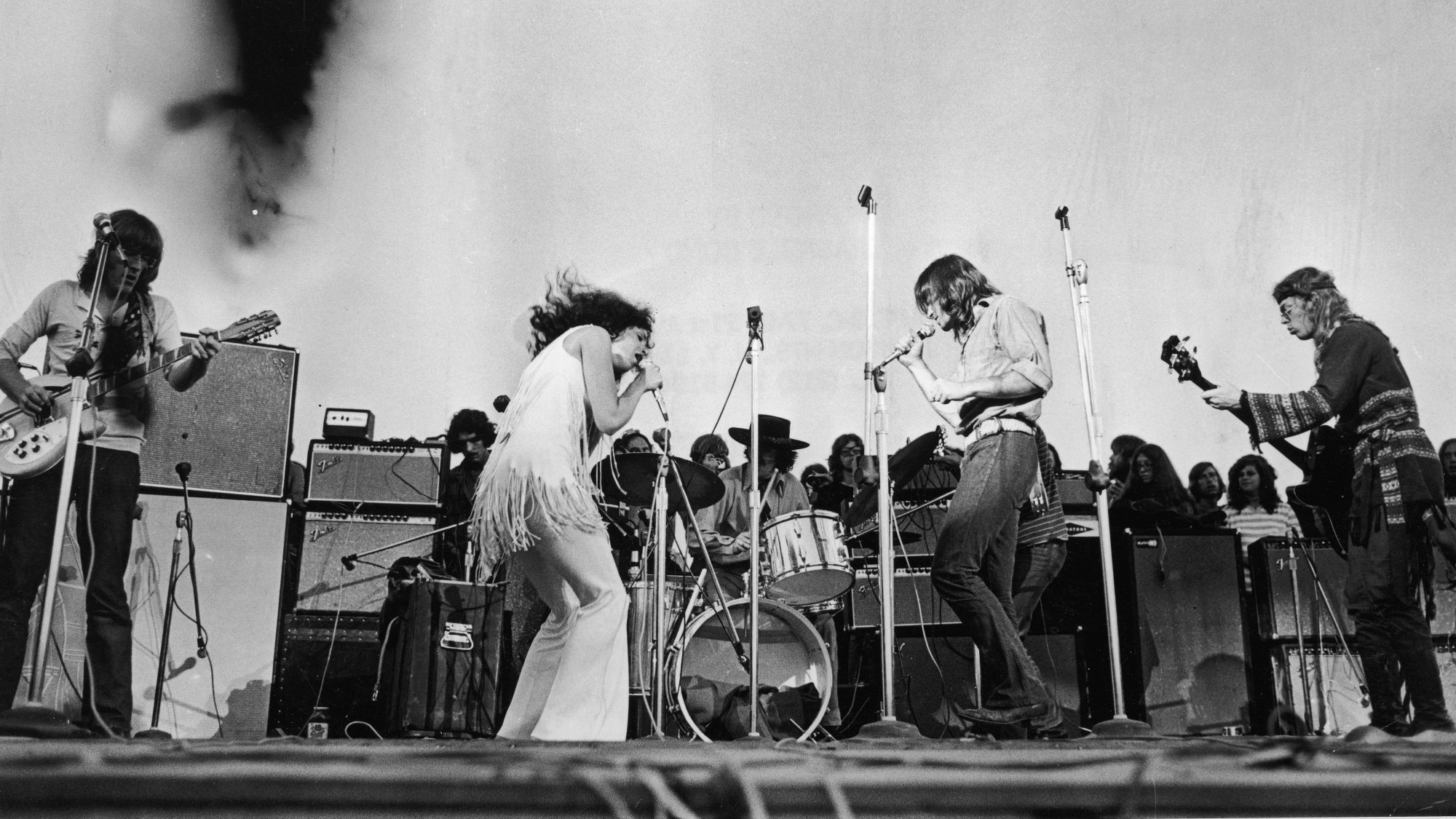
Photo by Michael Ochs Archives/Getty Images
Leave a Reply
Only members can comment. Become a member. Already a member? Log in.