Everyone has always known Bob Dylan to be a bit straightforward and brash. By doing so he not only protects his musical nuance, but also his idealistic brand appreciation. Per this mindset, Dylan has refused, scolded, and detachment from numerous pop-culture staples for those very reasons. Whether it be scoring a reluctant grimace in the “We Are The World” recording or going electric at the Newport Folk Festival—Dylan has always walked to the beat of his own drum.
One of the most notable moments in which Dylan did so, was on a 1963 episode of The Ed Sullivan Show. The decision would not only mark a historic moment in Dylan’s career but also in the career of the show. The Beatles, Elvis Presley, and The Rolling Stones are just a few of the names to appear on the show, and given its career-launching star power, rarely anyone ever said no to Ed Sullivan. But, leave it to Dylan to be one of the few.
Videos by American Songwriter
Censoring Dylan
In 1963, Dylan wasn’t yet the Dylan who became the voice of a generation. He hadn’t yet released his second album, The Freewheelin’ Bob Dylan, and was looking for the next big break in his career. Ed Sullivan gave it to him, but Dylan didn’t take it. The refusal derived from CBS executives’ decision not to allow Dylan to perform his political satire song, “Talkin’ John Birch Paranoid Blues.” It wasn’t fun, it was bashing the establishment and didn’t make for family-friendly television.
As many people assume when a star doesn’t comply, folks at the time viewed Dylan as an arrogant prima donna. However, Dylan’s refusal was of good taste and good manners. “Bob, quite appropriately, said ‘No, this is what I want to do. If I can’t play my song, I’d rather not appear on the show,” recalls producer, Bob Precht told History.com. Regardless of the happenings of the day, it would be a decision that made Dylan, Dylan.
Dylan’s Unwavering Principles
Any act that ever performed on the show typically went on to become a highly commercialized household name. That doesn’t sound like Dylan, does it? No, and it could be surmised that Dylan made the decision not only due to the censorship, but also how it would affect his mass appeal. If Dylan had performed on the show, his politically pervasive lyrics might have been lost through the ornateness of the program. Thus, his impact might have been diminished.
Whether or not this was at the forefront of Dylan’s mind while making the decision, it still was a decision obtaining multitudes. This can be attributed to the fact that his presence went beyond screaming fans and teenyboppers. Rather, he seemingly knew that the decision to opt-out would acquire him the fan base he desired.
Photo by Michael Ochs Archives/Getty Images
More Features
-

Patrick Swayze and Jennifer Grey in a scene from the film 'Dirty Dancing', 1987. (Photo by Vestron/Getty Images) -
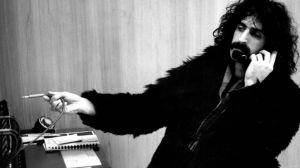
NEW YORK – DECEMBER 21: Rock and roll guitarist Frank Zappa wears a black fur coat as he operates a telephone switchboard and talks on the phone at Apostolic Studio – Soho on December 21, 1966 in New York City, New York. (Photo by Michael Ochs Archives/Getty Images) -
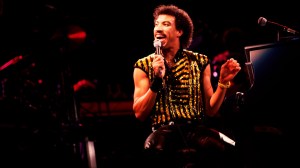
Lionel Richie performing on stage at the Rosemont Horizon in Rosemont, Illinois, June 12, 1984. (Photo by Paul Natkin/Getty Images) -
Photo by David Redfern/Redferns/Getty Images -
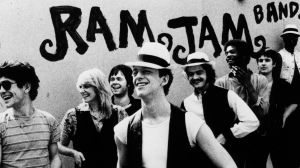
UNSPECIFIED – JANUARY 01: Photo of RAM JAM; Posed group portrait of Ram Jam (Photo by Echoes/Redferns) -
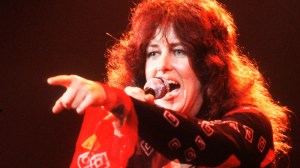
Grace Slick of Jefferson Starship performs on stage, New York, September 1978. (Photo by Michael Putland/Getty Images) -
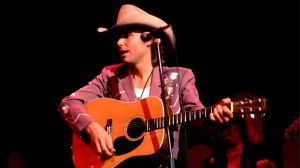
CHICAGO, ILLINOIS – American Country musician Dwight Yoakam performs onstage at the Chicago Theater, Chicago, Illinois, August 5, 1988. (Photo by Paul Natkin/Getty Images) -
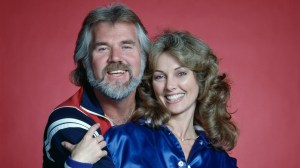
CROCKETT – APRIL 12: A CBS television country music presentation, A Special Kenny Rogers. Originally broadcast April 12, 1979. Crockett, TX. Kenny Rogers with guest, country singer Dottie West. (Photo by CBS via Getty Images)