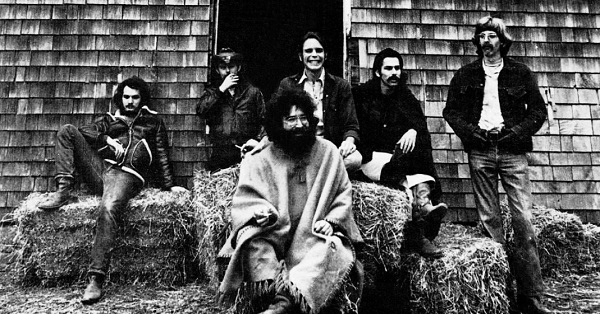
Deadhead or not, you have to respect any band that had the impact on popular culture that the Grateful Dead did. Even though several of the founding members, including Jerry Garcia, died long ago, the interest in the band continues, and you can still hear and see their influence in the music of jam bands like Phish and Widespread Panic. Songwriting-wise, though, it seems to have become less acceptable to write in the sometimes esoteric manner of the Grateful Dead’s extraordinary lyricist, Robert Hunter.


Most of the band’s classics are songs that Hunter wrote the lyrics for, like “Truckin’” and “Friend of the Devil.” Even 1987’s “Touch of Grey” became part of the fabric of life for so many counter-culturalists, some of whom actually were grey by the time “Touch of Grey” was recorded. One of Hunter’s most abstruse pieces, which became a staple of the Grateful Dead’s legendary hours-long concerts, was “China Cat Sunflower.” It was recorded for the band’s 1969 studio album Aoxomoxoa, and later released on the live Europe ’72 triple album set in a mash-up with the old blues number “I Know You Rider.” The two songs segued together perfectly, and the Grateful Dead performed the combination well over 500 times in live performances.
Videos by American Songwriter
In his outstanding anthology A Box of Rain, Hunter wrote, “Nobody ever asked me the meaning of [“China Cat Sunflower”]. People seem to know exactly what I’m talking about. It’s good that a few things in this world are clear to all of us.” But with lines like Krazy Kat peeking through a lace bandana/ like a one-eyed Cheshire/ like a diamond-eyed jack/ A leaf of all colors plays/ a golden string fiddle/ to a double-e waterfall over my back, it may be wishful thinking to say that that the words were really “clear to all of us.” To this day, numerous faithful still debate the meaning of the lyric, as seen on a number of websites devoted to discussing the song.
“I Know You Rider,” meanwhile, is a traditional blues song of exact unknown origin, though the father-son folklorist team of John and Alan Lomax included the lyric in the 1930s book American Ballads and Folk Songs. Written in the standard AAB blues motif, the song was cut by Janis Joplin, Hot Tuna and others, but received the most attention when the Grateful Dead started playing it.
Much has been made of the lyrics of Hunter, Bob Dylan and others whose work seems to be either pure genius or the channeling of some unseen supernatural force. And given the reputation of the Grateful Dead camp for ingesting psychedelics, it’s always been easy to say that such lyrics come from the minds of people who took too much of a particular drug. But the truth is usually that creative folk just tap into the hard-drives of life’s experiences and let their imaginations take flight. In the end, Hunter has become known as one of America’s great music industry poets and a real treasure.
More Features
-
HOUSTON, TEXAS – Toni Braxton performs during the New Edition Way Tour at Toyota Center on April 04, 2026 in Houston, Texas. (Photo by Eugenia R. Washington/Getty Images) -
The Rolling Stones at Desert Trip -
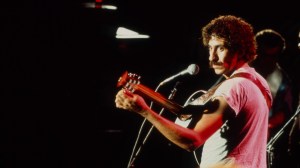
Unspecified – 1973: Jim Croce performing live on 'In Concert'. (Photo by Disney General Entertainment Content via Getty Images) -
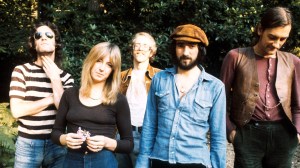
Posed group portrait of Fleetwood Mac in September 1973. Left to right are Bob Weston, Christine McVie, Bob Welch, John McVie and Mick Fleetwood. (Photo by Michael Putland/Getty Images) -
Photo by Lester Cohen/Getty Images -
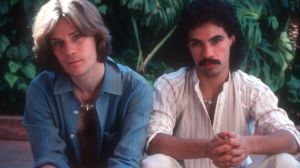
UNSPECIFIED – CIRCA 1970: Photo of Hall & Oates Photo by Michael Ochs Archives/Getty Images -
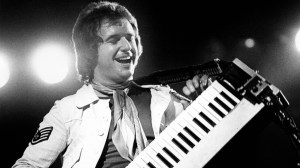
DETROIT, USA – 1st FEBRUARY: Gary Wright performs live on stage in Detroit, Michigan in February 1976. (Photo by Fin Costello/Redferns) -

UNITED KINGDOM – NOVEMBER 16: WEMBLEY ARENA Photo of RADIOHEAD and Thom YORKE, Thom Yorke performing live onstage (Photo by Patrick Ford/Redferns)