
The Beatles were pioneers in many ways. From their singular songwriting efforts to their experimental sonic changes, all their contributions to the rock world are indelible. Perhaps their most widely adopted innovations are the recording techniques they helped to usher in. Find four pieces of musical engineering popularized by The Beatles below.
[RELATED: Remember When: “More Popular Than Jesus”— The Public Burning of Beatles’ Records]
Videos by American Songwriter
1. Reverse vocal lines
Reverse vocals in rock songs are considered by some evidence of demonic ties. Nevertheless, The Beatles’ use of the technique had much more innocent origins. “After we’d done the session on [“Rain”]…I went home with a tape to see what else you could do with it,” John Lennon once explained. “I just happened to put it on my own tape recorder and it came out backward. And I liked it better.”
The Beatles brought the technique into popular music, using it on several of their name-making offerings including “Rain” and “I’m So Tired…”.
2. Reverse guitar solos
Many musicians in the age of psychedelia made use of the strange, warbly sound a reverse guitar line can offer. However, The Beatles were one of the first bands to bring the technique into the popular music space. You can hear George Harrison craft an atmospheric, edgy reverse solo on “I’m Only Sleeping.”
3. Close-up string recording
If you’ve ever wondered why the string section in “Eleanor Rigby” is so crisp and life-like, it’s because The Beatles’ engineer got up close and personal with the instruments. During the recording session, the microphones were grazing the strings of the violins and cellos. The end result is a far richer listening experience that has been replicated countless times since.
4. Audio double tracking
Prior to engineer Ken Townshend coming up with a way to double-track a song in production, a musician would have to record their vocal line twice. Because of innate human error, that process would sometimes prove difficult. The engineer curbed that human error by finding a way to copy a recorded vocal. While that process is no sweat in today’s digital landscape, it was quite the feat in the era of tape recordings.
(Photo by: Universal Archive/Universal Images Group via Getty Images)
More Features
-
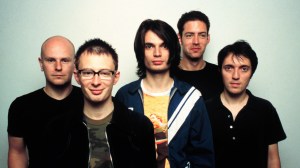
LOS ANGELES – JUNE 12: Rock band Radiohead (Thom Yorke 2nd from left) poses for a portrait at Capitol Records during the release of their album OK Computer in Los Angeles, California on June 12, 1997. (Photo by Jim Steinfeldt/Michael Ochs Archives/Getty Images) -
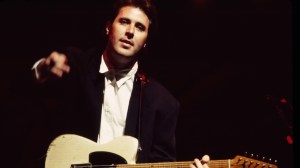
American Country musician Vince Gill plays electric guitar as he performs onstage at the Beacon Theatre, New York, New York, May 15, 1991. (Photo by Gary Gershoff/Getty Images) -
UNSPECIFIED – CIRCA 1970: Photo of Stoney Cooper Photo by Michael Ochs Archives/Getty Images -
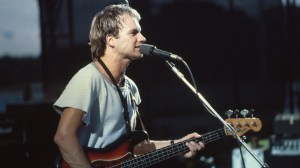
Original Caption) : 1981: Sting, of the British pop band The Police, sings and plays bass during a concert. (Photo by Lynn Goldsmith/Corbis/VCG via Getty Images) -
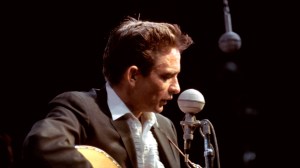
UNITED STATES – JULY 24: NEWPORT FOLK FESTIVAL Photo of Johnny CASH, Johnny Cash performing on stage (Photo by Gai Terrell/Redferns) -
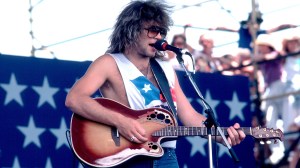
American musician Jon Bon Jovi performs at the Manor Downs Racetrack for the Farm Aid II Concert, Austin, Texas, July 4, 1986. (Photo by Paul Natkin/Getty Images) -
Photo by Frank Micelotta/Getty Images for CMT -
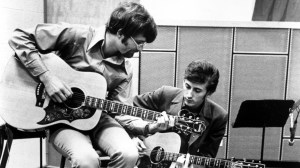
UNSPECIFIED – CIRCA 1970: Photo of Zager & Evans Photo by Michael Ochs Archives/Getty Images