Your cart is currently empty!

Glyn Johns Once Called This Common Studio Technique “Against His Religion,” Here’s Why
The musical world is full of controversial techniques and gadgets, the use of which ultimately boils down to personal preference and affects the overall outcome minimally, if at all. Think: capos, in-ear monitors, recording with multiple microphones versus one, playing with or without a guitar pick. For Glyn Johns, one of his biggest “nope”s of the industry is a tool that countless musicians utilize while in the studio: a click track.
Videos by American Songwriter
Johns is one of the most iconic producers in rock ‘n’ roll history. He helped create massively influential albums by Led Zeppelin, The Who, The Beatles, The Rolling Stones, Bob Dylan, The Kinks, and, briefly, albeit unsuccessfully, The Eagles. The producer’s refusal to use a click meant that the albums he worked on with these bands, like The Stones’ Beggars Banquet or The Beatles’ Abbey Road, were largely done without the use of a click.
Click tracks refer to a metronome playing as the ensemble records a take. This helps musicians stay on time with one another. In turn, a metronome helps minimize the pushes and pulls that come from our natural inclinations to speed up or slow down while playing. Some players consider this a non-negotiable in the studio. It’s just as non-negotiable for some stage performers, particularly musicians playing in massive venues, for which it’s more requirement than preference.
Glyn Johns Said Click Tracks Were “Against His Religion”
During a 2025 interview with Rick Beato, Glyn Johns discussed why he refuses to use a click, slyly joking that it was “against his religion.” He continued, explaining that he believed his job was to create a live, accurate replication of a performance of a group of people. More specifically, he said it was his job to capture “their subliminal interaction with each other. They’re not even aware of it. They’re probably concentrating like f*** on what they’re doing. However, they’re being tremendously influenced by what everyone else is doing. Equally, everyone else is being influenced by what they’re doing.”
Elsewhere in the interview, Johns mentioned the importance of allowing the music to breathe. As the players naturally speed up or slow down, a good ensemble will follow one another’s shifts. This creates a dynamic, exciting performance that isn’t always attainable when relegated to the confines of a specific BPM.
Johns said that overdubs, which are new takes that a musician lays over an existing part to replace the old one, are slightly different. If only one player retracks—say, the guitarist going back in and redoing a solo—there is little impact on the overall feel of the record. But, he clarified, “My principle has always been, ‘Everybody should play it once.’ That way, you’ll get a performance of a piece of music rather than some sterile, perfect nonsense.”
“Music is about emotion, for God’s sake,” he said. And when the right emotion locked into place, there was a distinct change that occurred. “You could do six takes, and they’d all be different. Eventually, you get the take, where it all literally comes together, and it’s like a bloody firework going off. It’s just…the difference is extraordinary.”
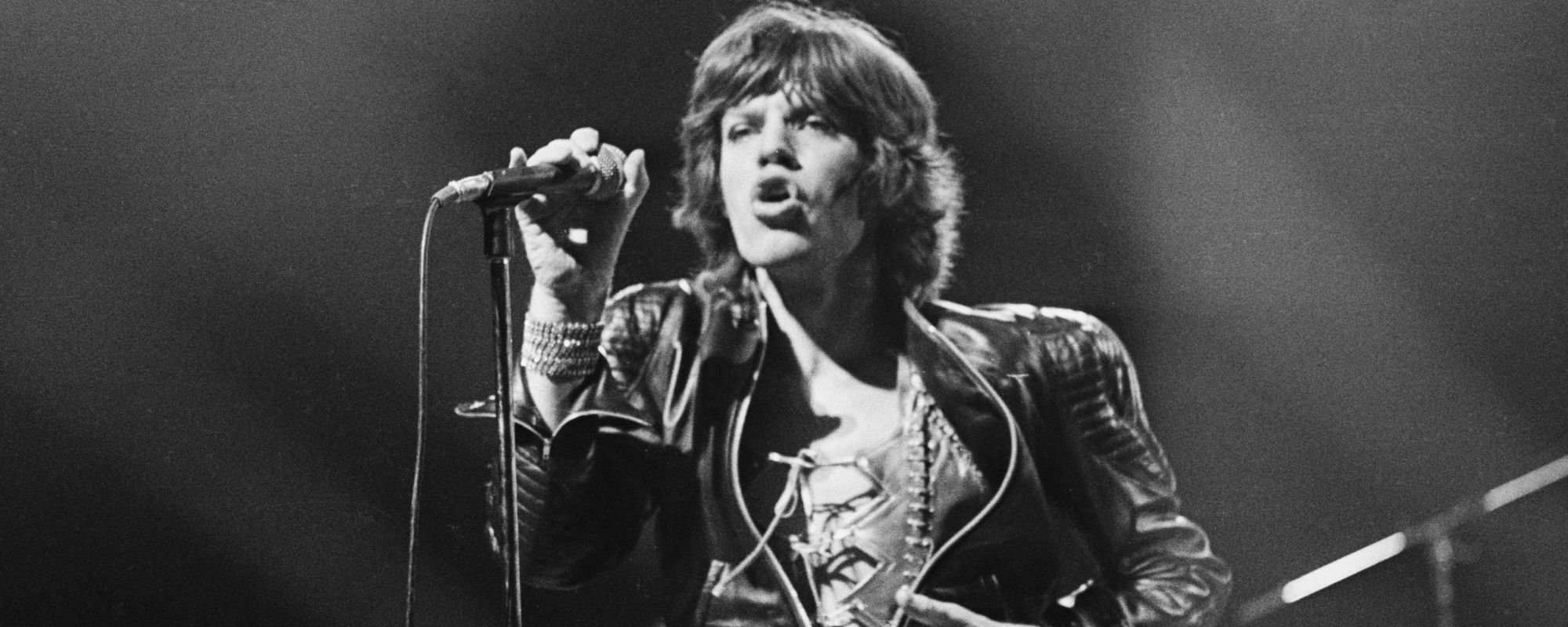
Photo by Michael Putland/Getty Images


Leave a Reply
Only members can comment. Become a member. Already a member? Log in.